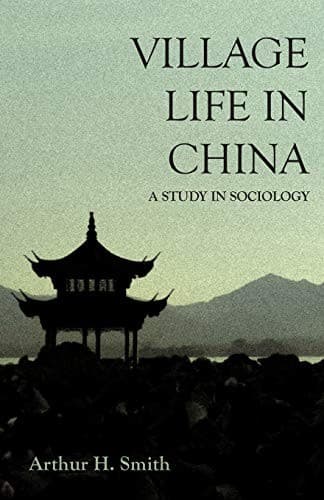
Village Life in China: A Study in SociologySmith, Arthur H.
General
Village Life in China: A Study in Sociology
Smith, Arthur H.
China -- Social life and customs; Villages
The fourth examination begins at a later hour than the third, and while
the number of the themes may be larger than before--all of them from the
Four Books--time is not allowed for the completion of any of them. In
addition to the classical themes, a philosophical one may be given.
Besides this, there are poetical themes, to be treated in a way different
from those in the preceding examinations, and much more difficult, as the
lines of poetry are subject also to the rules governing the composition of
antithetical couplets.
The metre, whether five characters to a line, or seven, (the only
varieties to choose from), is left to the option of the candidate, who, if
he be a fine scholar and a rapid penman, may treat the same theme in both
ways. A meal is served as at the preceding trial, and by five or six
o'clock, the hall is empty. After the interval of another day, the fourth
board is hung, and the number who have survived this examination is found
to be a small one--perhaps twenty or thirty.
A day later the final examination occurs. The theme is from the Four
Books, and may be treated fully or partially according to the examiner's
orders at the moment. A poem is required in the five-character metre, and
also a transcript of some section of the "Sacred Edicts" of the Emperor
Yung Chêng. The design of the latter is to furnish a specimen of the
candidate's handwriting, in case it should be afterward needed for
comparison. A meal is furnished as before, and by the middle of the
afternoon the hall is cleared. The next day the board is again hung,
announcing the names who have finally passed. The number is a fixed one,
and it is relatively lowest where the population is most dense. In two
contiguous districts, for example, which furnish on an average 500 or 600
candidates, the number of those who can pass is limited, in the one case
to twenty and in the other to seventeen. In another district where there
are often 2,000 candidates, _only_ thirty can pass. It thus appears that
the chances of success for the average candidate, are extremely tenuous.
Public-domain text, read in full here on John Shaqi.
Reviews
Reviews
No reviews yet
Be the first to share your thoughts on this work.
Elsewhere in the archive
Join the Discussion
Join the discussion
Sign in to leave a comment or review.
Sign InorCreate an account