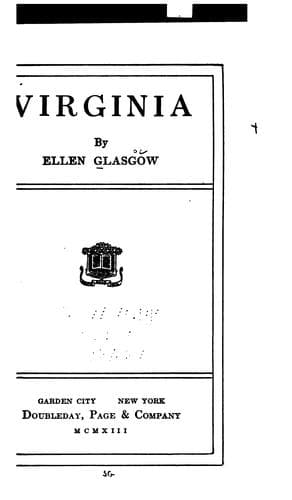
Marriage -- Fiction; Virginia -- Fiction; Wives -- Fiction; Women -- Fiction
Mrs. Pendleton, who had never denied anything in her life, except the
biblical sanction for the Thirteenth Amendment to the Constitution,
shook her head gently and began to talk in the inattentive and anxious
manner she had acquired at scantily furnished tables. Ever since the
war, with the exception of the Reconstruction period, when she had lived
practically on charity, she had managed to exist with serenity, and
numerous negro dependents, on the rector's salary of a thousand dollars
a year. Simple and wholesome food she had supplied to her family and her
followers, and for their desserts, as she called the sweet things of
life, she had relied with touching confidence upon her neighbours. What
they would be for the day, she did not know, but since poverty, not
prosperity, breeds the generous heart, she was perfectly assured that
when Miss Priscilla was putting up raspberries, or Mrs. Goode was making
lemon pie, she should not be forgotten. During the terrible war years,
it had become the custom of Dinwiddie housekeepers to remember the wife
of the rector who had plucked off his surplice for the Confederacy, and
among the older generation the habit still persisted, like all other
links that bound them to a past which they cherished the more
passionately because it guarded a defeated cause. Like the soft
apologetic murmur of Mrs. Pendleton's voice, which was meant to distract
attention rather than to impart information, this impassioned memory of
the thing that was dead sweetened the less romantic fact of the things
that were living. The young were ignorant of it, but the old _knew_.
Mrs. Pendleton, who was born a great lady, remained one when the props
and the background of a great lady had crumbled around her; and though
the part she filled was a narrow part--a mere niche in the world's
history--she filled it superbly. From the dignity of possessions she had
passed to the finer dignity of a poverty that can do without. All the
intellect in her (for she was not clever) had been transmuted into
character by this fiery passage from romance into reality, and though
life had done its worst with her, some fine invincible blade in the
depths of her being she had never surrendered. She would have gone to
the stake for a principle as cheerfully as she had descended from her
aristocratic niche into unceasing poverty and self-denial, but she would
have gone wearing garlands on her head and with her faint, grave smile,
in which there was almost every quality except that of humour, touching
her lips. Her hands, which were once lovely, were now knotted and worn;
for she had toiled when it was necessary, though she had toiled always
with the manner of a lady. Even to-day it was a part of her triumph that
this dignity was so vital a factor in her life that there was none of
her husband's laughter at circumstances to lighten her burden. To her
the daily struggle of keeping an open house on starvation fare was not a
Public-domain text, read in full here on John Shaqi.
Reviews
Reviews
No reviews yet
Be the first to share your thoughts on this work.
Join the Discussion
Join the discussion
Sign in to leave a comment or review.
Sign InorCreate an account