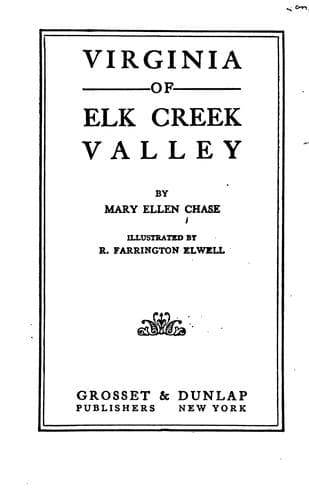
Ranch life -- Fiction; Vacations -- Fiction; Wyoming -- Fiction
"It was early November when we reached our journey's end in a Montana
valley. A few sod huts were there to welcome us, and the day after our
arrival other pioneers drifted in from the south. The spot was chosen
because it was near water, and because there seemed to be plenty of wild
game. Some of our train pushed on to the gold mines, another day's journey
and more, but it was the gravel beds of the creek where we were promised
gold, and we decided to stay in the valley.
"We built a sod hut like those around us, and began to get settled. Our
poor cows and horses were glad enough to rest and crop the grass in among
the sagebrush. It was a forlorn-looking village enough when all our huts
were done. I wish you could have seen it! There we spent our first
winter--the happiest one of my whole life. Yes, my dears," she said,
looking into their doubtful, surprised faces, "it _was_ the happiest.
There were dangers, of course, and all kinds of hardships, but those made
no difference. Of course there were lonely days when I longed for home.
When Robert was there, I didn't mind the smoky, crowded hut, but on the
days when he had to be away I felt as though I couldn't stand it much
longer. We lived on meat and milk that winter. The flour gave out and
there was no way to get more, so we had no bread. All the provisions had
been used before February came, and we could get no more before spring.
Buffalo meat and elk, we ate mostly. Yes, Virginia, what is it?"
"The story, Aunt Deborah, about the Indian coming into the hut?"
"Oh, yes," said Aunt Deborah, "Virginia always must have that. It
happened on one day that Robert was away. He had ridden to the mining camp
to try to get flour. I was all alone in the hut. There had been no news of
Indians around, so imagine my surprise when the door was pushed open and
an Indian walked in. I knew by his signs that he wanted food, so I gave
him all I had. He drank all the milk in the hut, and some oat cakes which
I had made from our last bit of oat-meal. I remember how angry I was, for
I had been saving them especially for Robert, but I dared not refuse. Then
he began admiring a rug which we had brought from home. It was on the bed
in the corner. He asked me for it, and I refused. Then he insisted, and I
still refused. But he wanted that rug, and was going to have it. At last
he just grabbed it, and made for the door. That was too much for me. My
grandmother had given Robert and me that rug for a wedding gift, and no
Indian was going to take it away. I snatched Robert's gun from the corner
and raised it.
"'Drop it, or I shoot you!" I screamed.
"I guess he knew I meant what I said, for he dropped the rug and hurried
out of the cabin. I don't know how long I sat there facing the door. I was
afraid he would bring others back, but he never came again. When Robert
came that night, I was still facing the door with the gun. When I saw him,
I burst out crying, and cried and cried. The strain had been too much for
me."
Public-domain text, read in full here on John Shaqi.
Reviews
Reviews
No reviews yet
Be the first to share your thoughts on this work.
Join the Discussion
Join the discussion
Sign in to leave a comment or review.
Sign InorCreate an account