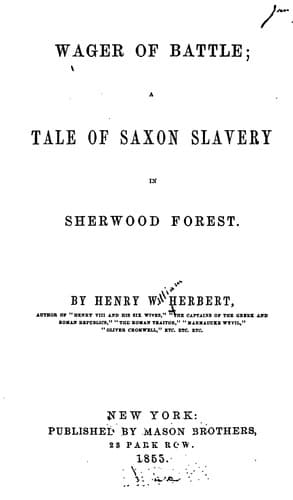
Wager of Battle: A Tale of Saxon Slavery in Sherwood ForestHerbert, Henry William
History
Wager of Battle: A Tale of Saxon Slavery in Sherwood Forest
Herbert, Henry William
Anglo-Saxons -- Fiction; Great Britain -- History -- Norman period, 1066-1154 -- Fiction; Sherwood Forest (England) -- Fiction
"Terrible, terrible indeed!" said Kenric, as he ended his tale,
doggedly told, with many sullen interruptions. "Terrible his deed, and
terrible thy deeds, Eadwulf; and, of all, most terrible the deeds of
Him who worked out his will by storm, and darkness, and the terror of
the mighty waters. And of a surety, terrible will be the vengeance of
Foulke d'Oilly. He is not the man to forget, nor are thy deeds, deeds
to be forgotten. But what shall I say to thee, obstinate, obdurate,
ill-doer, senseless, rash, ungrateful, selfish? Already, in this
little time, had Edith and I laid by, out of our humble gains, enough
to purchase two thirds of thy freedom. Ere Yule-tide, thou hadst been
as free a man as stands on English earth, and now thou art an outlaw,
under ban forever, and blood-guiltiness not to be pardoned; and upon
us--us, who would have coined our hearts' blood into gold, to win thy
liberty--thou hast brought the odor, and the burden, and, I scarce
doubt it, the punishment, of thy wicked wilfullness. It were better
thou hadst perished fifty-fold in the accursed sands of Lancaster, or
ere thou hadst done this thing. It were better a hundred-fold that
thou hadst never been born."
"Why dost not add, 'better a thousand-fold thou wert delivered up to
the avenger of blood,' and then go deliver me?"
"Words are lost upon thee," replied his brother, shaking his head
mournfully, "as are actions likewise. Follow me; thou must have
'tendance and rest above all things, and to-morrow must bring forth
the things of to-morrow."
Nothing more passed between them until they reached the threshold of
Kenric's humble dwelling, where, in silence and darkness, with the
door ajar, listening to every distant sound of the fitful breeze or
passing water, the fair young wife sat awaiting them.
She arose, as they entered. "Ah! it is thou, Eadwulf; I thought so,
from the first. Enter, and sit. Wilt eat or bathe first? thou art worn
and weary, brother, as I can see by this gloaming light. There is a
good bed ready for thee, under the rafters, and in the morning thou
wilt awake, refreshed and strong----"
"Thou thoughtst so from the first. I warrant me thou didst--mayhap thy
husband told thee so. Brother, too! _he_ hath not greeted me as
brother. Eat, bathe, sleep? neither of the three, girl. I'll drink
first of all; and, if that please thee, then eat, then sleep; and
bathe when I may, perhaps not at all."
"Bring him the mead-pitcher, Edith, and the big horn, and then avoid
ye. There is blood on his hand, and worse than blood on his soul.
Leave the meat on the board. I'll see to him."
And when his wishes were fulfilled, they were left alone, and a long,
gloomy conversation followed; and, if the dark, sullen, and unthankful
heart of the younger brother was in no sort touched, or his better
feelings--if he had any--awakened, at least his fears were aroused,
and, casting aside all his moroseness, he became a humble, I had
almost said a craven, suppliant for protection.
Public-domain text, read in full here on John Shaqi.
Reviews
Reviews
No reviews yet
Be the first to share your thoughts on this work.
Elsewhere in the archive
Join the Discussion
Join the discussion
Sign in to leave a comment or review.
Sign InorCreate an account