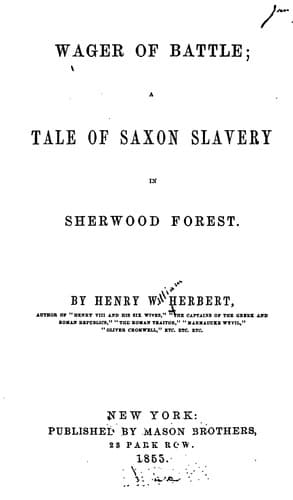
Wager of Battle: A Tale of Saxon Slavery in Sherwood ForestHerbert, Henry William
History
Wager of Battle: A Tale of Saxon Slavery in Sherwood Forest
Herbert, Henry William
Anglo-Saxons -- Fiction; Great Britain -- History -- Norman period, 1066-1154 -- Fiction; Sherwood Forest (England) -- Fiction
LONGFELLOW.
The dark winter months, with their alternate snows, sheeting the wide
moorlands, and roofing the mighty mountain-tops of the lake country
with inviolate white, and soft thaws swelling the streamlets into
torrents, inundating the grassy meadows, and converting the mountain
tarns into inland seas, had passed away; nor passed away all gloomily,
or without their appropriate and peculiar pleasures, from the
sojourners in Hawkshead Castle.
All over Merrie England, but in no part of it more than in the north
country, was Christmas the gladdest and the blythest time of all the
circling year; when every door stood open, from that of the baron's
castle and the franklin's hall to that of the poorest cotter's cabin;
when the yule log was kindled, and the yule candle lighted; when the
furmety smoked on every English board, and the wassail bowl was spiced
for all comers; when the waits sang Christmas carols under the clear
cold moon in the frosty midnights, and the morris-dancers and the
mummers rioted and reveled to the rude minstrelsy of the time, and made
the most of the short-lived wintery sunshine; when ancient feuds were
often reconciled, and ancient friendships riveted by closer ties; when
families long dissevered were re-collected and re-united about the old
ancestral hearth-stones; when the noble and the rich filled their
abundant halls with sumptuous luxury and loud-rejoicing merriment, and
the poor were not forgotten by the great.
Indeed, though there was much that was coarse and rude, much that was
hard, cruel, and oppressive, in the social life of England, in those
old and almost forgotten days, there was much also that was good and
generous and genial, much that was sound and hearty, much that was
brave and hale and masculine, which has vanished and departed from the
world forever, with the vaunted progress of civilization and refinement,
In those old times
When the Christmas chimes
Were a merry sound to hear,
When the squire's wide hall,
And the cottage small,
Were full of good English cheer.
Above all, there was this great redeeming virtue, conspicuous among the
flagrant wrongs and innate evils of society under the feudal system,
that between the governors and the governed, between the lord and his
lieges, nay, even between the master and his serfs, there was then no
such social gulf established, as now yawns, in these boasted days of
civilizing progress and political equality, between castes and classes,
separated by little else than their worth, estimated by the standard of
gold--gold, which seems, daily and hourly, more and more to be
over-riding all distinctions of honored ancestry, high name, noble
deeds, personal deserts, nay, even of distinguished bearing, of
intellect, of education, of accomplishment, much more of truth,
integrity or honor.
Public-domain text, read in full here on John Shaqi.
Reviews
Reviews
No reviews yet
Be the first to share your thoughts on this work.
Elsewhere in the archive
Join the Discussion
Join the discussion
Sign in to leave a comment or review.
Sign InorCreate an account