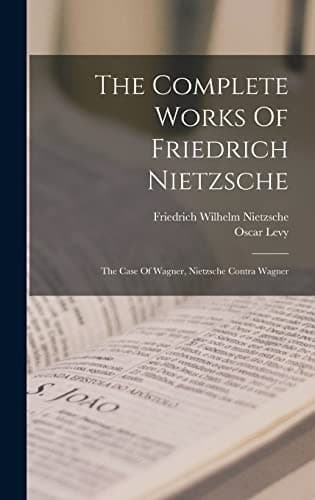
We Philologists: Complete Works of Friedrich Nietzsche, Volume 8Nietzsche, Friedrich Wilhelm
PhilosophyPhilosophy
We Philologists: Complete Works of Friedrich Nietzsche, Volume 8
Nietzsche, Friedrich Wilhelm
Classical philology; Education
To know history now means . to recognise how all those who believed in a
Providence took things too easily. There is no such thing. If human
affairs are seen to go forward in a loose and disordered way, do not
think that a god has any purpose in view by letting them do so or that
he is neglecting them. We can now see in a general way that the history
of Christianity on earth has been one of the most dreadful chapters in
history, and that a stop _must_ be put to it. True, the influence of
antiquity has been observed in Christianity even in our own time, and,
as it diminishes, so will our knowledge of antiquity diminish also to an
even greater extent. Now is the best time to recognise it: we are no
longer prejudiced in favour of Christianity, but we still understand it,
and also the antiquity that forms part of it, so far as this antiquity
stands in line with Christianity.
159
Philosophic heads must occupy themselves one day with the collective
account of antiquity and make up its balance-sheet. If we have this,
antiquity will be overcome. All the shortcomings which now vex us have
their roots in antiquity, so that we cannot continue to treat this
account with the mildness which has been customary up to the present.
The atrocious crime of mankind which rendered Christianity possible, as
it actually became possible, is the _guilt_ of antiquity. With
Christianity antiquity will also be cleared away.--At the present time
it is not so very far behind us, and it is certainly not possible to do
justice to it. It has been availed of in the most dreadful fashion for
purposes of repression, and has acted as a support for religious
oppression by disguising itself as "culture." It was common to hear the
saying, "Antiquity has been conquered by Christianity."
This was a historical fact, and it was thus thought that no harm could
come of any dealings with antiquity. Yes, it is so plausible to say that
we find Christian ethics "deeper" than Socrates! Plato was easier to
compete with! We are at the present time, so to speak, merely chewing
the cud of the very battle which was fought in the first centuries of
the Christian era--with the exception of the fact that now, instead of
the clearly perceptible antiquity which then existed, we have merely its
pale ghost; and, indeed, even Christianity itself has become rather
ghostlike. It is a battle fought _after_ the decisive battle, a
post-vibration. In the end, all the forces of which antiquity consisted
have reappeared in Christianity in the crudest possible form: it is
nothing new, only quantitatively extraordinary.
160
What severs us for ever from the culture of antiquity is the fact that
its foundations have become too shaky for us. A criticism of the Greeks
is at the same time a criticism of Christianity; for the bases of the
spirit of belief, the religious cult, and witchcraft, are the same in
both--There are many rudimentary stages still remaining, but they are by
this time almost ready to collapse.
Public-domain text, read in full here on John Shaqi.
Reviews
Reviews
No reviews yet
Be the first to share your thoughts on this work.
Join the Discussion
Join the discussion
Sign in to leave a comment or review.
Sign InorCreate an account