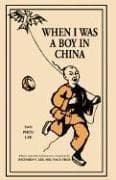
China -- Social life and customs -- 1644-1912; Lee, Yan Phou, 1861-1938?
Therefore it is not strange that schools are to be found everywhere, in
small hamlets as in large towns, although the government appropriates
no funds for the establishment of common schools; and although no
such thing is known as “compulsory education,” there is a general
desire, even among the poorest classes, to give their children “a
little schooling.” Schools of the lower grades never boast more than
one teacher each. The combination system of a head-master and several
assistants does not work well in China. The schoolmaster in China must
be absolute. He is monarch of all he surveys; in his sphere there
is none to dispute his rights. You can always point him out among a
thousand by the scholar’s long gown, by his stern look, by his bent
form, by his shoulders rounded by assiduous study. He is usually
near-sighted, so that an immense pair of spectacles also marks him
as a trainer of the mind. He generally is a gentleman who depends on
his teaching to make both ends meet;—his school is his own private
enterprise—for no such thing exists in China as a “school-board” and
if he be an elegant penman, he increases the weight of his purse by
writing scrolls; if he be an artist, he paints pictures on fans. If he
has not taken a degree, he is a perennial candidate for academic honors
which the government only has a right to confer.
A tuition fee in China varies according to the ability and reputation
of the teacher, from two dollars to twenty dollars a year. It varies
also according to the age and advancement of the pupil. The older he
be, the more he has to pay. The larger sum I have named is paid to
private tutors. A private tutor is also usually invited to take his
abode in the house of the wealthy pupil; and he is also permitted
to admit a few outsiders. During festivals, and on great occasions,
the teacher receives presents of money, as well as of eatables, from
his pupils. And always he is treated with great honor by all, and
especially by the parents of the pupils. For the future career of their
children may, in one sense, be said to be in his hands.
One who teaches thirty or forty boys at an average tuition fee of four
dollars, is doing tolerably well in China; for with the same amount he
can buy five or six times as much of provisions or clothing as can be
bought in America.
Public-domain text, read in full here on John Shaqi.
Reviews
Reviews
No reviews yet
Be the first to share your thoughts on this work.
Join the Discussion
Join the discussion
Sign in to leave a comment or review.
Sign InorCreate an account