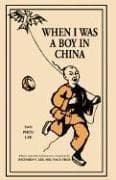
China -- Social life and customs -- 1644-1912; Lee, Yan Phou, 1861-1938?
Out rushed a troop of servants. Now fly! Chang, fly for your life! Yes,
he flew, nor paused till he got to the inn where he learned that his
neighbors had set sail. He also found the cunning matchmaker absent.
Now realizing how completely he was sold, and that the offenders
could not be punished, while he himself was liable to be arrested for
trespassing in a man’s house and attempting to destroy his domestic
happiness, he sailed for Fragrant Hills in a state of mind far from
tranquil.
The story got abroad and the whole town grinned from ear to ear, while
even his own friends enjoyed his discomfiture.
CHAPTER X.
HOW I WENT TO SHANGHAI.
About forty years ago, there came to this country under the auspices
of the Rev. Dr. Brown, an American missionary in China, a Chinese
youth—who was destined to exert a potent influence on the future of
the Chinese Empire. Many have heard of him or read about him; his name
is Yung Wing. Inspired by a lofty ambition, he worked his way through
preparatory school and college, graduating from Yale in 1854 with high
honors.
He went back to China soon after his graduation and engaged in business
at Shanghai. But business with the incidental pleasure of money making,
did not entirely absorb his attention. China was at that time having
troublesome diplomatic negotiations with foreign powers, and was
being taken advantage of right and left for want of men in office
who understood the customs, the laws and the civilization of Western
countries.
Dr. Wing, indignant at the wrongs which China had suffered and was
suffering at the hands of so-called “Christian” and “enlightened”
nations, sought for a remedy, and conceived the brilliant project of
educating a number of Chinese boys in America for future service at the
government expense.
He made his plan known to prominent Chinese officials. At first he met
with no sympathy, no encouragement. Still, he persevered; and after
twelve years of patient waiting and active labor, he succeeded in
convincing two of the most powerful ministers at the court of Pekin of
the feasibility of his scheme. In consequence, an edict was issued by
the emperor to enforce its execution.
A school was established at Shanghai to receive candidates, and
announcement made that the government had appropriated a large sum of
money to educate one hundred and twenty boys in America, who were to
be sent in four detachments, in four successive years, beginning with
1872; and that a candidate, on his election after a term of probation
at the school, should have the cadet’s button and rank conferred on
him; and that after fifteen years of residence in America, during which
period the government promised to defray all expenses and exercise
parental care over the youths, they were to return for entrance into
its service.
Public-domain text, read in full here on John Shaqi.
Reviews
Reviews
No reviews yet
Be the first to share your thoughts on this work.
Join the Discussion
Join the discussion
Sign in to leave a comment or review.
Sign InorCreate an account