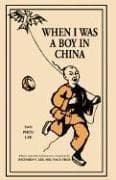
China -- Social life and customs -- 1644-1912; Lee, Yan Phou, 1861-1938?
Nothing occurred on our Eastward journey to mar the enjoyment of our
first ride on the steam-cars—excepting a train robbery, a consequent
smash-up of the engine, and the murder of the engineer. We were quietly
looking out of the windows and gazing at the seemingly interminable
prairies when the train suddenly bounded backward, then rushed forward
a few feet, and, then meeting some resistance, started back again. Then
all was confusion and terror. Pistol-shots could be made out above the
cries of frightened passengers. Women shrieked and babies cried. Our
party, teachers and pupils, jumped from our seats in dismay and looked
out through the windows for more light on the subject. What we saw
was enough to make our hair stand on end. Two ruffianly men held a
revolver in each hand and seemed to be taking aim at us from the short
distance of forty feet or thereabouts. Our teachers told us to crouch
down for our lives. We obeyed with trembling and fear. Doubtless many
prayers were most fervently offered to the gods of China at the time.
Our teachers certainly prayed as they had never done before. One of
them was overheard calling upon all the gods of the Chinese Pantheon to
come and save him. In half an hour the agony and suspense were over. A
brakeman rushed through with a lamp in his hand. He told us that the
train had been robbed of its gold bricks, by five men, three of whom,
dressed like Indians, rifled the baggage car while the others held the
passengers at bay; that the engine was hopelessly wrecked, the engineer
killed; that the robbers had escaped on horseback with their booty;
and that men had been sent to the nearest telegraph station to “wire”
for another engine and a supply of workmen. One phase of American
civilization was thus indelibly fixed upon our minds.
We reached Springfield, Mass., in due time, where we were distributed
among some of the best families in New England. As liberal provision
having been made for our care by the Chinese government, there was
no difficulty in finding nice people to undertake our “bringing-up,”
although I now know that a philanthropic spirit must have inspired
all who assumed the responsibility of our training and education. We
were assigned two by two; and it was my good fortune to be put into
the hands of a most motherly lady in Springfield. She came after us
in a hack. As I was pointed out to her, she put her arms around me
and kissed me. This made the rest of the boys laugh, and perhaps I
got rather red in the face; however, I would say nothing to show my
embarrassment. But that was the first kiss I ever had had since my
infancy.
Our first appearance in an American household must have been a funny
occurrence to its members. We were dressed in our full Chinese costume,
consisting of cue, satin shoes, skull-cap, silk gown, loose jacket and
white linen blouse. We were both thirteen years of age, but smaller
than American boys at eleven.
Public-domain text, read in full here on John Shaqi.
Reviews
Reviews
No reviews yet
Be the first to share your thoughts on this work.
Join the Discussion
Join the discussion
Sign in to leave a comment or review.
Sign InorCreate an account