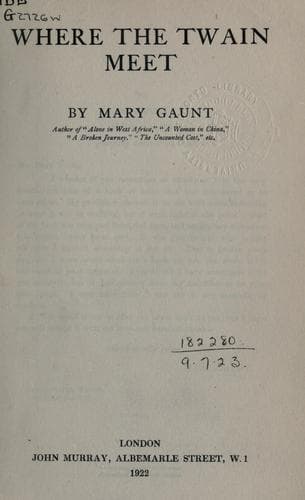
Black people -- Jamaica; Jamaica; Slavery -- Jamaica
“These,” says he, “were distinct in every respect, their figure,
character, language, and country being different from those of the other
blacks. Their skin is of a deeper jet than that of any other negro,
their features resemble those of Europeans, their hair is of a long
and soft texture like a Mulatto's or Quadroon's; their form is more
delicate, and their stature rather lower than those of the people they
joined; they were much handsomer to a European eye, but seemed not to
have originally possessed such hardiness and strength of nerve as
the other people under Cudjoe; and although it is probable that the
intercourse with the latter had existed between seventy and eighty
years, and an intermixture of families had taken place, their original
character was easily traced in their descendants. They were called
Madagascars, but why I do not know, never having heard that any slaves
were brought from the island of Madagascar. They said that they ran away
from the settlements about Lacovia in the parish of St Elizabeth soon
after the planters had bought them. It does not appear that their
numbers were great, but they were remarkably prolific.”
Bridges says in much more grandiloquent language that a slave ship from
Madagascar with slaves that had Malay blood in their veins was wrecked
on the coast, and the slaves escaping joined the Maroons. But one thing
is clear, that the blood of a good many races ran in the veins of these
freebooters who held the heights for so long. It is quite possible there
was even a little admixture of white blood, but not very much, for one
thing was certain, they hated the whites--naturally.
At first it seems Cudjoe was only regarded as a leader of runaway
slaves; later, as his successes grew and settlement among the mountains
became more and more difficult on account of his depredations, they
decided he was a Maroon. Hidden in the inaccessible fastnesses of the
interior, the troops sent against him were foiled again and again. It
was rough on those soldiers dressed in the absurd fashions of the time
so unsuitable for the tropics, but once they got beyond the parade
ground, I doubt not they accommodated themselves to circumstances
lightly clad in shirt and breeches. There is in the Jamaican Institute a
fearsome erection of black felt and brass which says it is the headgear
of a militia regiment in the eighteenth century, and is kept there as
a monument to the unutterable folly of those who arranged for their
fighting forces in the tropics. If everything else was ordered on like
lines, it is not surprising that a foe who could take advantage of every
stick and stone and tree, could and did easily make all the discipline a
thing of naught.
Public-domain text, read in full here on John Shaqi.
Reviews
Reviews
No reviews yet
Be the first to share your thoughts on this work.
Elsewhere in the archive
Join the Discussion
Join the discussion
Sign in to leave a comment or review.
Sign InorCreate an account