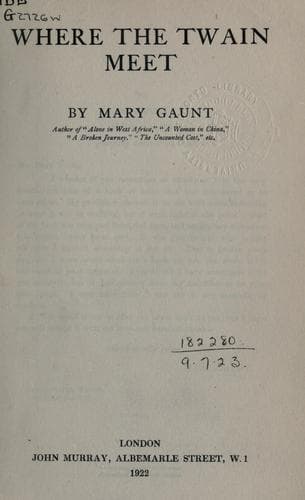
Black people -- Jamaica; Jamaica; Slavery -- Jamaica
We came into sight of Jamaica in the late afternoon and sailed along the
south coast as the shadows were falling. A well-wooded country we saw,
as its first discoverer must have seen more than four hundred years
before, a land of steep mountains and deep valleys, with here and there
patches of vivid green that, those who knew, told us were the sugar
plantations that were the gold mines of Jamaica in the sugar boom. And
the mists rose up from the valleys, and the shadows grew deeper and the
day died in a glory of red and gold, a sight so common that no one
takes note of it; and the night with a sky of velvet, embroidered
with diamonds, crystal clear, came sweeping down upon us--a cloak of
darkness--as we steamed into Kingston Harbour.
Columbus did not land in Jamaica on his first voyage, but he undoubtedly
saw it, as we saw it, many and many a time. The memory of him was with
me still as we landed. What to me were the comforts of the Myrtle Bank
Hotel set right in Kingston, or of the Constant Spring out at the foot
of the mountains? No, that is ungrateful. As an old traveller, no one
can appreciate better than I the comforts of a good hotel. But as I
dreamt on a comfortable steamer, so I dreamt more vividly of the past
on the verandah of the Myrtle Bank, looking down the palm avenue to
the sea. The night air was heavy with spicy scents, and the fireflies
wheeled and danced, living lights in the dark shadows under the
greenery, all the voluptuousness of the tropics was here in this land
of romance which Columbus found for Spain, and that later was the first
great tropical possession of Britain. But Jamaica has been an unlucky
land, and I doubt whether Britain has yet realised its value. It might
be called the land of lost opportunities, so often have those who
governed it let its good things pass by. I doubt whether Spain herself
got any great good from this new possession; certainly Columbus found
small peace here. With “his people dismayed and downhearted, almost all
his anchors lost and his vessels bored as full of holes as a honeycomb,
driven by opposing winds and currents, he put into Puerto Bueno, in
the parish of Saint Ann's. But not finding sufficient food or water”
(probably water, as it is now known as Dry Harbour), “he sailed east
again and put into a cove since known as Don Cristopher's Cove.” His
ships were mere wrecks, those brave “castled” ships that had sailed from
Spain with such high hopes, and it was very certain that whatever might
happen to them, back to Spain they could not go. It was a terrible
situation, an awful strait in which those brave mariners found
themselves over four hundred years ago.
“You must see the parish of St Ann,” said a Jamaican lady to me; “it is
all green grass and white Indian cattle, and dark green pimento trees.”
Public-domain text, read in full here on John Shaqi.
Reviews
Reviews
No reviews yet
Be the first to share your thoughts on this work.
Join the Discussion
Join the discussion
Sign in to leave a comment or review.
Sign InorCreate an account