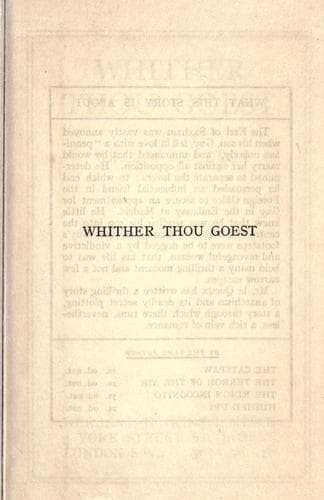
Adventure stories; Anarchists -- Fiction; British -- Spain -- Fiction; Madrid (Spain) -- Fiction
"Lord Saxham, Lady Mary, I most heartily approve Isobel's attitude. I
am sure Mr Rossett feels as I do in this matter. If he deserted his
post at this juncture, he would be like the soldier who runs away on the
battlefield."
Lord Saxham looked at the beautiful, slender girl, so noble in her
self-sacrificing love.
"My dear," he said, in tones that were a little unsteady, "you are a
wonderful woman. Guy could not have chosen more wisely. I am sorry--
very sorry--" He broke off. It was not perhaps precisely the moment to
apologise for his previous obstinacy, his rancour against "the little
girl who lived in a cottage at Eastbourne."
Lady Mary went round the table, put her arms round her, and kissed her
warmly.
"You are a brave and beautiful darling," she said, with a woman's
enthusiasm. "You have taught both my father and myself a lesson in
unselfishness. God grant that our dear Guy comes back to us safe and
sound."
CHAPTER EIGHT.
A tall, lean man of about sixty years of age, of dignified appearance,
came out of a house in Fitzjohn's Avenue, Hampstead, and walked slowly
in the direction of the station at Swiss Cottage.
He was a very aristocratic-looking person; you might have taken him for
a retired ambassador, except for the fact that retired ambassadors do
not live in the neighbourhood of Finchley Road. At the first glance you
might have thought he was an Englishman, with his clear complexion, his
short, pointed beard. A closer inspection revealed the distinguishing
traits of the foreigner. But even then you would have been inclined to
put him down as a Frenchman, rather than a Spaniard.
Ferdinand Contraras, such was his name, was one of the principal leaders
of the world-wide anarchist movement. A man of learning and education,
he had worked it out to his own satisfaction that anarchy was the cure
for all social evils. A man of considerable wealth, he had devoted the
greater portion of his possessions to the spreading of this particular
propaganda. His zeal in the great cause burnt him with a consuming
fire.
One is confronted with these anomalies in all countries--men of family
and refinement, reaching out sincere hands to the proletariat, and
welcoming them into a common brotherhood.
Mirabeau led the French Revolution in its first steps, an aristocrat of
the first water. Tolstoi, equally an aristocrat, preached very
subversive doctrines.
Ferdinand Contraras, from conviction, sentimentality, or some other
equally compelling motives, hated his own order, and devoted himself
heart and soul to the service of the masses as against the classes. He
had spent much more than half his very considerable fortune on the
necessary propaganda of his principles. From the house in Fitzjohn's
Avenue he, in conjunction with a few other enthusiastic spirits,
controlled the policy which was directed to upset an old and effete
world and construct a new and perfect one on the ruins of the old.
Public-domain text, read in full here on John Shaqi.
Reviews
Reviews
No reviews yet
Be the first to share your thoughts on this work.
Join the Discussion
Join the discussion
Sign in to leave a comment or review.
Sign InorCreate an account