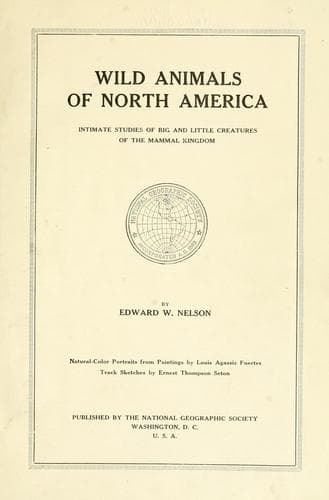
Wild Animals of North America: Intimate Studies of Big and Little Creatures of the Mammal KingdomNelson, Edward William
Science
Wild Animals of North America: Intimate Studies of Big and Little Creatures of the Mammal Kingdom
Nelson, Edward William
Mammals -- North America
It is rarely that an observer is located where he can study the
every-day lives of little animals like the meadow mice and at the same
time go on with his regular occupation. At one of my mountain camps in
Mexico I fortunately pitched my tent on a patch of lawn-like grass in
front of the ruins of an abandoned hut. Runways of field mice formed a
network everywhere in the surrounding growth of grass and weeds.
[Illustration: ANTELOPE JACK RABBIT
_Lepus alleni_]
For hours at a time as I worked quietly in the tent the many mice,
unconscious of my presence, came silently along their little roads
through the tall vegetation to the border of the short grass. Just
within the shelter of the tall growth they would each time stop and
remain watchfully immovable for a half minute, and then, if everything
was quiet, make a swift run two or three feet into the open, bite
off a tender little grass blade and dash back to the sheltered road.
There they would sit up squirrel-like, holding the grass blades in
their forepaws and eating them rapidly, or would sometimes carry the
food back to the burrows.
[Illustration: CALIFORNIA JACK RABBIT
_Lepus californicus_]
[Illustration: VARYING HARE, or SNOWSHOE RABBIT
_Lepus americanus_]
Occasionally as the mice darted into the open I made a slight squeaking
noise and perhaps two or three in sight at the time would instantly
turn and dash back into the sheltered road, sometimes not reappearing
for a long time. Again and again I saw them come into the open for
food, and before securing it suddenly scamper back in a panic without
apparent cause for alarm.
Eternal vigilance is the only defense such animals have, and despite
their watchfulness myriads of them are devoured daily by a large number
of rapacious birds and mammals, including even such huge beasts as
the great Alaskan brown and grizzly bears, which dig them from their
burrows on grassy northern mountain sides.
Despite their numerous natural enemies field mice are so prolific they
continue among the most destructive of agricultural pests. They are so
obscure and the damage by a single mouse appears so insignificant, that
it requires a knowledge of their habits, their wide distribution, and
their enormous numbers to appreciate what a serious drain they are on
the farmer’s income, even when in their normal numbers.
In summer they feed on growing grass, clover, alfalfa, and grain,
seeds, bulbs, root crops, and garden vegetables. In fall they
congregate under shocks to feed on the grain, and in winter often do
enormous injury to young or even well-grown fruit and other trees by
gnawing off the bark on the base of the trunk and roots, sometimes in
this way destroying entire orchards and nurseries.
Public-domain text, read in full here on John Shaqi.
Reviews
Reviews
No reviews yet
Be the first to share your thoughts on this work.
Elsewhere in the archive
Join the Discussion
Join the discussion
Sign in to leave a comment or review.
Sign InorCreate an account