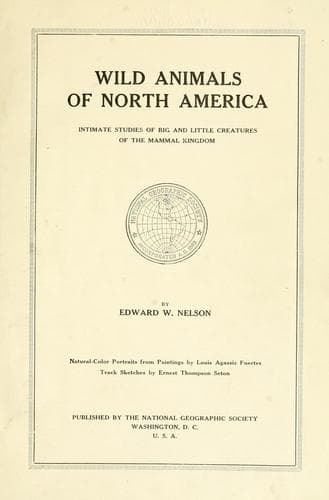
Wild Animals of North America: Intimate Studies of Big and Little Creatures of the Mammal KingdomNelson, Edward William
Science
Wild Animals of North America: Intimate Studies of Big and Little Creatures of the Mammal Kingdom
Nelson, Edward William
Mammals -- North America
Although usually not quite so noisy and self-assertive as the
irrepressible little red blusterer of eastern forests, the Douglas
squirrel is also notable for its rollicking, chattering character and
sometimes cannot be outdone in its amusing displays of aggressive
impudence. When the animals are numerous the air at times resounds with
their call notes or songs, one answering the other, now near and now
far, until the somber depths of the mighty forest seems peopled with a
multitude of these joyous furry sprites. Their song, resembling that
of the red squirrel, is a rapid trilling or bubbling series of notes,
long drawn out and sometimes varied by cadences. It is so musical that
it seems more like the song of some strange bird than of a mammal. When
these squirrels are not common they are much less given to song and
seem subdued and shy, as though impressed by the vast loneliness of
their deep forest haunts.
At mating time, early in spring, they are especially noisy, and again
in summer when the first litter of young are out trying their youthful
pipes in expression of their cheerful well being. They frequently come
down on a low branch or on the trunk of a tree and chatter, bark, and
scold at man, dog, or other intruder, now rushing up and down, or
making little dashes around the tree trunk, their necks outstretched
and tails flirting with a great show of anger and contempt highly
entertaining to see. They are restlessly active at all seasons of
the year and habitually chase one another through the forest with an
appearance of rollicking fun which may many times be in more deadly
earnest than appears to the casual observer.
In winter their tracks in the snow lead from tree to tree, along the
tops of logs and fences, and in all directions to hidden stores of
food, which they appear to be able to locate with unerring certainty
under the snow. An adventurous spirit leads them to race away from the
forest, along fence-tops, to pay visits to ranch buildings and even
to villages and small towns. Like their eastern relative, the Douglas
squirrels are omnivorous, feeding on the seeds of all the conifers in
their range, including spruces, firs, pines, and redwoods, and also
upon acorns, and a great variety of other seeds, fruits, and mushrooms,
insects, birds’ eggs, young birds, and any other meat they can find.
Owing to their habit of interfering with meat-baited traps, they are
a nuisance to trappers. They frequently visit orchards and carry off
apples and pears, from which they extract the seeds. They have been
seen also to visit the wounds made on a willow trunk by sapsuckers to
drink the flowing sap. Their feet and the fur about their mouths are
often much gummed with pitch from working on pine cones.
[Illustration: LITTLE SPOTTED SKUNK
_Spilogale putorius_]
[Illustration: COMMON SKUNK
_Mephitis mephitis_]
Public-domain text, read in full here on John Shaqi.
Reviews
Reviews
No reviews yet
Be the first to share your thoughts on this work.
Elsewhere in the archive
Join the Discussion
Join the discussion
Sign in to leave a comment or review.
Sign InorCreate an account