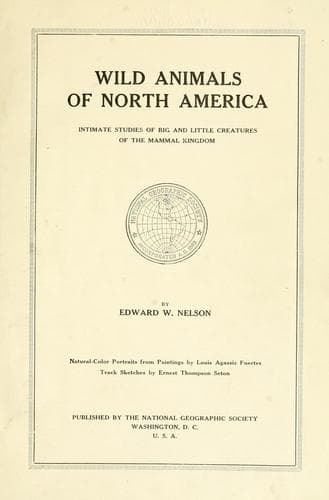
Wild Animals of North America: Intimate Studies of Big and Little Creatures of the Mammal KingdomNelson, Edward William
Science
Wild Animals of North America: Intimate Studies of Big and Little Creatures of the Mammal Kingdom
Nelson, Edward William
Mammals -- North America
With this stimulated increase of rodent life goes a related increase
in the number of birds and mammals which prey upon them. The close
relationship between the numbers of rodents and of the carnivores which
prey upon them is shown by the records of the Hudson Bay Company, in
which with the increase or decrease in the abundance of varying-hare
skins secured by the fur traders goes a corresponding increase or
decrease in the number of lynx skins taken.
[Illustration:
Photograph by Howard Taylor Middleton
IT IS NOT VANITY WHICH PROMPTS THIS MOUSE TO TAKE ITS OWN PICTURE
The bait is a grain of corn attached to one end of a thread; the other
end operates the camera shutter; but the pose is almost “studied”.]
After rodents become enormously abundant, if food becomes scarce
they sometimes make extended migrations, during which vast numbers
swarm across the country, like the lemmings of the North or the gray
squirrels during their historic migrations of early days in the eastern
United States. At such times vast numbers of the wandering hordes
perish; epidemic disease also plays its part in reducing their numbers.
Nature thus is self-limiting in restraining the permanent increase of
any species beyond the numbers needed to preserve its balance.
The advent of man in new regions with his clearing of forests,
cultivation of the soil, and destruction of animal life for food or
other purposes, quickly upsets the balance of nature, and some species
are much reduced in numbers or disappear, while others, especially
among the smaller kinds of mammals, may greatly benefit through added
food supplies, and then increase until they become a pest, to be
destroyed by the farmer as a measure of self-protection.
ANIMALS THAT SEEK SAFETY IN DARKNESS
For some reason, perhaps owing to their small size and defenselessness
against birds and beasts of prey, the great majority of small mammals,
including hundreds of species and untold millions of individuals, are
nocturnal or live such obscure and hidden lives they are unknown except
to the comparatively few people who go much afield, with all their
powers of observation alert by day and by night. Many of the mainly
nocturnal species pursue minor activities by day, where shelter of one
kind or another gives them a reasonable feeling of security.
Under the revealing light of day most small mammals, especially the
rodents, are extremely watchful and timid, leading lives filled with
alarms which commonly end in tragic deaths. By night they appear to
have far greater confidence; yet this also is a time of imminent danger
from the owls and many beasts of prey then prowling about.
[Illustration:
Photograph by Howard Taylor Middleton
A NEST OF YOUNG WHITE-FOOTED MICE
One form of this small animal has been found living at an elevation of
from 15,000 to 16,000 feet on Mt. Orizaba, Mexico, the highest record
of any North American mammal.]
Public-domain text, read in full here on John Shaqi.
Reviews
Reviews
No reviews yet
Be the first to share your thoughts on this work.
Elsewhere in the archive
Join the Discussion
Join the discussion
Sign in to leave a comment or review.
Sign InorCreate an account