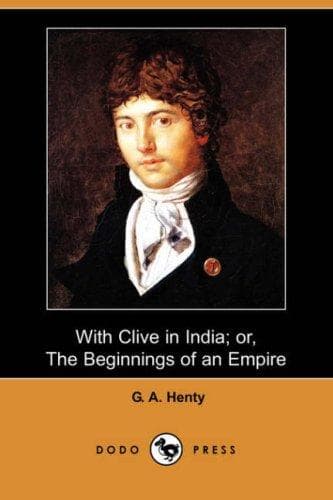
With Clive in India; Or, The Beginnings of an EmpireHenty, G. A. (George Alfred)
History
With Clive in India; Or, The Beginnings of an Empire
Henty, G. A. (George Alfred)
India -- History -- British occupation, 1765-1947 -- Fiction
A less determined man than Clive would, no doubt, have accepted the
proposal. Calcutta was still besieged by a vastly superior force,
supplies of all kinds were running short, the attack of the previous
day had been a failure. He knew, however, the character of Asiatics,
and determined to play the game of bounce. The very offer of the nabob
showed him that the latter was alarmed. He therefore wrote to him,
saying that he had simply marched his troops through his highness'
camp to show him of what British soldiers were capable; but that he
had been careful to avoid hurting anyone, except those who actually
opposed his progress. He concluded by expressing his willingness to
accede to the nabob's proposal, and to negotiate.
The nabob took it all in. If all this destruction and confusion had
been wrought by a simple march through his camp, what would be the
result if Clive were to take into his head to attack him in earnest?
He therefore at once withdrew his army three miles to the rear, and
opened negotiations. He granted all that the English asked: that all
the property and privileges of the Company should be restored, that
all their goods should pass into the country free of tax, that all the
Company's factories, and all moneys and properties belonging to it or
its servants, should be restored or made good, and that permission
should be given to them to fortify Calcutta as they pleased.
Having agreed to these conditions, the nabob, upon the 11th of
February, retired with his army to his capital; leaving Omichund with
a commission to propose to the English a treaty of alliance, offensive
and defensive, against all enemies. This proposal was a most
acceptable one, and Clive determined to seize the opportunity to crush
the French. His previous experiences, around Madras, had taught him
that the French were the most formidable rivals of England in India.
He knew that large reinforcements were on their way to Pondicherry,
and he feared that the nabob, when he recovered from his panic, might
regret the conditions which he had granted, and might ally himself
with the French in an effort, again, to expel the English.
He therefore determined at once to attack the French. The deputies
sent by Monsieur Renault, the governor of Chandranagore, had been kept
waiting from day to day, under one pretence or another; and they now
wrote to the governor that they believed that there was no real
intention, on the part of the English, to sign an agreement of
neutrality with him; and that they would be the next objects of
attack. Monsieur Renault immediately sent messengers to the nabob,
urging upon him that, if the English were allowed to annihilate the
French, they would be more dangerous enemies than ever; and
Suraja-u-Dowlah, having now recovered from his terror, wrote at once
to Calcutta, peremptorily forbidding any hostilities against the
French.
Public-domain text, read in full here on John Shaqi.
Reviews
Reviews
No reviews yet
Be the first to share your thoughts on this work.
Elsewhere in the archive
Join the Discussion
Join the discussion
Sign in to leave a comment or review.
Sign InorCreate an account