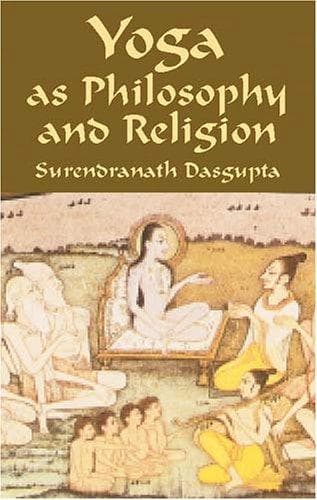
Yoga as philosophy and religionDasgupta, Surendranath
Religion
Yoga as philosophy and religion
Dasgupta, Surendranath
Hindu philosophy; Patañjali; Yoga
Now that state of samādhi in which the mind seems to become one with the
thing, together with its name and concept, is the lowest stage of
samādhi called savitarka; it is the lowest stage, because here the gross
object does not appear to the mind in its true reality, but only in the
false illusory way in which it appears associated with the concept and
the name in ordinary life. This state does not differ from ordinary
conceptual states, in which the particular thing is not only associated
with the concepts and their names, but also with other concepts and
their various relations; thus a cow will not only appear before the mind
with its concept and name, but also along with other relations and
thoughts associated with cows, as for example—“This is a cow, it belongs
to so and so, it has so many hairs on its body, and so forth.” This
state is therefore the first stage of samādhi, in which the mind has not
become steady and is not as yet beyond the range of our ordinary
consciousness.
The nirvitarka stage arises from this when the mind by its steadiness
can become one with its object, divested of all other associations of
name and concept, so that it is in direct touch with the reality of the
thing, uncontaminated by associations. The thing in this state does not
appear to be an object of my consciousness, but my consciousness
becoming divested of all “I” or “mine,” becomes one with the object
itself; so that there is no such notion here as “I know this,” but the
mind becomes one with the thing, so that the notion of subject and
object drops off and the result is the one steady transformation of the
mind into the object of its contemplation. This state brings home to us
real knowledge of the thing, divested from other false and illusory
associations, which far from explaining the real nature of the object,
serves only to hide it. This samādhi knowledge or prajñā is called
nirvitarka. The objects of this state may be the gross material objects
and the senses.
Public-domain text, read in full here on John Shaqi.
Reviews
Reviews
No reviews yet
Be the first to share your thoughts on this work.
Elsewhere in the archive
Join the Discussion
Join the discussion
Sign in to leave a comment or review.
Sign InorCreate an account