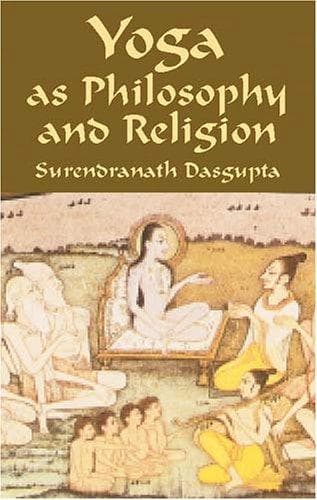
Yoga as philosophy and religionDasgupta, Surendranath
Religion
Yoga as philosophy and religion
Dasgupta, Surendranath
Hindu philosophy; Patañjali; Yoga
(13) Base of the throat. │ „ │Subdual of hunger and
│ │ thirst.
(14) Tortoise tube. │Saṃyama.│Steadiness.
(15) Coronal light. │ „ │Vision of the perfected
│ │ ones—the knowledge of the
│ │ seer, or all knowledge by
│ │ prescience.
(16) Heat. │ „ │Knowledge of the mind.
(17) Purusha. │ „ │Knowledge of purusha.
(18) Gross nature subtle │ „ │Control over the element
pervasiveness and │ │ from which follows
purposefulness. │ │ attenuation, perfection of
│ │ the body and
│ │ non-resistance by their
│ │ characteristics.
(19) Act, substantive appearance,│ „ │Mastery over the senses;
egoism, pervasiveness and │ │ thence quickness of mind,
purposefulness of │ │ unaided mental perception
sensation. │ │ and mastery over the
│ │ pradhāna.
─────────────────────────────────┴────────┴────────────────────────────
These vibhūtis, as they rise with the performance of the processes of
Yoga, gradually deepen the faith _śraddha_ of the Yogin in the
performance of his deeds and thus help towards his main goal or ideal by
always pushing or drawing him forward towards it by the greater and
greater strengthening of his faith. Divested from the ideal, they have
no value.
CHAPTER XIV
GOD IN YOGA
After describing the nature of karmayoga, and the way in which it leads
to jñānayoga, we must now describe the third and easiest means of
attaining salvation, the bhaktiyoga and the position of Īśvara in the
Yoga system, with reference to a person who seeks deliverance from the
bonds and shackles of avidyā.
Īśvara in the Yoga system is that purusha who is distinguished from all
others by the fact of his being untouched by the afflictions or the
fruits of karma. Other purushas are also in reality untouched by the
afflictions, but they, seemingly at least, have to undergo the
afflictions and consequently birth and rebirth, etc., until they are
again finally released; but Īśvara, though he is a purusha, yet does not
suffer in any way any sort of bondage. He is always free and ever the
Lord. He never had nor will have any relation to these bonds. He is also
the teacher of the ancient teachers beyond the range of conditioning
time.
Public-domain text, read in full here on John Shaqi.
Reviews
Reviews
No reviews yet
Be the first to share your thoughts on this work.
Elsewhere in the archive
Join the Discussion
Join the discussion
Sign in to leave a comment or review.
Sign InorCreate an account