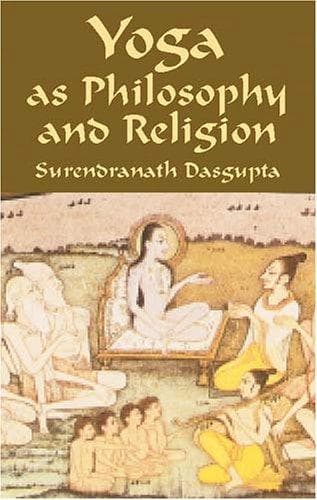
Yoga as philosophy and religionDasgupta, Surendranath
Religion
Yoga as philosophy and religion
Dasgupta, Surendranath
Hindu philosophy; Patañjali; Yoga
Avidyā manifests itself in different forms: (1) as the afflictions
(_kleśa_) of asmitā (egoism), rāga (attachment), dvesha (antipathy)
and abhiniveśa (self-love); (2) as doubt and intellectual error; (3)
as error of sense. All these manifestations of avidyā are also the
different forms of viparyyaya or bhrama (error, illusion, mistake).
This bhrama in Yoga is the thinking of something as that which it is
not (_anyathākhyāti_). Thus we think the miserable worldly existence
as pleasurable and attribute the characteristics of prakṛti to purusha
and vice versa. All afflictions are due to this confusion and
misjudgment, the roots of which stay in the buddhis in all their
transmigrations from one life to another. Sāṃkhya, however, differs
from Yoga and thinks that all error (_avidyā_ or _bhrama_) is due only
to non-distinction between the true and the untrue. Thus
non-distinction (_aviveka_) between prakṛti and purusha is the cause
of all our miserable mundane existence. Avidyā and aviveka are thus
synonymous with Sāṃkhya.
------------------------------------------------------------------------
TRANSCRIBER’S NOTES
● Typos fixed; non-standard spelling and dialect retained.
● Used numbers for footnotes, placing them all at the end of the last
chapter.
● Enclosed italics font in _underscores_.
Public-domain text, read in full here on John Shaqi.
Reviews
Reviews
No reviews yet
Be the first to share your thoughts on this work.
Elsewhere in the archive
Join the Discussion
Join the discussion
Sign in to leave a comment or review.
Sign InorCreate an account