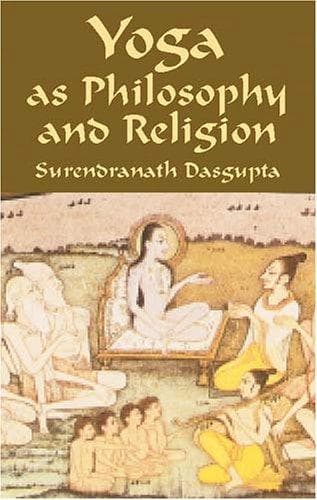
Yoga as philosophy and religionDasgupta, Surendranath
Religion
Yoga as philosophy and religion
Dasgupta, Surendranath
Hindu philosophy; Patañjali; Yoga
We have seen that the karmāśaya has three fructifications, viz. jāti,
āyush and bhoga. Now generally the karmāśaya is regarded as ekabhavika
or unigenital, i.e. it accumulates in one life. Ekabhava means one life
and ekabhavika means the product of one life, or accumulated in one
life. Regarded from this point of view, it may be contrasted with the
vāsanās which remain accumulated from thousands of previous lives since
eternity, the mind, being pervaded all over with them, as a fishing-net
is covered all over with knots. This vāsanā results from memory of the
experiences of a life generated by the fructification of the karmāśaya
and kept in the citta in the form of potency or impressions (saṃskāra).
Now we have previously seen that the citta remains constant in all the
births and rebirths that an individual has undergone from eternity; it
therefore keeps the memory of those various experiences of thousands of
lives in the form of saṃskāra or potency and is therefore compared with
a fishing-net pervaded all over with knots. The vāsanās therefore are
not the results of the accumulation of experiences or their memory in
one life but in many lives, and are therefore called anekabhavika as
contrasted with the karmāśaya representing virtuous and vicious actions
which are accumulated in one life and which produce another life, its
experiences and its life-duration as a result of fructification
(vipāka). This vāsanā is the cause of the instinctive tendencies, or
habits of deriving pleasures and pains peculiar to different animal
lives.
Thus the habits of a dog-life and its peculiar modes of taking its
experiences and of deriving pleasures and pains are very different in
nature from those of a man-life; they must therefore be explained on the
basis of an incipient memory in the form of potency, or impressions
(saṃskāra) of the experiences that an individual must have undergone in
a previous dog-life.
Now when by the fructification of the karmāśaya a dog-life is settled
for a person, his corresponding vāsanās of a previous dog-life are at
once revived and he begins to take interest in his dog-life in the
manner of a dog; the same principle applies to the virtue of individuals
as men or as gods (IV. 8).
If there was not this law of vāsanās, then any vāsanā would be revived
in any life, and with the manifestation of the vāsanā of animal life a
man would take interest in eating grass and derive pleasure from it.
Thus Nāgeśa says: “Now if those karmas which produce a man-life should
manifest the vāsanās of animal lives, then one might be inclined to eat
grass as a man, and it is therefore said that only the vāsanās
corresponding to the karmas are revived.”
Public-domain text, read in full here on John Shaqi.
Reviews
Reviews
No reviews yet
Be the first to share your thoughts on this work.
Elsewhere in the archive
Join the Discussion
Join the discussion
Sign in to leave a comment or review.
Sign InorCreate an account