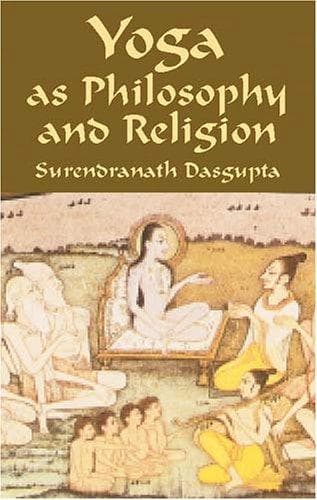
Yoga as philosophy and religionDasgupta, Surendranath
Religion
Yoga as philosophy and religion
Dasgupta, Surendranath
Hindu philosophy; Patañjali; Yoga
The karmāśaya of both kinds described above ripens into life-state,
life-time and life-experience. These are called the three ripenings or
vipākas of the karmāśaya; and they are conducive to pleasure or pain,
according as they are products of puṇyakarmāśaya (virtue) or pāpa
karmāśaya (vice or demerit). Many karmāśayas combine to produce one
life-state; for it is not possible that each karma should produce one or
many life-states, for then there would be no possibility of experiencing
the effects of the karmas, because if for each one of the karmas we had
one or more lives, karmas, being endless, space for obtaining lives in
which to experience effects would not be available, for it would take
endless time to exhaust the karmas already accumulated. It is therefore
held that many karmas unite to produce one life-state or birth (jāti)
and to determine also its particular duration (āyush) and experience
(bhoga). The virtuous and sinful karmāśayas accumulated in one life, in
order to produce their effects, cause the death of the individual and
manifest themselves in producing his rebirth, his duration of life and
particular experiences, pleasurable or painful. The order of undergoing
the experiences is the order in which the karmas manifest themselves as
effects, the principal ones being manifested earlier in life. The
principal karmas here refer to those which are quite ready to generate
their effects. Thus it is said that those karmas which produce their
effects immediately are called primary, whereas those which produce
effects after some delay are called secondary. Thus we see that there is
continuity of existence throughout; when the karmas of this life ripen
jointly they tend to fructify by causing another birth as a means to
which death is caused, and along with it life is manifested in another
body (according to the dharma and adharma of the karmāśaya) formed by
the prakṛtyāpūra (cf. the citta theory described above); and the same
karmāśaya regulates the life-period and experiences of that life, the
karmāśayas of which again take a similar course and manifest themselves
in the production of another life and so on.
Public-domain text, read in full here on John Shaqi.
Reviews
Reviews
No reviews yet
Be the first to share your thoughts on this work.
Elsewhere in the archive
Join the Discussion
Join the discussion
Sign in to leave a comment or review.
Sign InorCreate an account