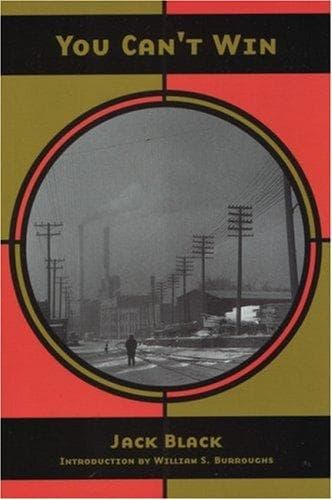
Black, Jack, 1871-1932; Criminals -- Canada -- Biography; Criminals -- United States -- Biography
“Correct, John.”
He did not seem to be much interested in my correct and prompt answers;
kept on looking at his paper. Finally he looked at me and said: “And
eight times thirteen, John?”
I was stuck again. This one froze me stiff. I got mad, red in the face.
I took pencil and paper out of my pockets, figured it out, and give him
the result. It seemed that he was taking advantage of me. Nobody at
school had ever asked me that question. I felt wronged. I thought of my
money and my two big horse pistols. If I was to be treated in this way I
would take my money and pistols and go away where I could get a square
deal. And if I did not get a square deal, I’d take it.
Father looked at the paper I gave him. “Why, you have it right, John.
That’s good, very good.” He was stroking his beard thoughtfully, and I
could not tell whether he was smiling or making a face.
Vacation was almost over. I needed new books for the coming season and
spoke to father about them one night.
“Never mind them now. We will see about them later. We are going away,
going to Kansas City. I have been promoted after all these years.”
“But I will lose my job,” I demurred.
“I’ll get you another job. Don’t worry. Do you want a regular job,
working all day, or would you like to go to school some more?”
I decided to have an all-day job, and let the school go.
“All right,” he said, “we’ll see about it.”
My father made no fuss about leaving the small town where he had spent
ten years of his life. He had no close friends or cronies. After my
mother died, he seldom spoke to any one but me, and I think he was glad
to go away. He was a cold, hard, silent Scotch-Irishman. He took no part
in social doings, never went to church, belonged to no clubs; nor was he
enough interested in politics to become a citizen and exercise the high
privilege of voting on election day.
My good-bys did not take much time. Cy was sorry to have me go. He
laboriously wrote me a fine letter of recommendation which he gave me
along with a large, worn silver watch, that wound with a key. It weighed
almost a pound, and I was proportionately proud of it. My boy friends
envied me in going away to a big city and impressed upon me the
necessity for taking my pistols with me. Unnecessary advice; I had no
intention of leaving them behind.
And last of all I hunted up old Beverly Shannon, the bad man. He was a
hooknosed old man with hard eyes and a long chin whisker dripping
tobacco juice. He had worn the Northern blue, and drew a small pension
for a “bad leg.” Times when he was half drunk, limping around town in
search of more drinks, some one would say: “Look out, ‘Bev.’ You’re
limpin’ on the wrong leg.” This always brought a string of eloquent
curses from him, and a warning that they had “better be keerful. I
hain’t stopped killin’ jest ’cause Abe Lincoln says the war’s over.”
Public-domain text, read in full here on John Shaqi.
Reviews
Reviews
No reviews yet
Be the first to share your thoughts on this work.
Join the Discussion
Join the discussion
Sign in to leave a comment or review.
Sign InorCreate an account