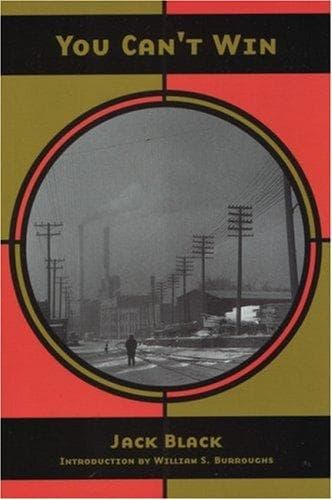
Black, Jack, 1871-1932; Criminals -- Canada -- Biography; Criminals -- United States -- Biography
“Don’t touch it, I despise it,” she burst out. “I hate these shoes.” She
put her foot up. “And this dress and every stitch of clothes on my back.
Do you know why? Because every one of them means a different man. Do you
want me to tell you about it; what a tough time I’ve had? But you
wouldn’t understand it. You’re only a kid, like I was a couple of years
ago.”
“Tell me, anyway, Julia.”
Her story, new to me then, was as old as man’s duplicity and woman’s
inherent desire to be loved and protected. Betrayed and deserted,
fearing to face her family, she stole enough of her father’s money to
take her to the city and into a hospital where her baby was born. “And,”
she continued, “I was glad when it died, it was a girl. When I was well
enough to leave the hospital they couldn’t find my clothes. Cheap as
they were, somebody had taken them. A man can go out into the street
without a hat and coat, kid, but just let a woman try it, even if she
has the nerve, and watch what happens to her. I had no money. The doctor
gave me this dress; that is, he sold it to me and I paid for it the
first time he got drunk. One of the internes traded me these shoes. He
was just a dirty little beast and didn’t wait to get drunk. Then the
hospital cook got me that hat and some cheap stockings and underclothes.
He happened to be a white man,” she said bitterly. “I suppose I would
have taken them just the same if he had been a negro or a Chinaman.
After the drunken doctor I thought of nothing but suicide, anyway. But I
had to have enough clothes to get through the street and down to the
bridge where I could jump into the river.
“The cook told me he would get me a job in a restaurant downtown and
that stopped me from going to the river. He gave me money for a couple
of night’s lodging, and something to eat, and told me where to go for a
room. He came that night to my room. When he left in the morning his
last words were: ‘I’ll go right out now and get you the job.’
“I waited all day but he never came back. He was a liar; I never saw him
again. When the third night came my money was gone. I was starving, and
the rent was due. I wanted to go down to the river then, but was so
hungry I couldn’t bring myself to do it.”
She had talked furiously, with a storm of bitter words. Now she stopped
and smiled. “Yes, this appetite of mine saved my life. I’ll never die
hungry if I can help it.
“Anyway,” she resumed, “this is the long and the short of it. About nine
o’clock that night the woman of the place came up and wanted the rent. I
told her I was broke, and asked her to stand me off for a few days till
I could get a job or give me something to do so I could earn the rent.
“What do you think she did, kid—the big, man-eater! She took me by the
arm, dragged me out into the hall and pushed me downstairs. She went
back and got my hat, that straw hat hanging up there, and threw it out
on the sidewalk after me.
Public-domain text, read in full here on John Shaqi.
Reviews
Reviews
No reviews yet
Be the first to share your thoughts on this work.
Join the Discussion
Join the discussion
Sign in to leave a comment or review.
Sign InorCreate an account