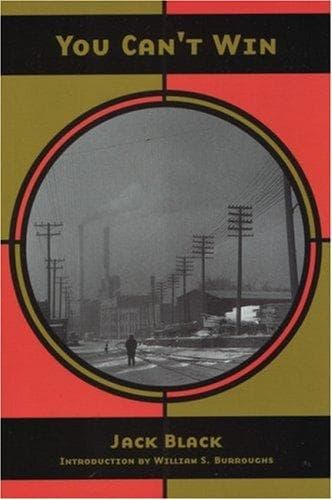
Black, Jack, 1871-1932; Criminals -- Canada -- Biography; Criminals -- United States -- Biography
When I returned with the mail I told the Superior what I heard the
postmaster say about her and her boys. She seemed very much pleased,
smiled, and said: “Boys are good when they are taught to say their
prayers and to fear God.” Shortly after, I was appointed “mailman.” I
went to the village every day after school. When the weather was fine I
walked; if it was bad, I rode in or on the coach with Tommy. This was
the first and only “appointment” of my life. I did not think it over
then, but I know now I was not given it because I said “please” or my
prayers—I got it because I had told the Superior the nice things the
postmaster said. “Please” is a good word in its place; but it does not
get one appointed to anything. It has a proper place in a small boy’s
vocabulary. And it is also much used by a certain class of prisoners and
supplicants who are always “pleasing” somebody and are never pleasant to
anybody.
Your capable beggar on the street does not say “please.” He rips off his
spiel in such exact and precise language that he gets your dime without
it. You so admire his “art” that you do not miss the “please.” His is an
art. He omits the “please” because he knows you do not use it except
when you want the mustard.
Looking back, it seems to me that our life in the convent was not
properly balanced. We had none of the rough, boisterous times so dear to
the small boy, no swimming, baseball, football. We were a little too
cloistered, too quiet, too subdued. There was no wrestling, no boxing,
no running and jumping and squabbling and shuffling and shouldering
about. Of course I learned all those later. But I learned them quickly,
too quickly—all in a bunch. That put me out of balance again. Those
exercises should have been mixed in with my studies and prayers.
One stormy day I came out of the post office and as usual handed up the
paper to Tommy, whose habit it was to glance at the headlines and return
it to me. This day, however, he found something that interested him. He
put the horses’ lines between his legs and crossed his knees on them. I
sat beside him on the box and shivered in the wind. He read on and on,
column after column, then turned to an inner page, fighting the paper in
the wind.
At last, and it seemed an hour, he folded it up carefully and returned
it to me. “Good news to-day, Tommy?” “No, boy, no good news. Bad news,
awful news, terrible news.” He spoke in an awed voice, a voice that
carried reverence. “Terrible news —Jesse James has been murdered,
murdered in cold blood and by a traitor.”
He fell silent and spoke to me no more that day. Later he told me many
things about Jesse James. He worshiped him, and like many other good
people of Missouri firmly believed that neither of the James boys ever
fired a shot except in defense of their rights.
Public-domain text, read in full here on John Shaqi.
Reviews
Reviews
No reviews yet
Be the first to share your thoughts on this work.
Join the Discussion
Join the discussion
Sign in to leave a comment or review.
Sign InorCreate an account