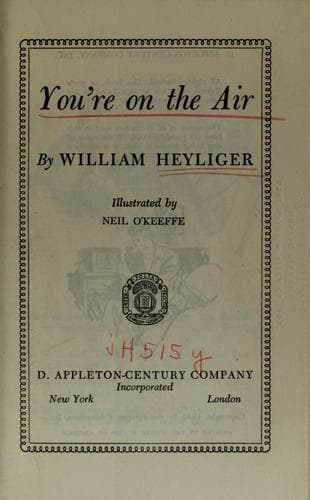
Dramatists -- Juvenile fiction; Radio acting -- Juvenile fiction; Radio broadcasting -- Juvenile fiction
Joe caught a bus at the corner. Downtown, the streets, laid out before
the coming of the automobile, were entirely too narrow for modern
traffic. The bus, in spurts of progress, triumphed over one tight,
snarled intersection after another. Stores, stores, stores went past—a
parade of stores. The parade varied. Hotels with potted palms and
canopies, office buildings, Munson’s eight-story department store, the
banks. They crept past a store with a long black and gold sign above the
door and windows: LAW BLANKS—STATIONERY—BOOKS—OFFICE SUPPLIES. A
gold-lettered name on the window read: THOMAS CARLIN.
Joe dropped off at a stagnated corner and walked up Royal Street. The
luncheon-hour crowds jostled him, threw him out of step, got in his way.
His fascinated eyes never left a red neon sign running down the face of
a stone building:
F
K
I
P
The building’s entrance was narrow. A loudspeaker in the hall rasped out
the station’s program of the moment. An elevator disgorged a group of
noisy musicians; a fat man with a cello had trouble worming his way out
through the door. The elevator shot upward, while its own speaker
continued the program.
“Fourth,” said Joe.
He stepped out into a cheerful reception-room done in blue leather. Here
another speaker gave forth FKIP’s gift to the air waves. The blonde,
good-looking girl at the reception-desk smiled. “Back again?”
Joe managed an uncertain grin. People lounged on the blue leather
settees built out from the windows and the walls; people occupied the
scattered blue chairs. Too many people around to ask about auditions.
A man burst into the reception-room out of nowhere, made a sprint across
its length, and disappeared to the right toward the broadcasting
studios. The blonde girl glanced at the wall clock.
“He’d better step,” she said as if this were an everyday occurrence. “He
has twenty-two seconds.”
The radio program signed off. Abruptly a new voice said: “Miss America
and what she’ll wear. Munson’s brings you to-morrow’s styles—” The voice
was somewhat breathless. Joe was sure the announcer was the man who had
raced through the reception-room.
Another elevator stopped, and a woman and three girls stepped out.
Nonchalantly swinging a gold chain, the woman marched off toward the
studios and limbered up her singing voice with complete unconcern. The
three girls stared after her in round-eyed wonder.
The blonde receptionist laughed. The laugh seemed to insinuate that
everything connected with radio was slightly wacky.
Joe said an abashed: “Guess I’ll look around.”
A turn to the right out of the reception-room brought him to a corridor.
Another speaker, set in the corridor wall, continued to tell him what
Miss America would wear. He pushed against a door marked:
Studios—Quiet—No Smoking. The door closed on his heels.
Public-domain text, read in full here on John Shaqi.
Reviews
Reviews
No reviews yet
Be the first to share your thoughts on this work.
Join the Discussion
Join the discussion
Sign in to leave a comment or review.
Sign InorCreate an account