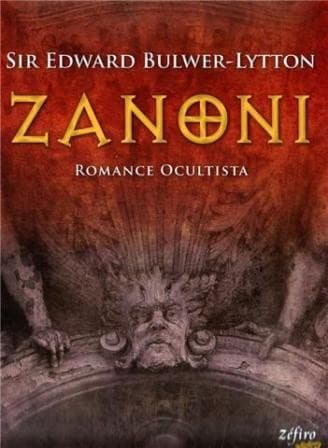
Bulwer has himself justly characterised this work, in the Introduction,
as a romance and not a romance, as a truth for those who can comprehend
it, and an extravagance for those who cannot. The most careless or
matter-of-fact reader must see that the work, like the enigmatical
“Faust,” deals in types and symbols; that the writer intends to suggest
to the mind something more subtle and impalpable than that which is
embodied to the senses. What that something is, hardly two persons will
agree. The most obvious interpretation of the types is, that in Zanoni
the author depicts to us humanity, perfected, sublimed, which lives
not for self, but for others; in Mejnour, as we have before said, cold,
passionless, self-sufficing intellect; in Glyndon, the young Englishman,
the mingled strength and weakness of human nature; in the heartless,
selfish artist, Nicot, icy, soulless atheism, believing nothing, hoping
nothing, trusting and loving nothing; and in the beautiful, artless
Viola, an exquisite creation, pure womanhood, loving, trusting and
truthful. As a work of art the romance is one of great power. It is
original in its conception, and pervaded by one central idea; but
it would have been improved, we think, by a more sparing use of the
supernatural. The inevitable effect of so much hackneyed diablerie--of
such an accumulation of wonder upon wonder--is to deaden the impression
they would naturally make upon us. In Hawthorne’s tales we see with what
ease a great imaginative artist can produce a deeper thrill by a far
slighter use of the weird and the mysterious.
Public-domain text, read in full here on John Shaqi.
Reviews
Reviews
No reviews yet
Be the first to share your thoughts on this work.
Join the Discussion
Join the discussion
Sign in to leave a comment or review.
Sign InorCreate an account