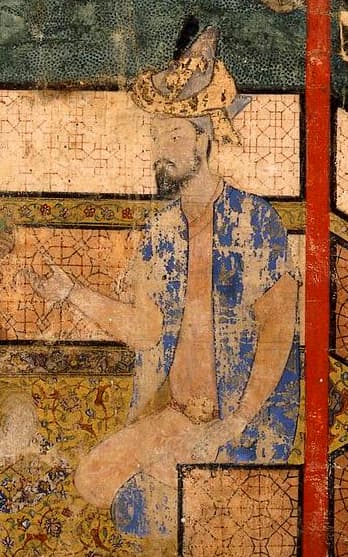
Life
Humayun succeeded Babur in 1530 but was driven from India by the Afghan Sher Shah Suri, spending years in exile, including at the Safavid court in Persia. With Persian help he reconquered Delhi in 1555, only to die months later in 1556 from a fall on his library stairs.
The Struggle
His reign was defined by struggle and loss: defeated by Sher Shah at Chausa and Kannauj, betrayed by his own brothers, and forced into a long, humiliating exile before his improbable return to power.
Teachings & Morals
Remembered as cultured, generous, and interested in astrology and the arts but often irresolute, Humayun brought Persian painters and refinement to the Mughal court during and after his exile, shaping the artistic flowering of his son Akbar's reign.
Wars & Conflicts
He lost the empire in battles against Sher Shah Suri (Chausa, 1539; Kannauj, 1540), and regained it by defeating the Suri successors at Sirhind (1555) with Safavid backing.
The Debates
Historical figures are debated. What follows records the major questions raised by historians and within the traditions themselves — presented for study, not verdict.
Historians debate how far his misfortunes owed to his own indecision and how much to the formidable Sher Shah and the disloyalty of his brothers; the sources, including his sister Gulbadan's memoir, give a sympathetic but frank portrait.
Legacy
Humayun's turbulent reign preserved the Mughal line through its most vulnerable years and, through the Persian influence he brought back, helped seed the cultural brilliance of the empire under Akbar. His tomb in Delhi is a landmark of Mughal architecture.