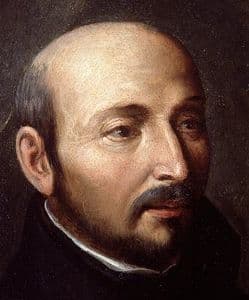
Life
Born a Basque noble around 1491, Ignatius was a soldier until a cannonball shattered his leg; during convalescence he underwent a religious conversion. After study and pilgrimage he gathered companions and founded the Society of Jesus in 1540, leading it as its first superior general until his death in 1556.
The Struggle
His path required overcoming his own worldly ambitions, physical suffering, and suspicion from the Inquisition, which investigated him more than once before his orthodoxy and his order were approved.
Teachings & Morals
Ignatius created the Spiritual Exercises, a systematic method of prayer and discernment, and shaped the Jesuits into a disciplined, mobile order devoted to education, missions, and service to the pope — "contemplatives in action."
Wars & Conflicts
A soldier before his conversion, Ignatius renounced arms for a spiritual "warfare"; the military imagery of his Exercises reflects his past, but his later battles were missionary and educational, not martial.
The Debates
Historical figures are debated. What follows records the major questions raised by historians and within the traditions themselves — presented for study, not verdict.
The Jesuits' discipline, their influence at courts, and their role in the Counter-Reformation made them admired and feared; "Jesuitical" became a term of suspicion, and the order was later suppressed for a time. Ignatius's ideal of obedience is debated as spiritual freedom or regimentation.
Legacy
Ignatius of Loyola founded the Jesuits, who became leaders in education, science, and global missions and a central force of the Catholic Reformation; his Spiritual Exercises remain widely practiced, and his influence on Catholic spirituality endures.