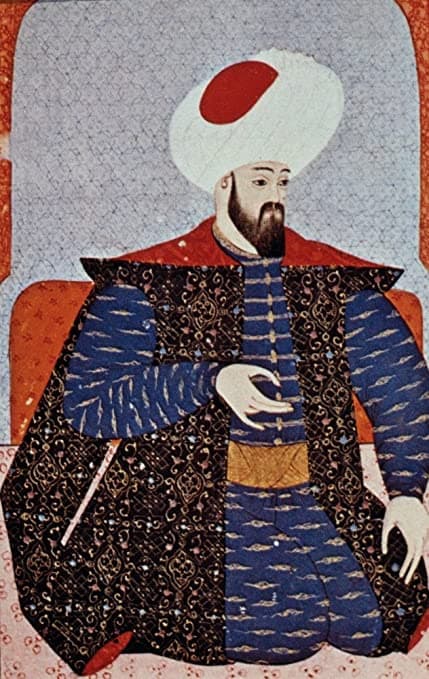
Life
Osman was a leader of a small Turkish frontier principality (beylik) in northwestern Anatolia around 1300, in the borderlands between the crumbling Seljuk realm and Byzantium. Through raiding and alliance he expanded his domain, founding the dynasty that bears his name. He died around 1324, his gains inherited by his son Orhan.
The Struggle
He operated in the volatile frontier world of ghazi warriors, holding and enlarging a petty state amid Byzantine weakness, Mongol overlordship of Anatolia, and rival Turkish beyliks — the modest beginnings of a great empire.
Teachings & Morals
Osman is remembered through later, semi-legendary tradition as a just and pious frontier leader; the famous "dream of Osman," in which a tree grows from him to shade the world, became the dynasty's founding myth of destined empire.
Wars & Conflicts
His career was one of frontier warfare against Byzantine lords in Bithynia, culminating in the siege of Bursa (completed by his son) and victories that established the beylik as a rising power.
The Debates
Historical figures are debated. What follows records the major questions raised by historians and within the traditions themselves — presented for study, not verdict.
Because contemporary sources are scarce, much about Osman is uncertain and known through later Ottoman tradition, and historians debate how much of his biography is history and how much dynastic legend. The gap between record and myth is noted.
Legacy
Osman founded the Ottoman Empire, one of the most powerful and enduring states in history; his descendants ruled from the Balkans to Arabia for over six hundred years, and the dynasty and empire carried his name to the twentieth century.