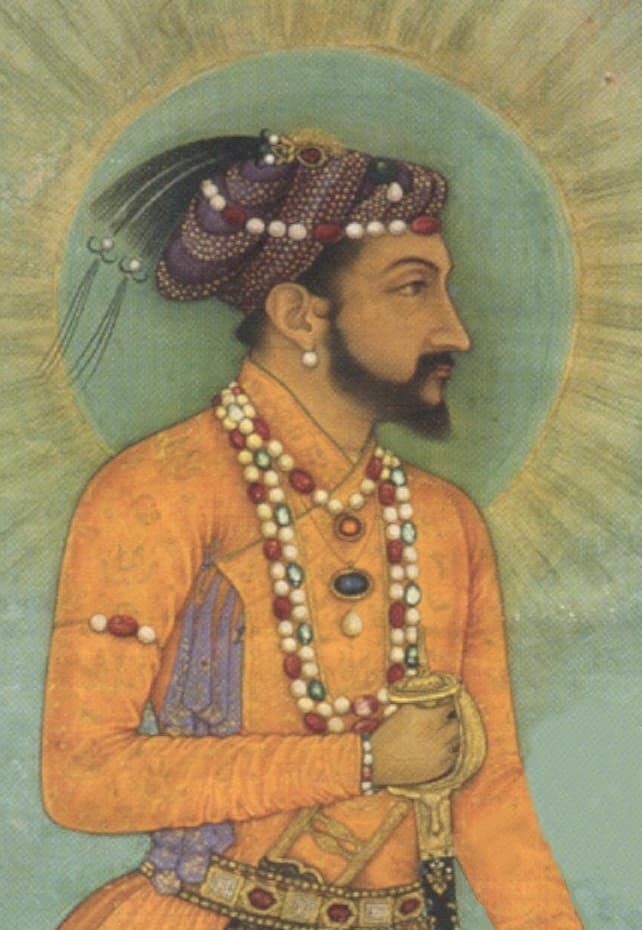
Life
Shah Jahan ruled from 1628 to 1658 over the wealthy, splendid height of the Mughal Empire. A prodigious builder, he raised the Taj Mahal as a tomb for his wife Mumtaz Mahal, the Red Fort, and the Jama Masjid. Deposed by his son Aurangzeb in 1658, he spent his last eight years imprisoned in Agra Fort, dying in 1666.
The Struggle
He came to the throne after a war of succession and the customary elimination of rivals, and his reign's later years were consumed by a bitter succession struggle among his own sons that ended with his overthrow and confinement.
Teachings & Morals
Shah Jahan is remembered above all as a patron of architecture and courtly magnificence; the Taj Mahal stands as one of the world's supreme buildings and an emblem of love, and his court set a standard of imperial splendor.
Wars & Conflicts
His reign saw costly wars in the Deccan, a failed attempt to reconquer the Timurid homeland in Central Asia, and campaigns against the Safavids over Kandahar, alongside the suppression of revolts.
The Debates
Historical figures are debated. What follows records the major questions raised by historians and within the traditions themselves — presented for study, not verdict.
His building projects and lavish court are debated for their enormous cost and the burden on the treasury, and his Deccan and Central Asian campaigns for their expense and limited gains. His deposition by Aurangzeb, and his own earlier ruthlessness in the succession, are recorded by the court chronicles.
Legacy
Shah Jahan presided over the golden age of Mughal architecture; the Taj Mahal alone secures his fame, and the monuments of his reign remain among the most celebrated in the world. His fall to Aurangzeb marked the turn toward the empire's later strains.