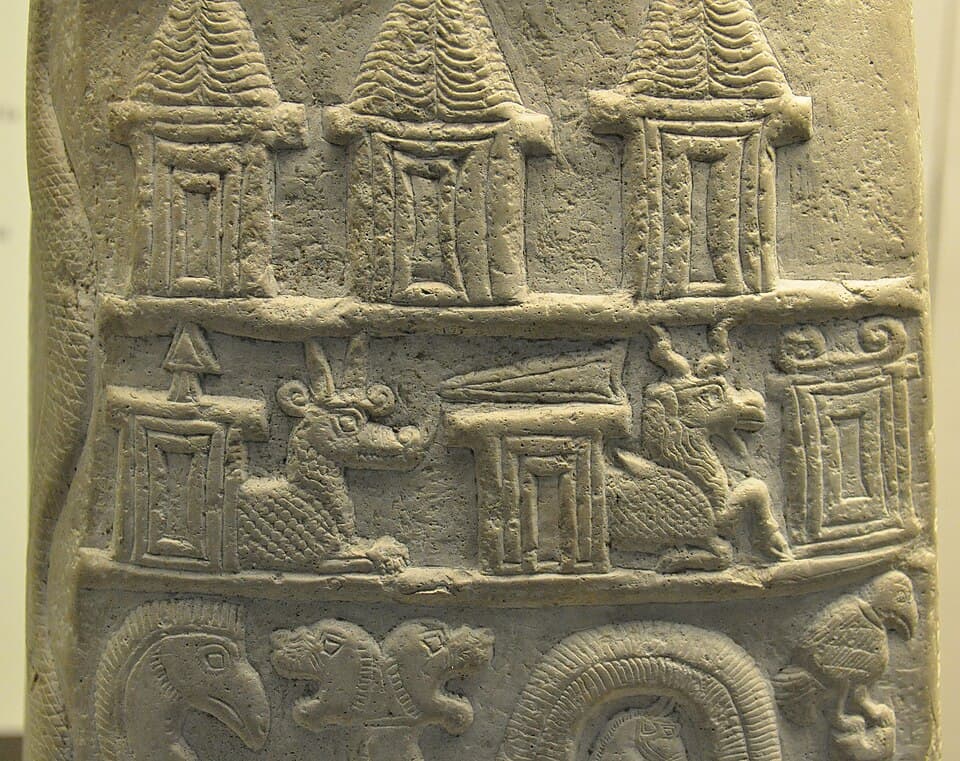
Anu
Anu or Anum, originally An, was the divine personification of the sky, king of the gods, and ancestor of many of the deities in ancient Mesopotamian religion. He was regarded as a source of both divine and human kingship, and opens the enumerations of deities in many Mesopotamian texts. At the same time, his role was largely passive, and he was not commonly worshipped. It is sometimes proposed that the Eanna temple located in Uruk originally belonged to him, rather than Inanna. While he is well attested as one of its divine inhabitants, there is no evidence that the main deity of the temple ever changed; Inanna was already associated with it in the earliest sources. After it declined, a new theological system developed in the same city under Seleucid rule, resulting in Anu being redefined as an active deity. As a result he was actively worshipped by inhabitants of the city in the final centuries of the history of ancient Mesopotamia.
Pantheon: Mesopotamian Culture: Sumerian / Akkadian Civilization: Ancient Mesopotamia Period: 3500 BCE – 500 BCE
Source: Wikipedia
Sources & Notes
Wikipedia: https://en.wikipedia.org/wiki/Anu
Discussion
Discussion
No comments yet
Start the discussion — sign in to leave a comment.
Join the Discussion
Join the discussion
Sign in to leave a comment or review.
Sign InorCreate an account