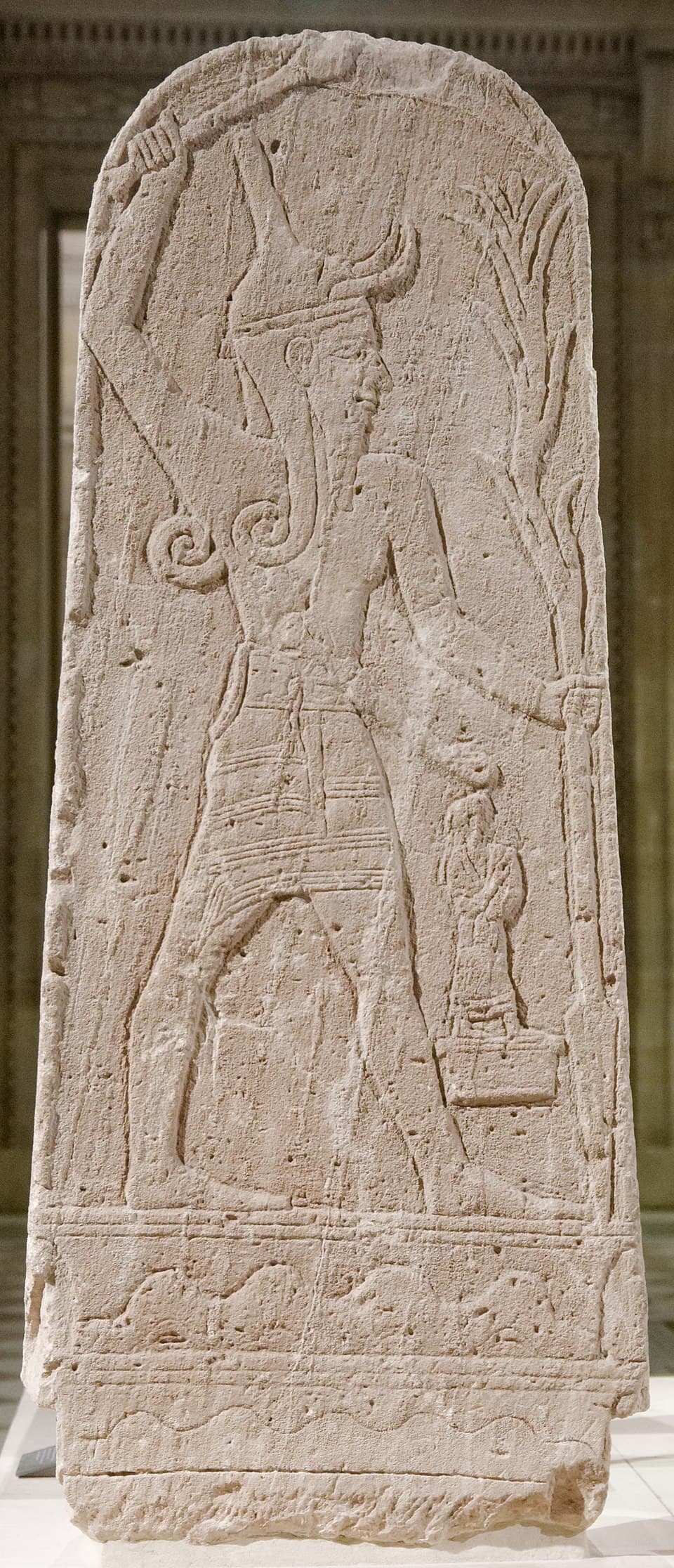
Baal
Baal, or Ba'al, was a title and honorific meaning "owner" or "lord" in the Northwest Semitic languages spoken in the Levant during antiquity. From its use among people, it came to be applied to gods. Scholars previously associated the theonym with solar cults and with a variety of unrelated patron deities, but inscriptions have shown that the name Baal was particularly associated with the storm and fertility god Hadad and his local manifestations. The Ugaritic god Baal (𐎁𐎓𐎍) is the protagonist of one of the lengthiest surviving epics from the ancient Near East, the Baal Cycle.
Pantheon: Mesopotamian Culture: Sumerian / Akkadian Civilization: Ancient Mesopotamia Period: 3500 BCE – 500 BCE
Source: Wikipedia
Sources & Notes
Wikipedia: https://en.wikipedia.org/wiki/Baal
Discussion
Discussion
No comments yet
Start the discussion — sign in to leave a comment.
Join the Discussion
Join the discussion
Sign in to leave a comment or review.
Sign InorCreate an account