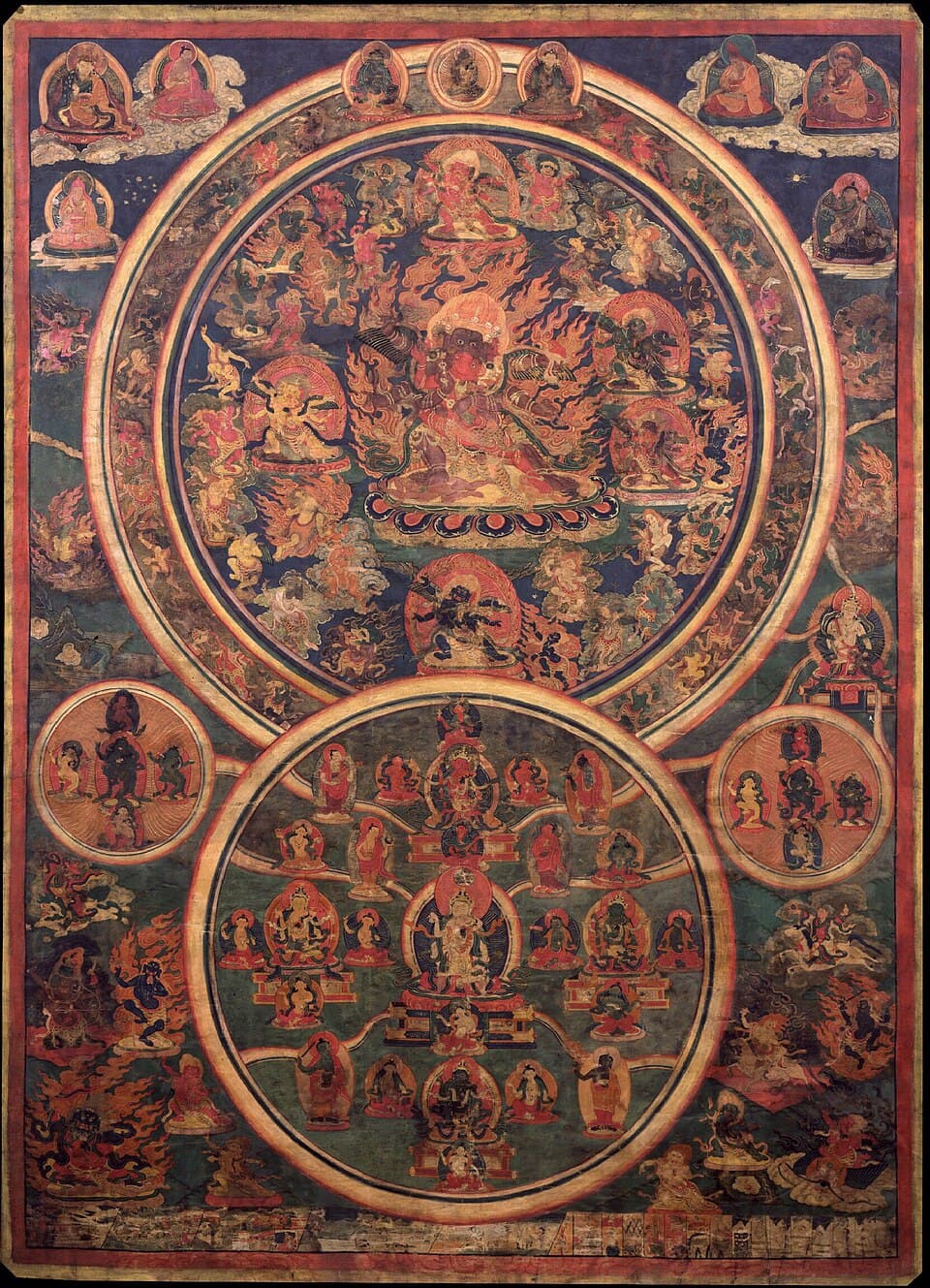
Bardo
In some schools of Buddhism, bardo or antarābhava is an intermediate, transitional, or liminal state between death and rebirth. The concept arose soon after Gautama Buddha's death, with a number of earlier Buddhist schools accepting the existence of such an intermediate state, while other schools rejected it. That is to say that during the so-called third Council in Pataliputra (Patna) the Asokan section of early Buddhism rejected this concept of àntāra-bháva. Some of those monks who, during this Council, were disrobed and sent away re-introduced it in Hybrid Sanskrit manuscripts. Franklin D. Edgerton mentions àntarābhávika in the Bodhisatttva-bhumi: "someone living in the intermediate state", and àntarābháva in the Làlita-vistára and Abhidhárma-kosa.
Pantheon: Buddhist Culture: Buddhist Civilization: Asia Period: 500 BCE – present
Source: Wikipedia
Sources & Notes
Wikipedia: https://en.wikipedia.org/wiki/Bardo
Discussion
Discussion
No comments yet
Start the discussion — sign in to leave a comment.
Join the Discussion
Join the discussion
Sign in to leave a comment or review.
Sign InorCreate an account