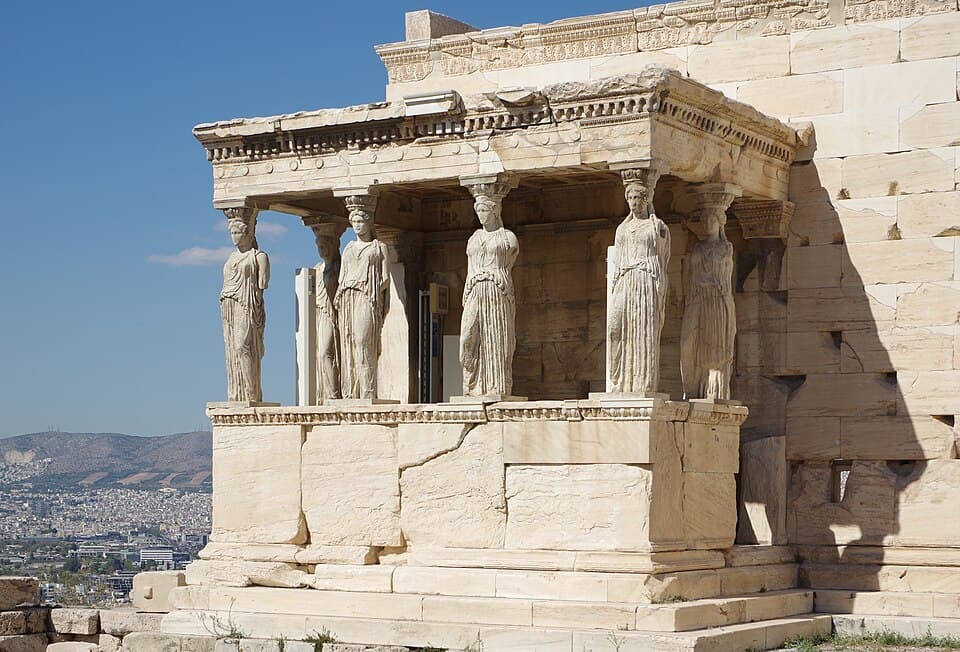
Caryatis
In ancient Greek religion, Artemis Caryatis (Καρυᾶτις) was an epithet of Artemis that was derived from the small polis of Caryae in Laconia. There, an archaic open-air temenos was dedicated to Carya, the Lady of the Nut-Tree, whose priestesses were called the caryatides, represented on the Athenian Acropolis as the marble caryatids supporting the porch of the Erechtheum. The late accounts made of the eponymous Carya a virgin who had been transformed into a nut-tree, whether for her unchastity or to prevent her rape. The particular form of veneration of Artemis at Karyai suggests that in pre-classical ritual, Carya was the goddess of the nut tree who was later assimilated into the Olympian goddess Artemis. Pausanias noted that every year, women performed a dance called the caryatis at a festival in honor of Artemis Caryatis called the Caryateia.
Pantheon: Greek Culture: Ancient Greek Civilization: Ancient Greece Period: 800 BCE – 400 CE
Source: Wikipedia
Sources & Notes
Wikipedia: https://en.wikipedia.org/wiki/Caryatis
Discussion
Discussion
No comments yet
Start the discussion — sign in to leave a comment.
Join the Discussion
Join the discussion
Sign in to leave a comment or review.
Sign InorCreate an account