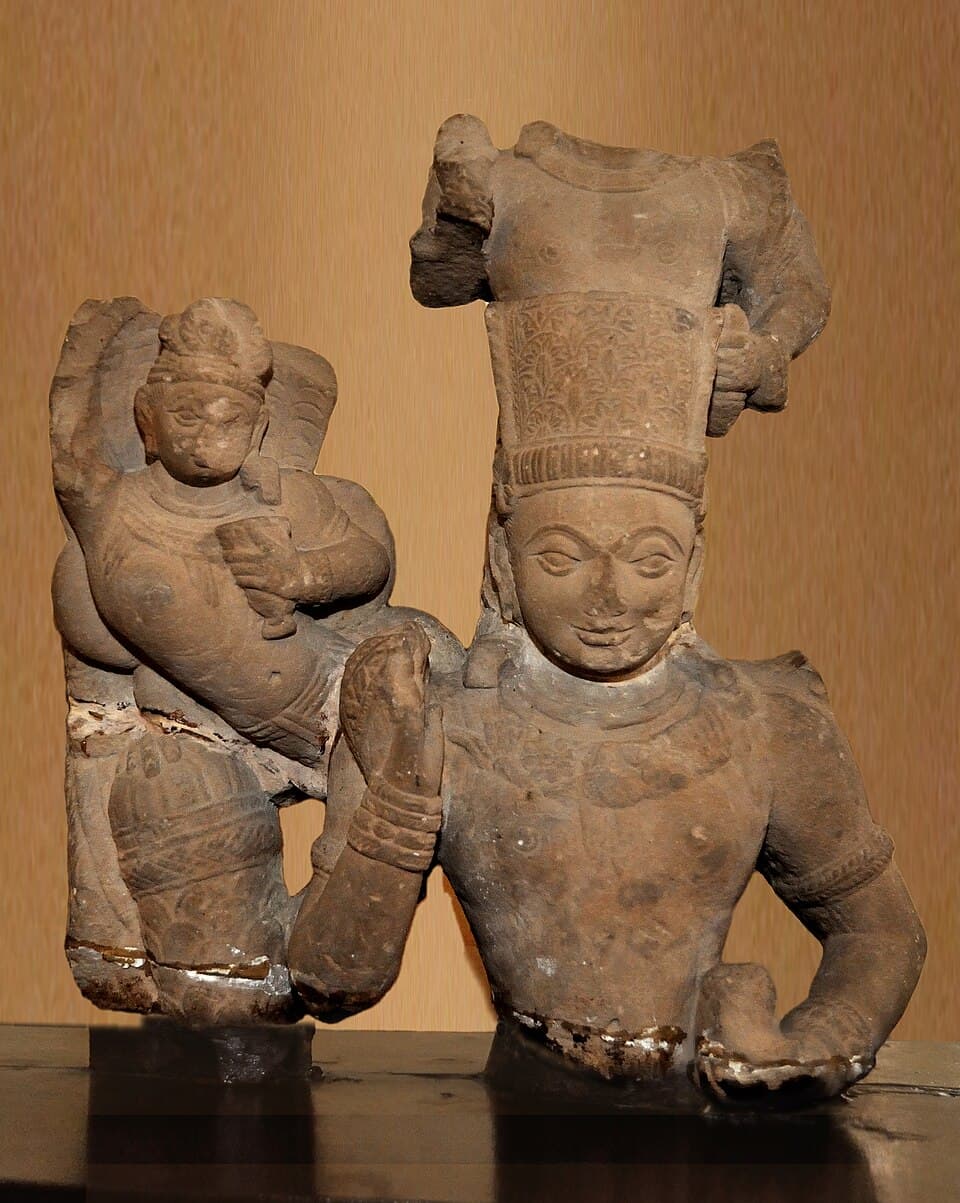
Caturvyūha
Caturvyūha or Chatur-vyūha, is an ancient Indian religious concept initially referring to the four earthly emanations (vyūhas) of the Supreme deity Nārāyaṇa, and later Viṣṇu. The first of these emanations identified with the hero-god Vāsudeva, with the other emanations being his kinsmen presented as extensions of Vāsudeva himself. From around the 1st century CE, the Vyuha doctrine (Vyūhavāda) developed out of the earlier Vīravāda cult of the Vrishni heroes, in which the five heroes Saṃkarṣaṇa, Vāsudeva, Pradyumna, Samba and Aniruddha had remained mostly human in character. Still later, around the 4th century CE, it evolved into the Avatāravāda system of incarnations of Vishnu, in which Vishnu was the primordial being and the Vrishni heroes had become his avatars.
Pantheon: Hindu Culture: Indian Civilization: Indian subcontinent Period: 1500 BCE – present
Source: Wikipedia
Sources & Notes
Wikipedia: https://en.wikipedia.org/wiki/Caturvy%C5%ABha
Discussion
Discussion
No comments yet
Start the discussion — sign in to leave a comment.
Join the Discussion
Join the discussion
Sign in to leave a comment or review.
Sign InorCreate an account