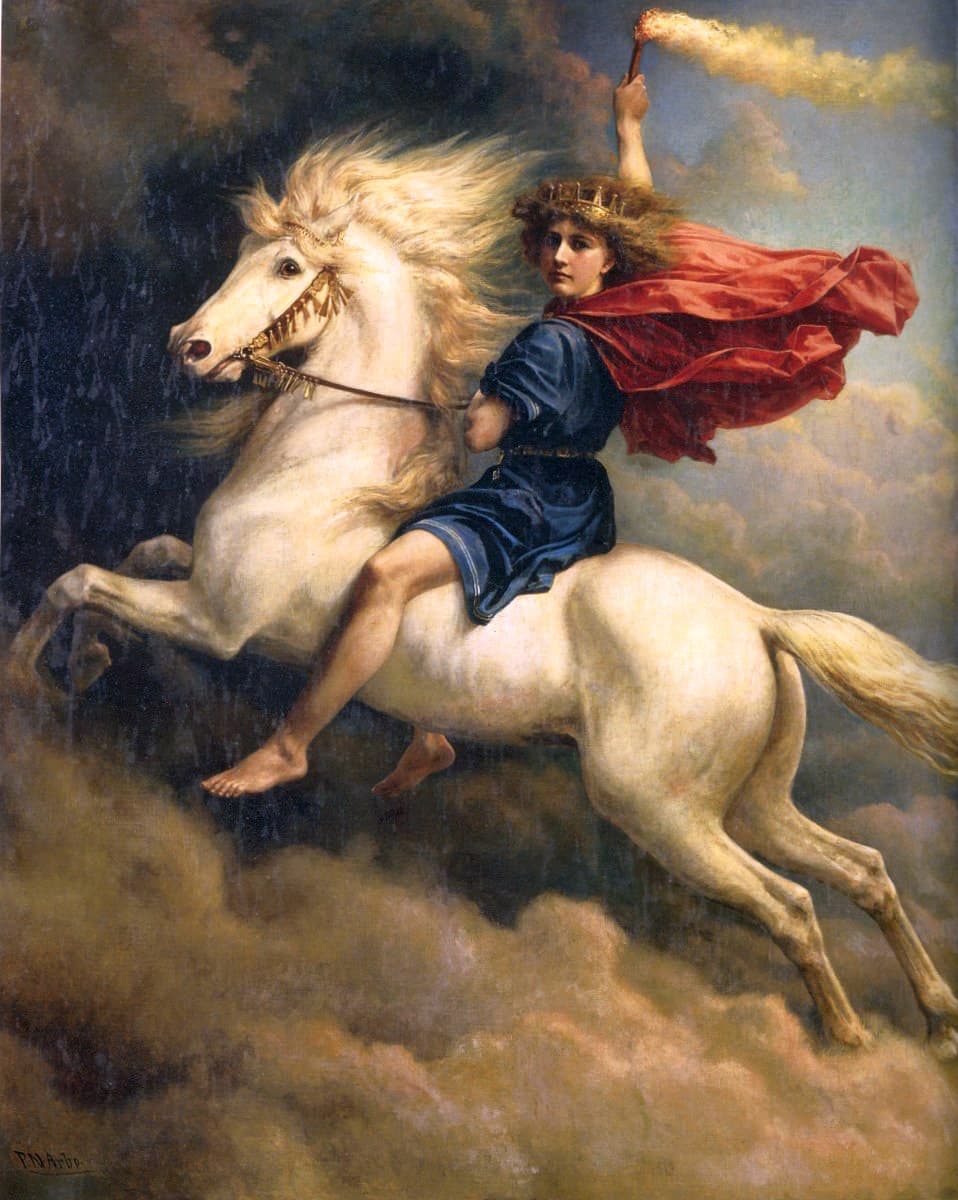
Dagr
Dagr is the divine personification of the day in Norse mythology. He appears in the Poetic Edda, compiled in the 13th century from earlier traditional sources, and the Prose Edda, written in the 13th century by Snorri Sturluson. In both sources, Dagr is stated to be the son of the god Dellingr and is associated with the bright-maned horse Skinfaxi, who "draw[s] day to mankind". Depending on manuscript variation, the Prose Edda adds that Dagr is either Dellingr's son by Nótt, the personified night, or Jörð, the personified Earth. Otherwise, Dagr appears as a common noun simply meaning "day" throughout Old Norse works. Connections have been proposed between Dagr and other similarly named figures in Germanic mythology.
Pantheon: Norse Culture: Norse / Germanic Civilization: Scandinavia Period: 800 CE – 1100 CE
Source: Wikipedia
Sources & Notes
Wikipedia: https://en.wikipedia.org/wiki/Dagr
Discussion
Discussion
No comments yet
Start the discussion — sign in to leave a comment.
Join the Discussion
Join the discussion
Sign in to leave a comment or review.
Sign InorCreate an account