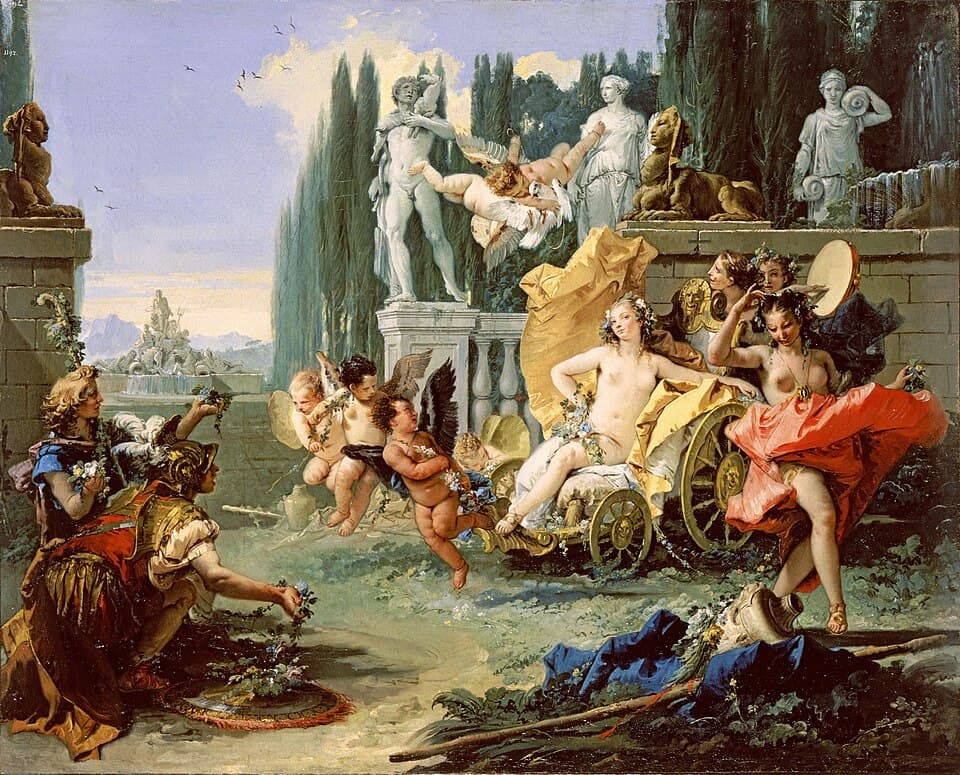
Fasti (poem)
The Fasti, sometimes translated as The Book of Days or On the Roman Calendar, is a six-book Latin poem written by the Roman poet Ovid and made public in AD 8. Ovid is believed to have left the Fasti incomplete when he was exiled to Tomis by the emperor Augustus in 8 AD. Written in elegiac couplets and drawing on conventions of Greek and Latin didactic poetry, the Fasti is structured as a series of eye-witness reports and interviews by the first-person vates with Roman deities, who explain the origins of Roman holidays and associated customs—often with multiple etiologies. The poem is a significant, and in some cases unique, source of fact in studies of religion in ancient Rome. Each book covers one month, January through June, of the Roman calendar, and was written several years after Julius Caesar replaced the old system of Roman time-keeping with what would come to be known as the Julian calendar.
Pantheon: Roman Culture: Ancient Roman Civilization: Ancient Rome Period: 750 BCE – 400 CE
Source: Wikipedia)
Sources & Notes
Wikipedia: https://en.wikipedia.org/wiki/Fasti_(poem)
Discussion
Discussion
No comments yet
Start the discussion — sign in to leave a comment.
Join the Discussion
Join the discussion
Sign in to leave a comment or review.
Sign InorCreate an account