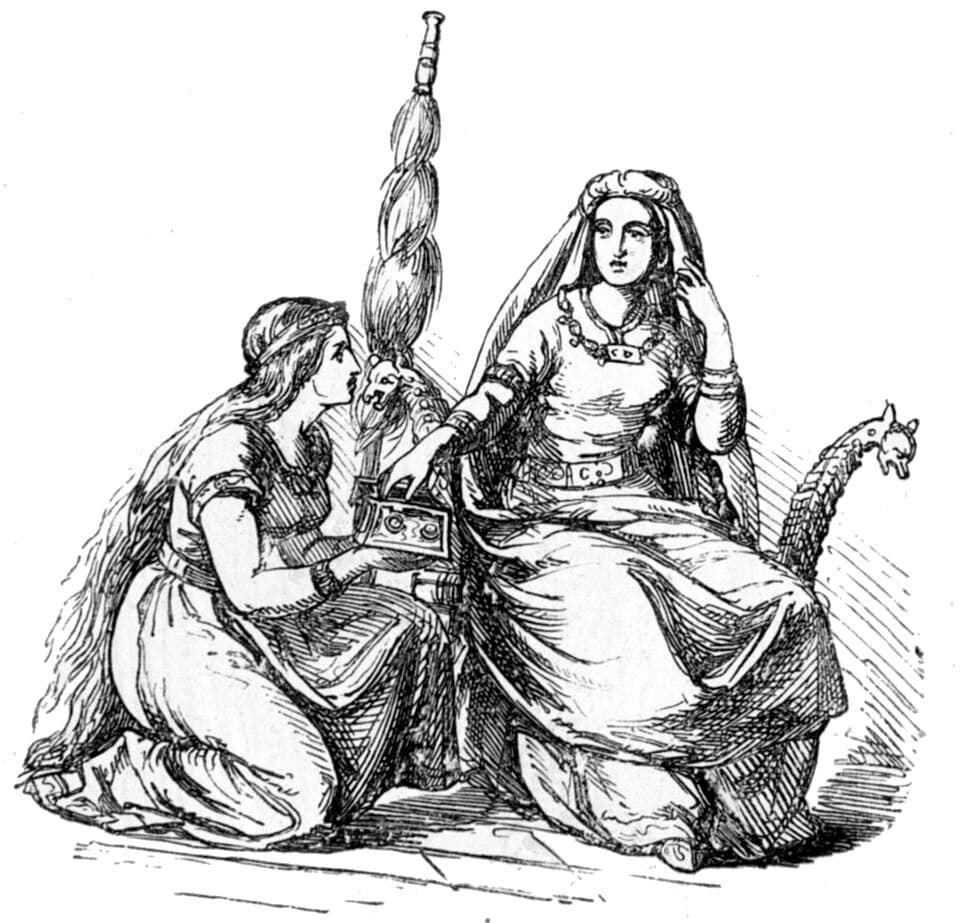
Fulla
Fulla or Volla is a goddess in Germanic mythology. In Norse mythology, Fulla is described as wearing a golden band and as tending to the ashen box and the footwear owned by the goddess Frigg, and, in addition, Frigg confides in Fulla her secrets. Fulla is attested in the Poetic Edda, compiled in the 13th century from earlier traditional sources; the Prose Edda, written in the 13th century by Snorri Sturluson; and in skaldic poetry. Volla (Folla) is attested in the "Horse Cure" Merseburg Incantation, recorded anonymously in the 10th century in Old High German, in which she assists in healing the wounded foal of Phol and is referred to as Frigg's sister. Scholars have proposed theories about the implications of the goddess.
Pantheon: Norse Culture: Norse / Germanic Civilization: Scandinavia Period: 800 CE – 1100 CE
Source: Wikipedia
Sources & Notes
Wikipedia: https://en.wikipedia.org/wiki/Fulla
Discussion
Discussion
No comments yet
Start the discussion — sign in to leave a comment.
Join the Discussion
Join the discussion
Sign in to leave a comment or review.
Sign InorCreate an account