Ishvara
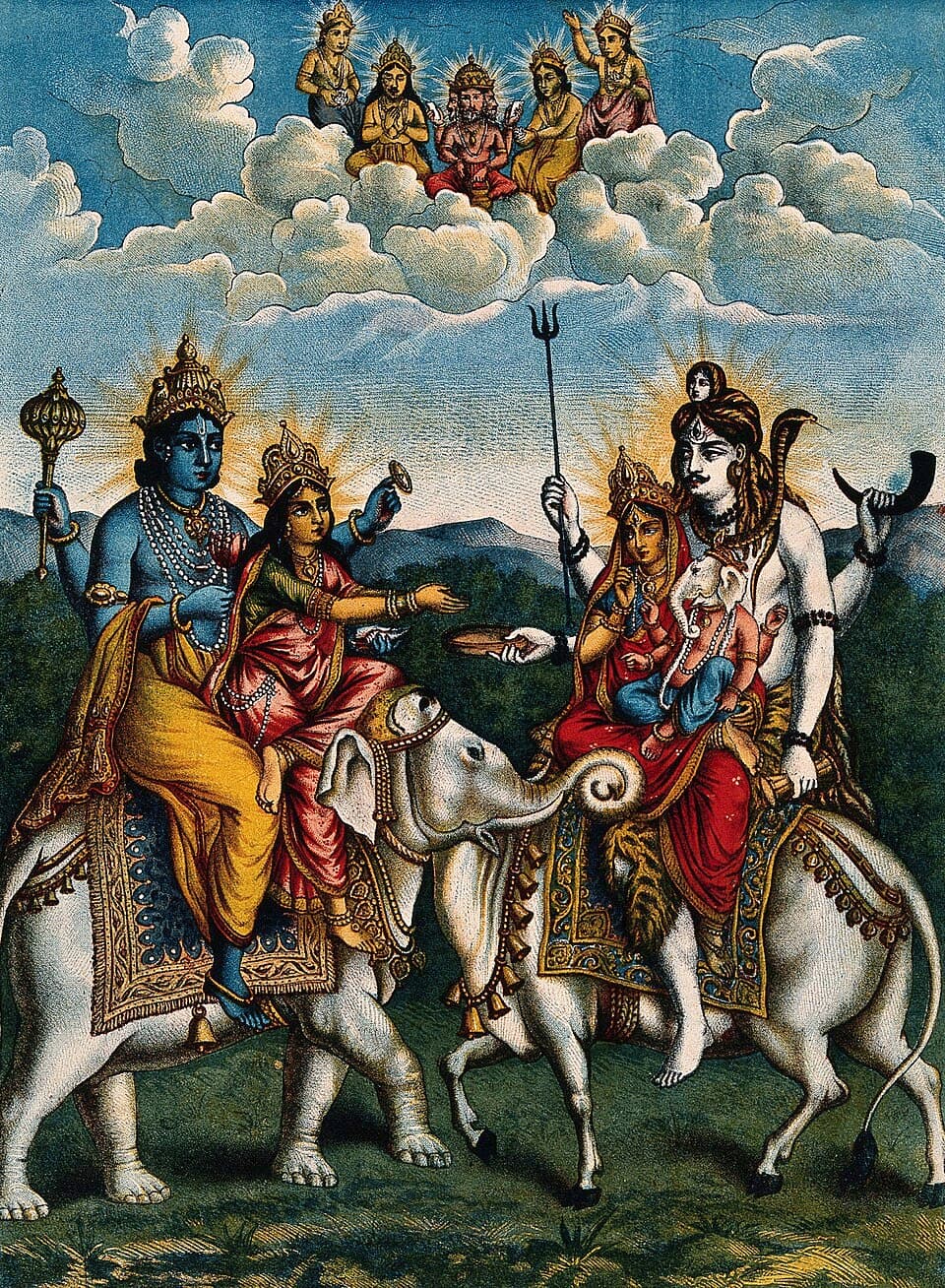
Ishvara is a concept in Hinduism, with a wide range of meanings that depend on the era and the school of Hinduism. In ancient texts of Hindu philosophy, depending on the context, Ishvara can mean lord, ruler, king, husband, queen, soul or the Supreme Self (Paramatman). In medieval-era Hindu texts, depending on the school of Hinduism, Ishvara means God, Supreme Being, personal God, or special Self. In Shaivism, Ishvara is an epithet of Shiva. In Vaishnavism, it is synonymous with Vishnu, like in his epithet of Venkateswara. In traditional Bhakti movements, Ishvara is one or more deities of an individual's preference (Iṣṭa-devatā) from Hinduism's polytheistic canon of deities. In modern-day sectarian movements like Arya Samaj and Brahmoism, Ishvara takes the form of a monotheistic God. In the Yoga school of Hinduism, it is any "personal deity" or "spiritual inspiration". In Advaita Vedanta, Ishvara is the manifested form of Brahman.
Pantheon: Hindu Culture: Indian Civilization: Indian subcontinent Period: 1500 BCE – present
Source: Wikipedia
Sources & Notes
Wikipedia: https://en.wikipedia.org/wiki/Ishvara
Discussion
Discussion
No comments yet
Start the discussion — sign in to leave a comment.
Join the Discussion
Join the discussion
Sign in to leave a comment or review.
Sign InorCreate an account