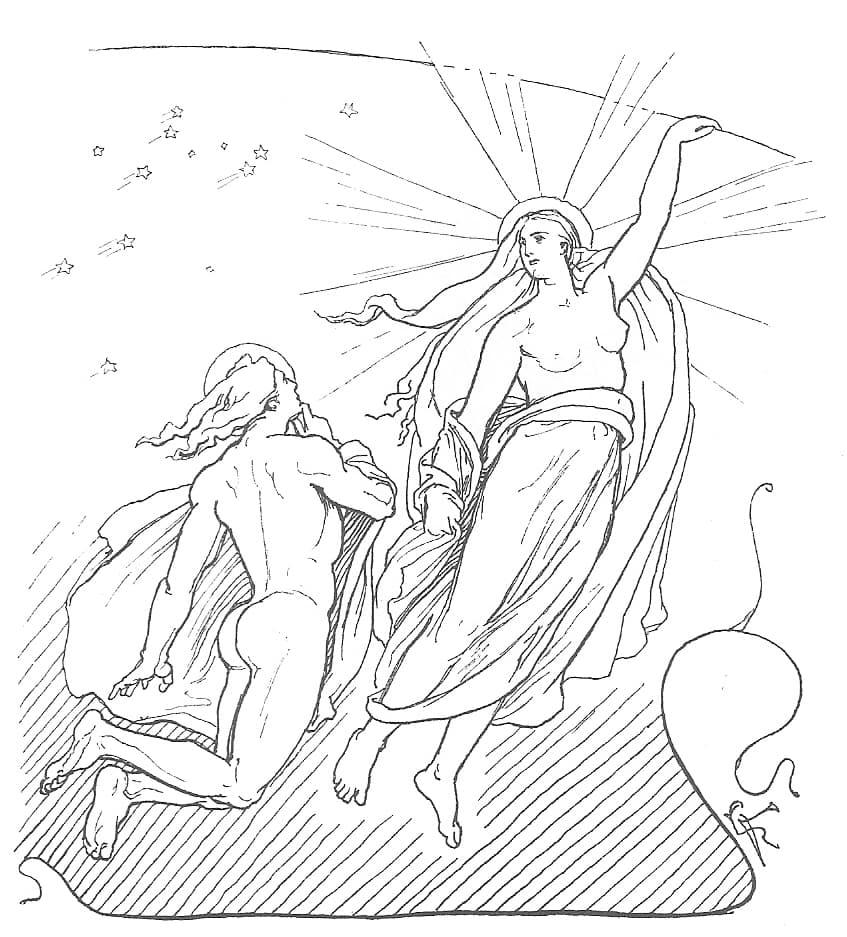
Máni
Máni is the Moon personified in Germanic mythology. Máni, personified, is attested in the Poetic Edda, compiled in the 13th century from earlier traditional sources, and the Prose Edda, written in the 13th century by Snorri Sturluson. Both sources state that he is the brother of the personified sun, Sól, and the son of Mundilfari, while the Prose Edda adds that he is followed by the children Hjúki and Bil through the heavens. As a proper noun, Máni appears throughout Old Norse literature. Scholars have proposed theories about Máni's potential connection to the Northern European notion of the Man in the Moon, and a potentially otherwise unattested story regarding Máni through skaldic kennings.
Pantheon: Norse Culture: Norse / Germanic Civilization: Scandinavia Period: 800 CE – 1100 CE
Source: Wikipedia
Sources & Notes
Wikipedia: https://en.wikipedia.org/wiki/M%C3%A1ni
Discussion
Discussion
No comments yet
Start the discussion — sign in to leave a comment.
Join the Discussion
Join the discussion
Sign in to leave a comment or review.
Sign InorCreate an account