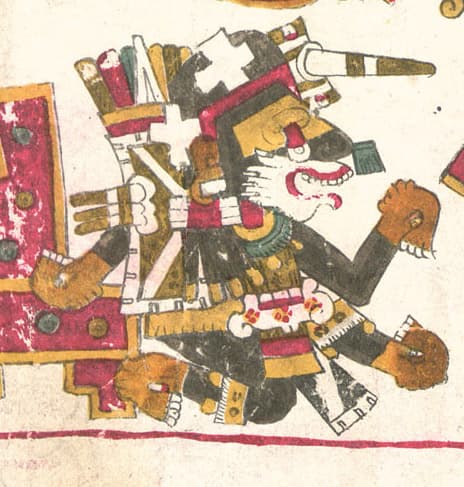
Nanāhuātzin
In Aztec mythology, the god Nanāhuātzin or Nanāhuātl, the most humble of the gods, sacrificed himself in fire so that he would continue to shine on Earth as the Sun, thus becoming the solar deity. Nanāhuātzin means "full of sores." According to a translation of the Histoyre du Mechique, Nanāhuātzin is the son of Ītzpāpālōtl and Cozcamiauh or Tonantzin, but was adopted by Piltzintecuhtli and Xōchiquetzal. In the Codex Borgia, Nanāhuātzin is represented as a man emerging from a fire. This was originally interpreted as an illustration of cannibalism. He is probably an aspect of Xolotl.
Pantheon: Aztec Culture: Nahua / Aztec Civilization: Aztec Empire Period: 1300 CE – 1521 CE
Source: Wikipedia
Sources & Notes
Wikipedia: https://en.wikipedia.org/wiki/Nan%C4%81hu%C4%81tzin
Discussion
Discussion
No comments yet
Start the discussion — sign in to leave a comment.
Join the Discussion
Join the discussion
Sign in to leave a comment or review.
Sign InorCreate an account