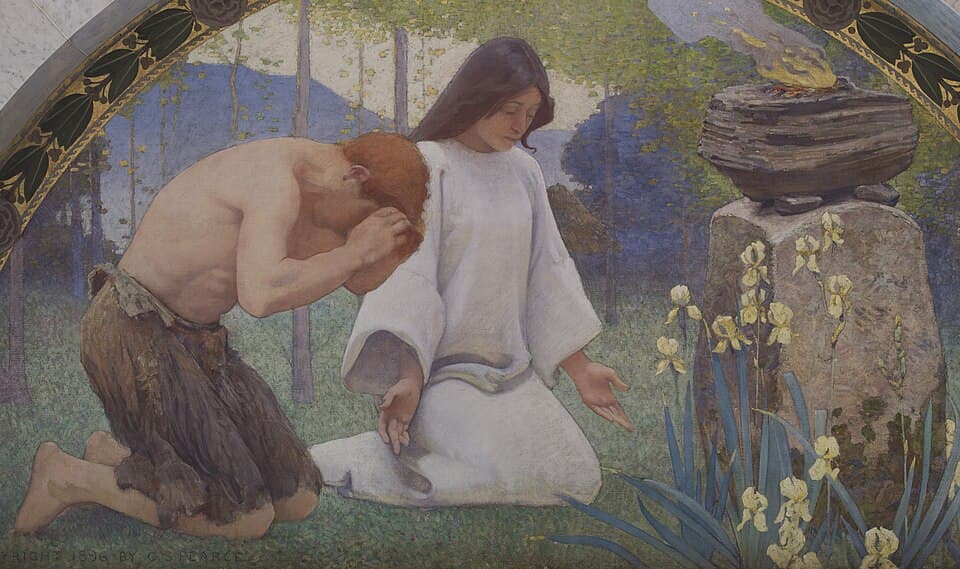
Nature worship
Nature worship, also called naturism or physiolatry, is any of a variety of religious, spiritual and devotional practices that focus on the worship of a nature deity, considered to be behind the natural phenomena visible throughout nature. A nature deity can be in charge of nature, a place, a biotope, the biosphere, the cosmos, or the universe. Nature worship is often considered the primitive source of modern religious beliefs and can be found in animism, pantheism, panentheism, polytheism, deism, totemism, shamanism, Taoism, Hinduism, some theism and paganism including Wicca. Common to most forms of nature worship is a spiritual focus on the individual's connection and influence on some aspects of the natural world and reverence towards it. Due to their admiration of nature, the works of Edmund Spenser, Anthony Ashley-Cooper and Carl Linnaeus were viewed as nature worship.
Pantheon: Zoroastrian Culture: Persian Civilization: Ancient Persia Period: 1500 BCE – present
Source: Wikipedia
Sources & Notes
Wikipedia: https://en.wikipedia.org/wiki/Nature_worship
Discussion
Discussion
No comments yet
Start the discussion — sign in to leave a comment.
Join the Discussion
Join the discussion
Sign in to leave a comment or review.
Sign InorCreate an account