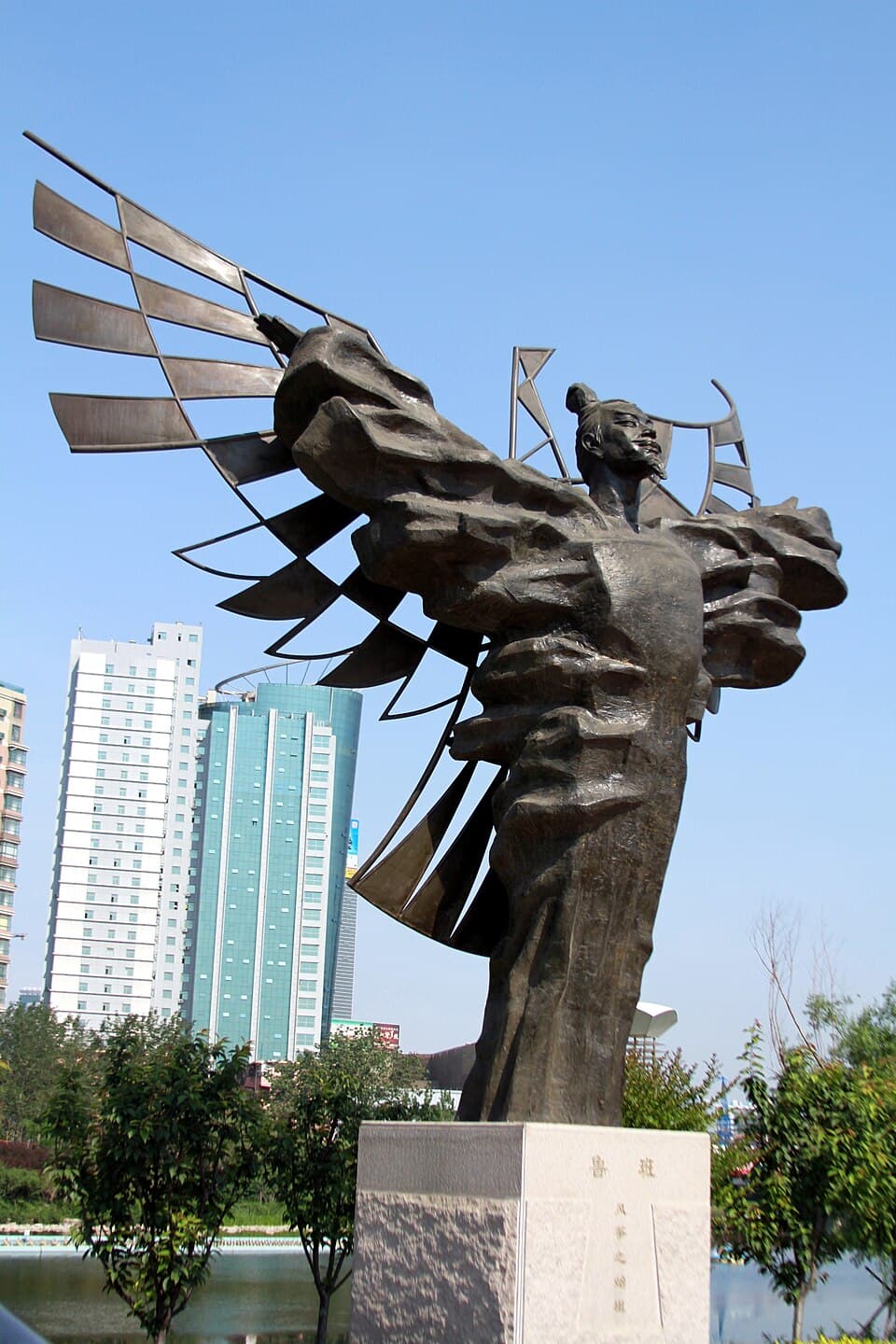
Lu Ban
Lu Ban was an ancient Chinese master carpenter, architect, structural engineer and inventor during the Spring and Autumn period of the Eastern Zhou Dynasty. He is revered as the Chinese Deity (Patron) of builders and contractors.
Pantheon
Page 2 of 3.
253 entries
These three are recorded for the Chinese pantheon as a whole. The archive holds no separate culture, civilization or period for the individual entries below.
Page 2 of 3
Showing 109–216 of 253, alphabetically.
Lu Ban was an ancient Chinese master carpenter, architect, structural engineer and inventor during the Spring and Autumn period of the Eastern Zhou Dynasty. He is revered as the Chinese Deity (Patron) of builders and contractors.
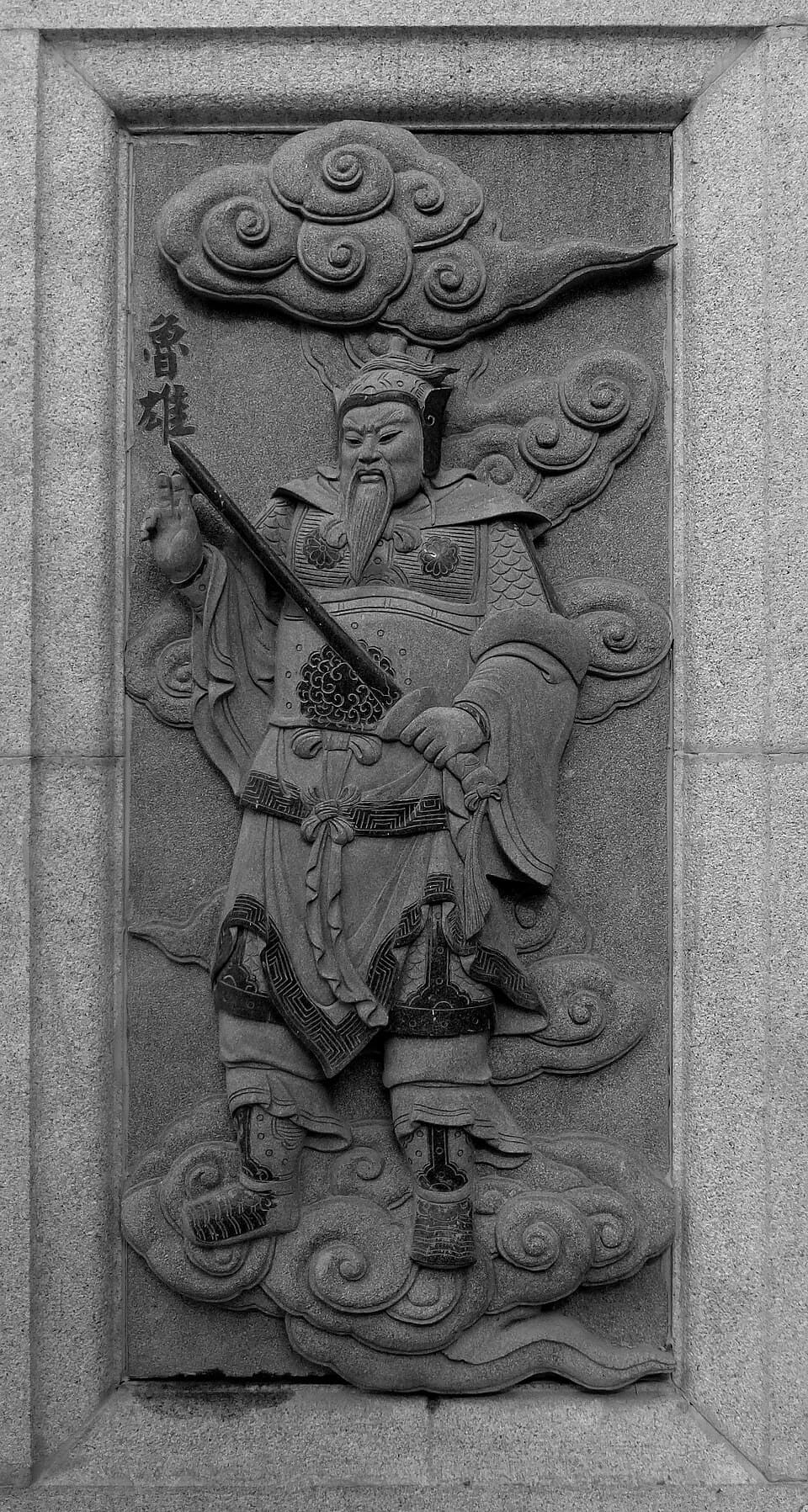
Lu Xiong is a minor character featured within the classic Chinese novel Fengshen Yanyi.
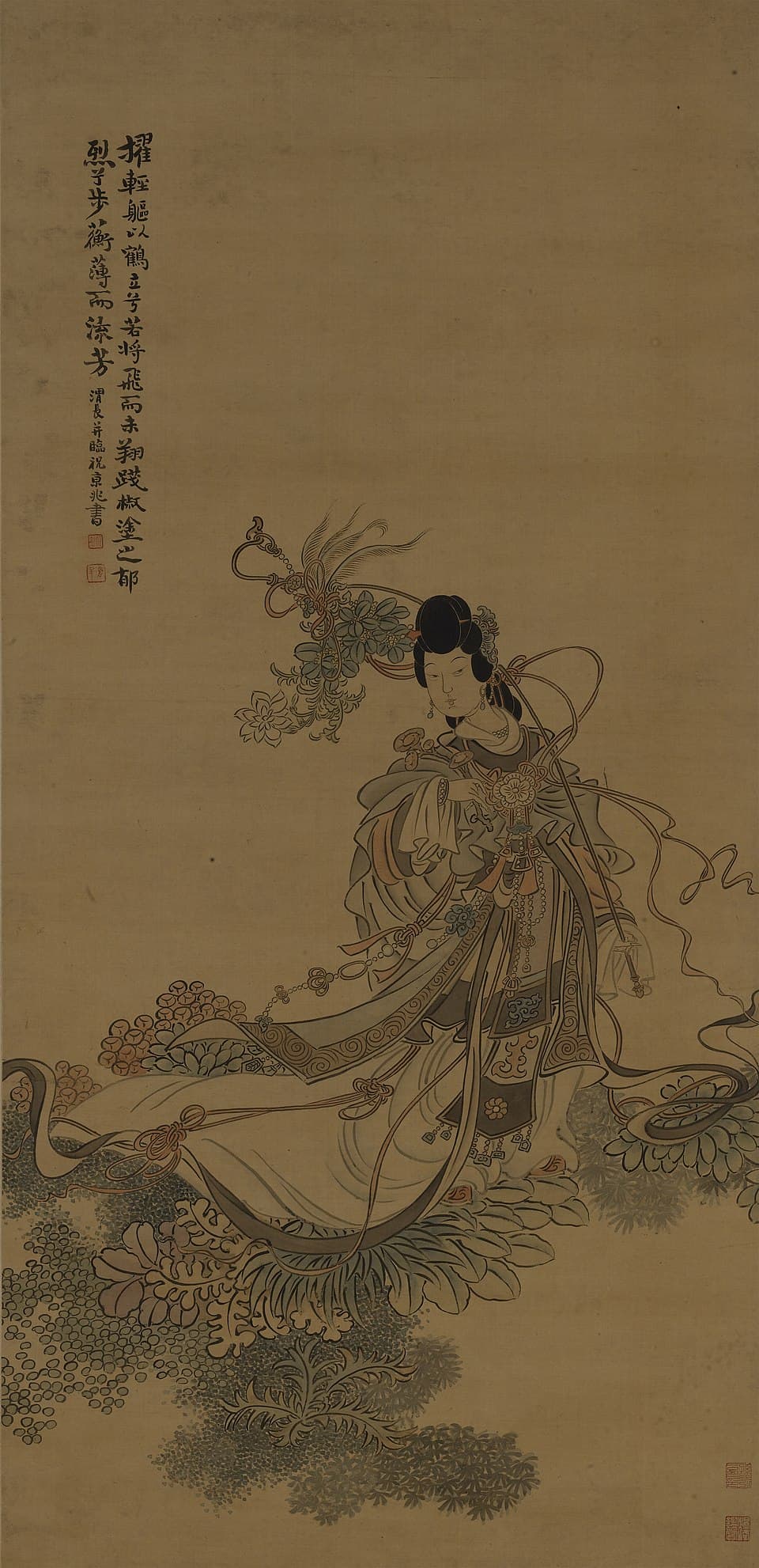
Luoshen is a deity of the Chinese pantheon.
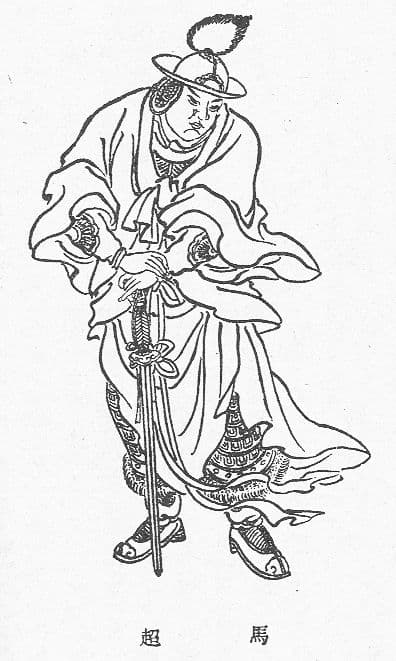
Ma Chao (176–222), courtesy name Mengqi, was a Chinese military general and warlord who lived in the late Eastern Han dynasty and early Three Kingdoms period of China. A descendant of the general Ma Yuan, Ma Chao was the eldest son of Ma Teng, a prominent warlord in Liang Province. In 211, he formed a coalition with Han Sui and other northwestern warlords and revolted against the Han central government, which was led by the warlord Cao Cao.
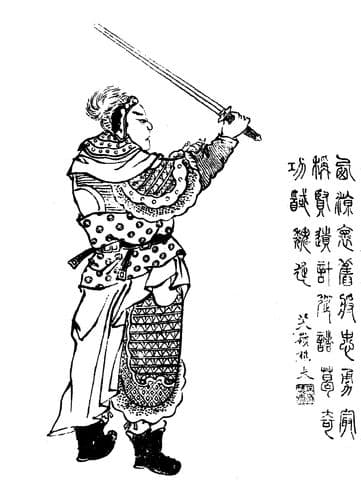
Ma Dai was a Chinese military general of the state of Shu Han during the Three Kingdoms period of China. He previously served under his uncle Ma Teng, a warlord in northwestern China, during the late Eastern Han dynasty. After Ma Teng's death, he followed his cousin Ma Chao and they joined the warlord Zhang Lu in Hanzhong for a short period of time.
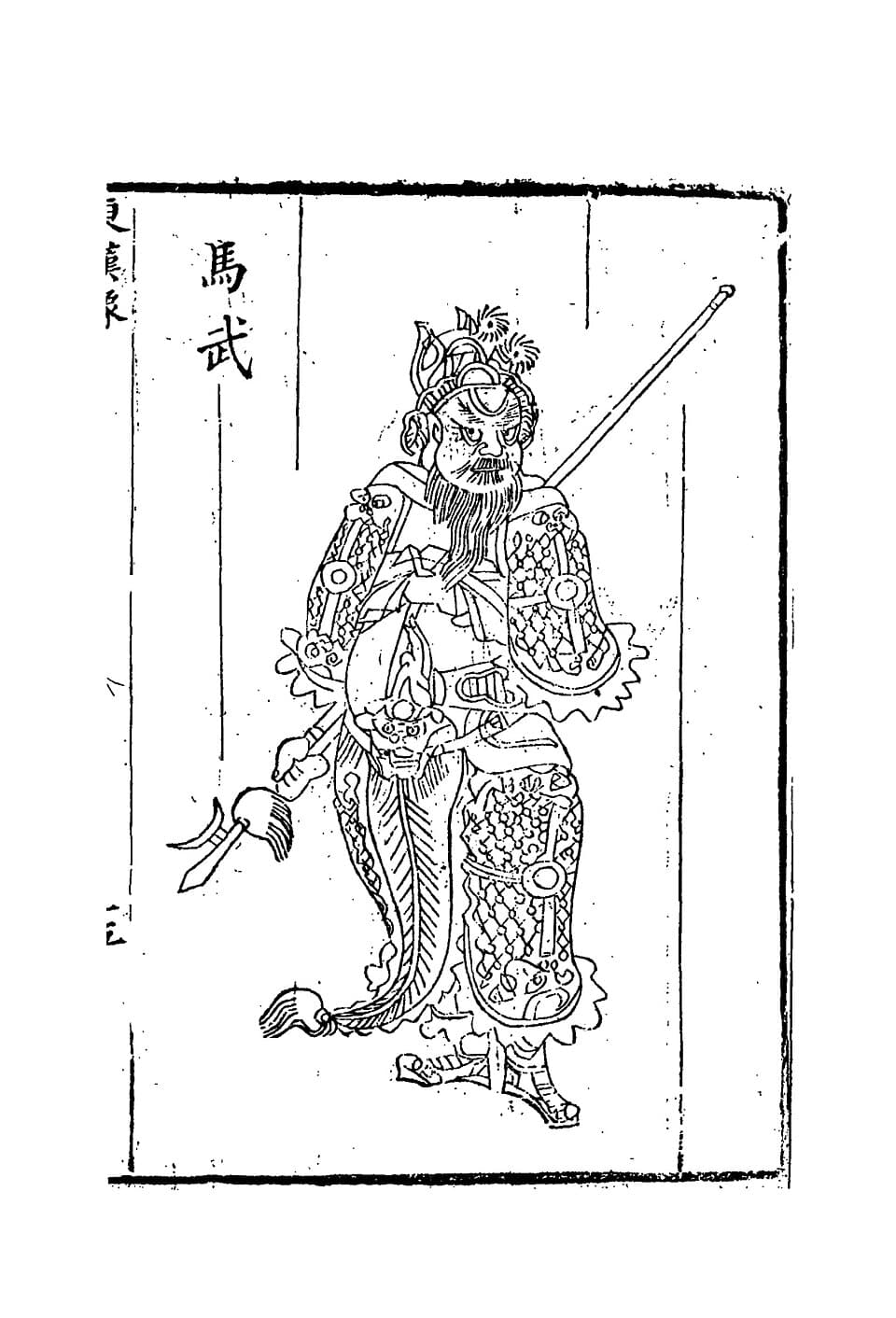
Ma Wu (d. AD 61), courtesy name Zizhang, was a Chinese general during the Eastern Han, who hailed from the Huyang Town, Tanghe, located in the Henan province. He was ranked 15th among the 28 Generals of Yuntai.
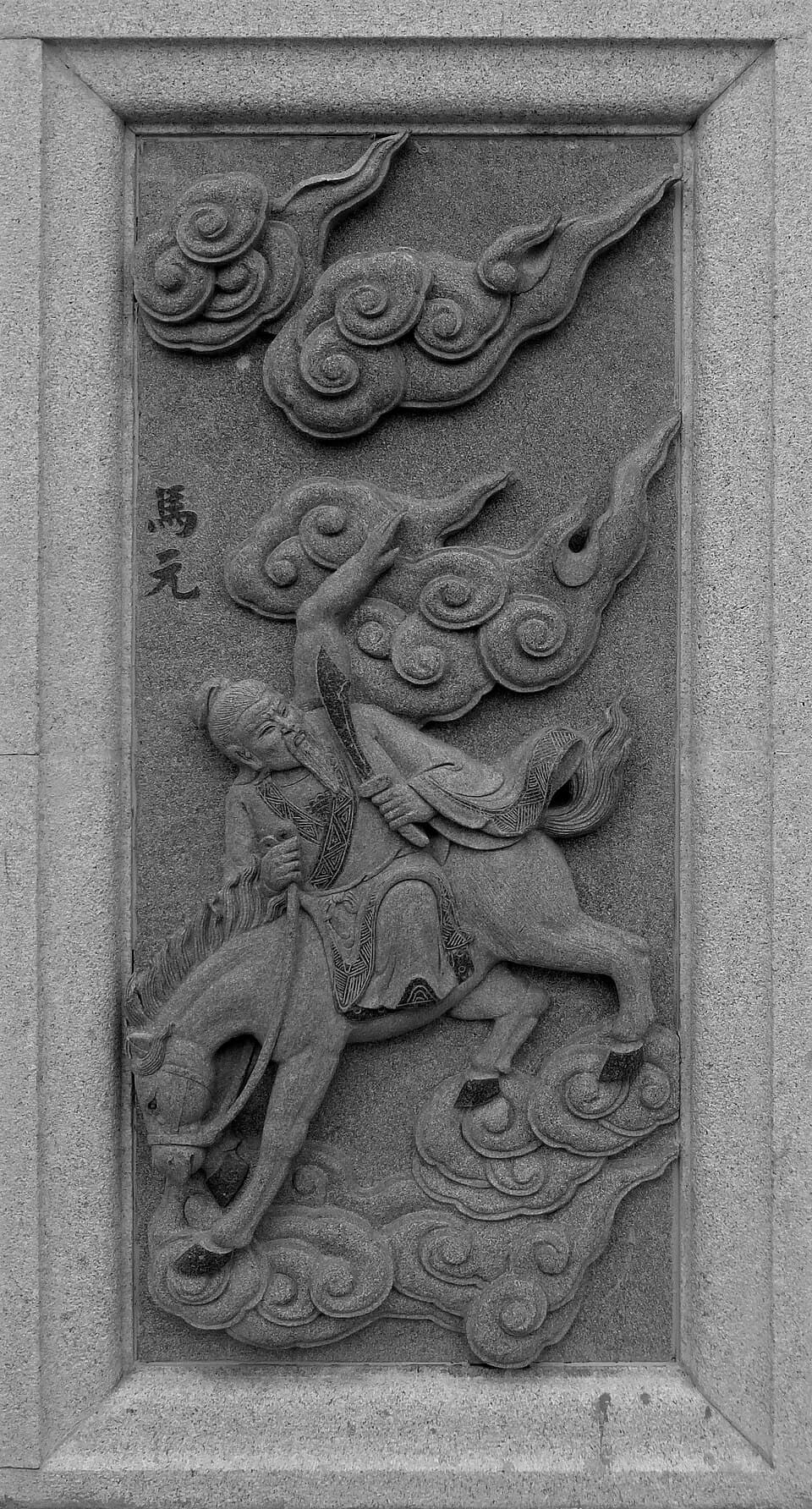
Ma Yuan is a character from the Chinese novel Fengshen Yanyi. Ma Yuan is described as a human eating demon who became a Buddha.
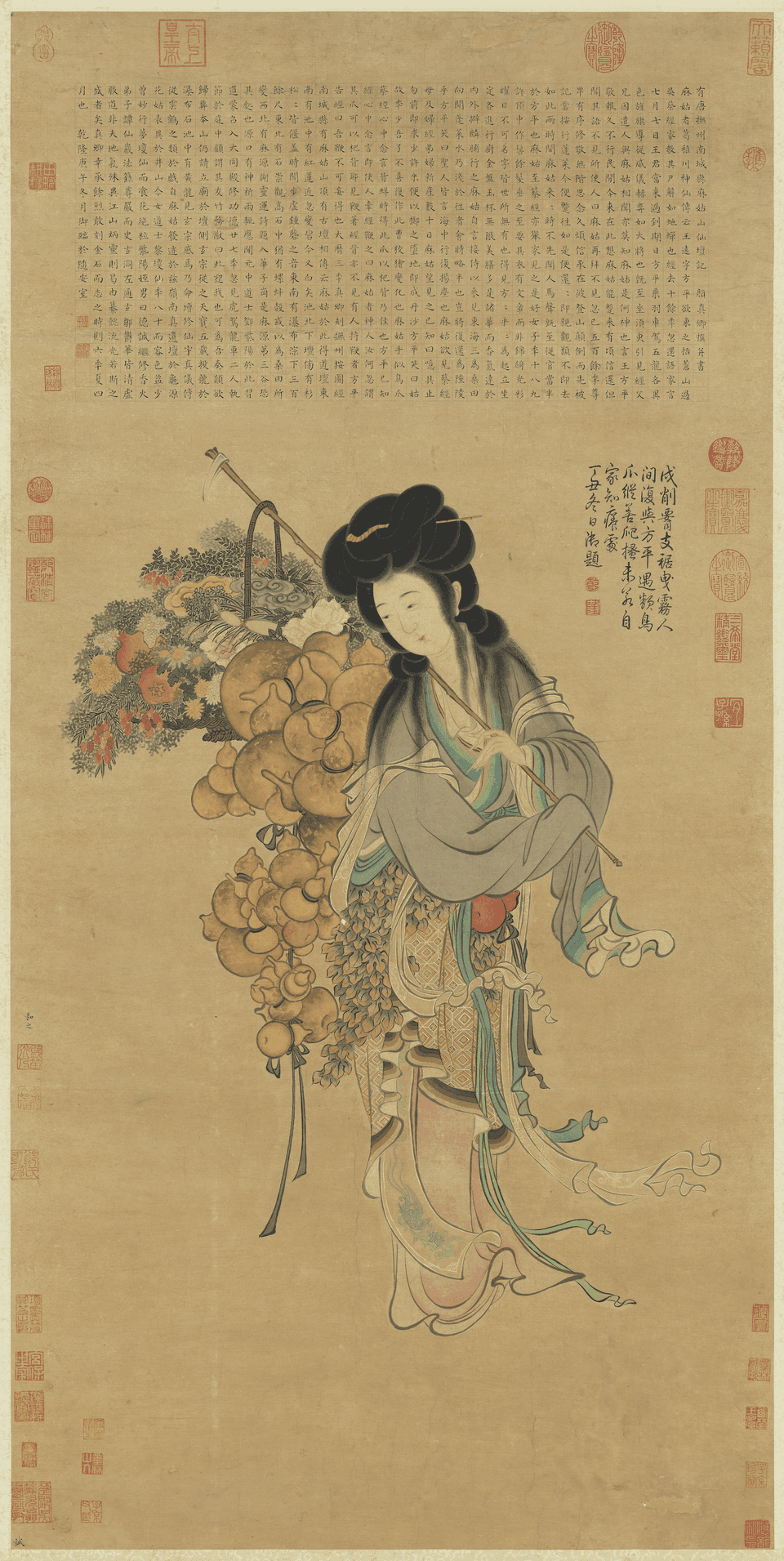
Magu (deity) is a deity of the Chinese pantheon.
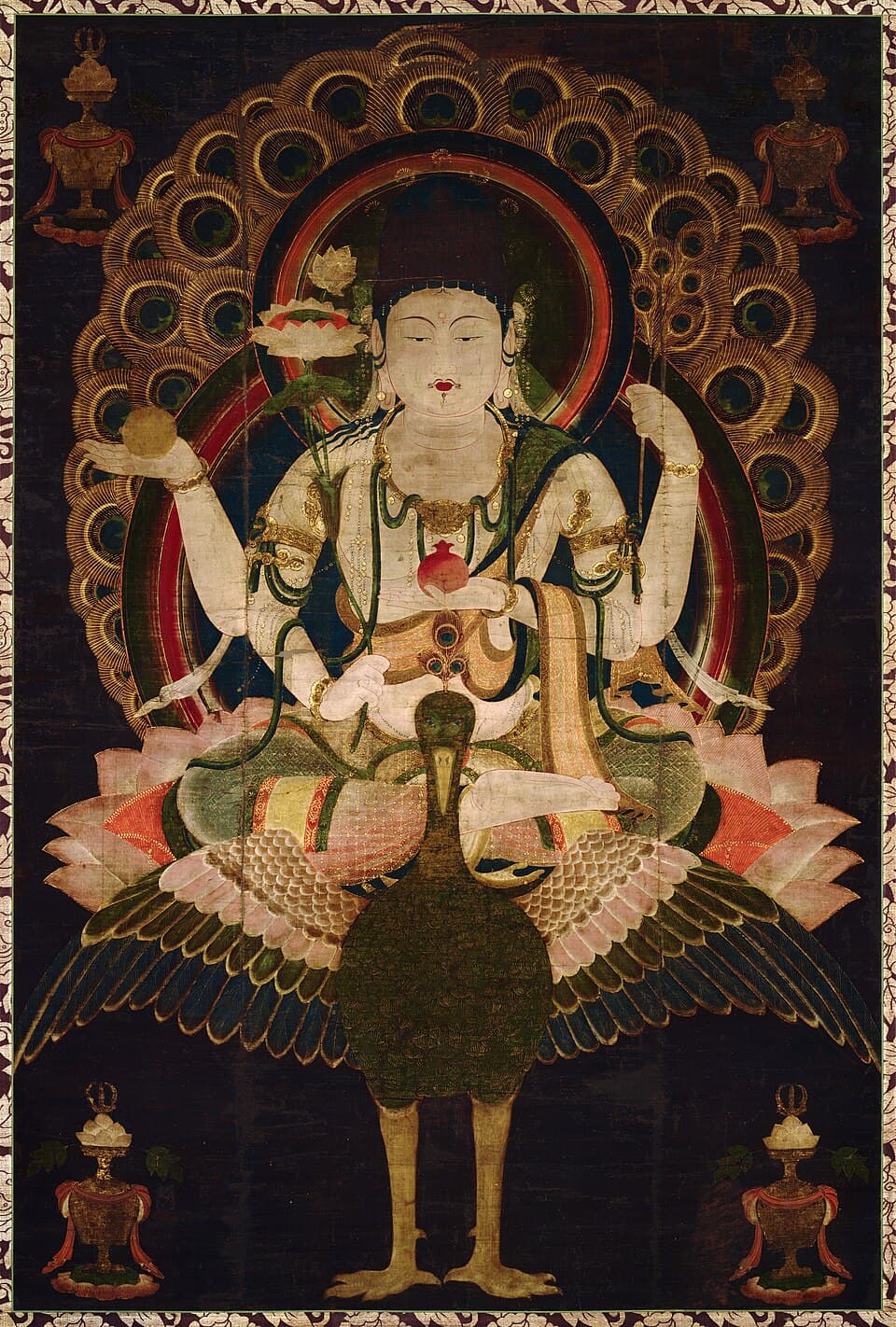
Mahamayuri, or Mahāmāyūrī Vidyārājñī is a bodhisattva and female Wisdom King in Mahayana and Vajrayana Buddhism. In the latter tradition, Mahamayuri is a popular practice in both the Chinese and Japanese forms of Vajrayana. She is also the name of one of the five protective goddesses in Buddhism.
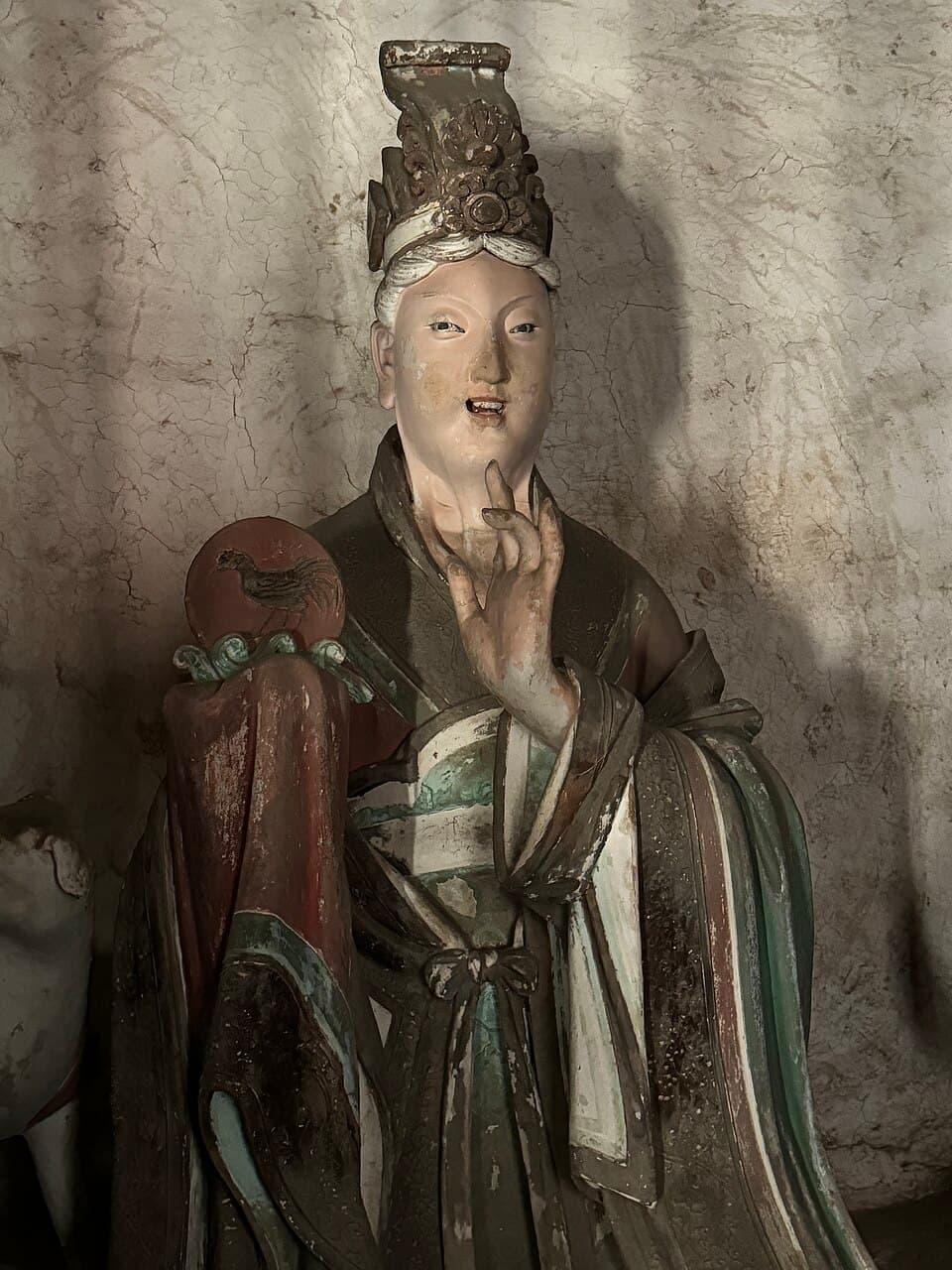
Maori Xingguan is a deity in the traditional Chinese spiritual beliefs. Maori is considered to be one of the 28 Mansions, which are Chinese constellations. These constellations are the same as those studied in Western astrology.
Marici (Buddhism) is a deity of the Chinese pantheon.
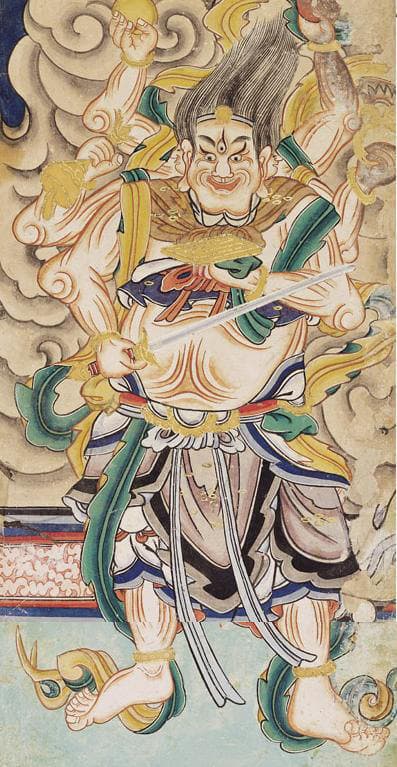
Marshal Tianpeng is a deity in Chinese mythology and Taoism. He is best known for his role in the classic Chinese novel Journey to the West (西游记), where he is reincarnated as Zhu Bajie, one of the main disciples of the monk Tang Sanzang. Marshal Tianpeng is revered as a powerful celestial general in Taoist tradition, often associated with the protection against evil spirits and the command of heavenly forces.
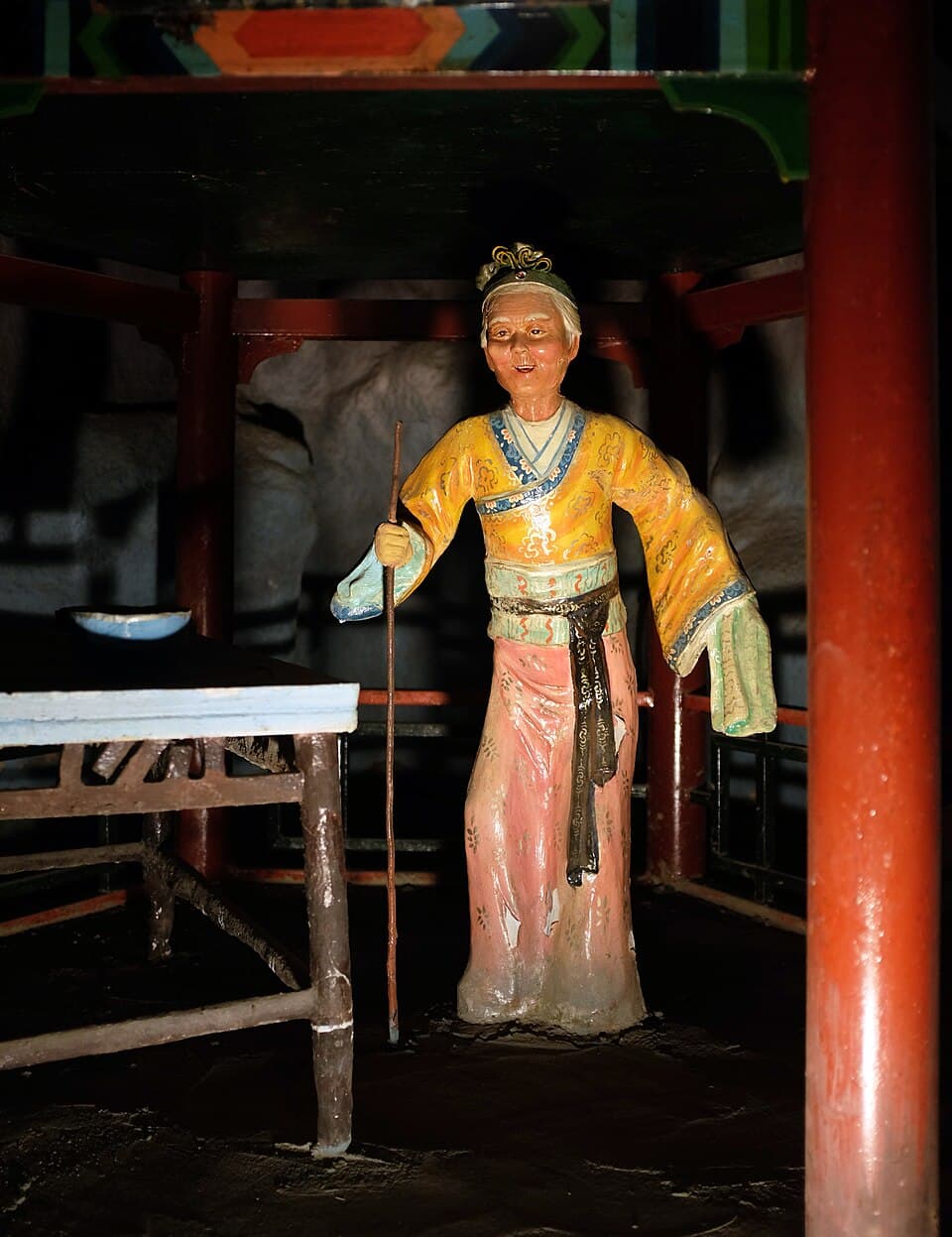
Meng Po is a deity of the Chinese pantheon.

Miaozhuang Wang is a Chinese deity and the father of the Guanyin Bodhisattva, also known as the Goddess of Mercy. Miaozhuang was the ruler of Fucheng Kingdom in the 6th century B. C.

Mingong (憫公) is a Buddhist layman and the right attendant of the bodhisattva Kṣitigarbha. His son also entered the way of the bodhisattva and became his disciple and the left attendant, Daoming. Mingong was one of the earliest converts to Buddhism and ordained by the Buddha.
Momu (goddess) is a deity of the Chinese pantheon.
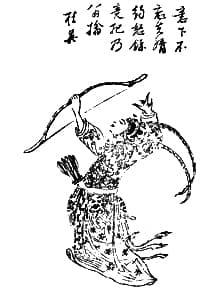
Mu Guiying is a deity of the Chinese pantheon.

Na Tuk Gong are local guardian spirits worshipped by overseas Chinese communities in Malaysia and Singapore. An alternate more generic name for the culture is Datuk Gong, uniting Dato or Datuk from the local Malay word for 'grandfather', which is also used as an honorific title, and Kong or Gong from Chinese, also an honorific title. According to Taoist tradition, a Na Tuk Kong's could hold the official title 拿督尊王.
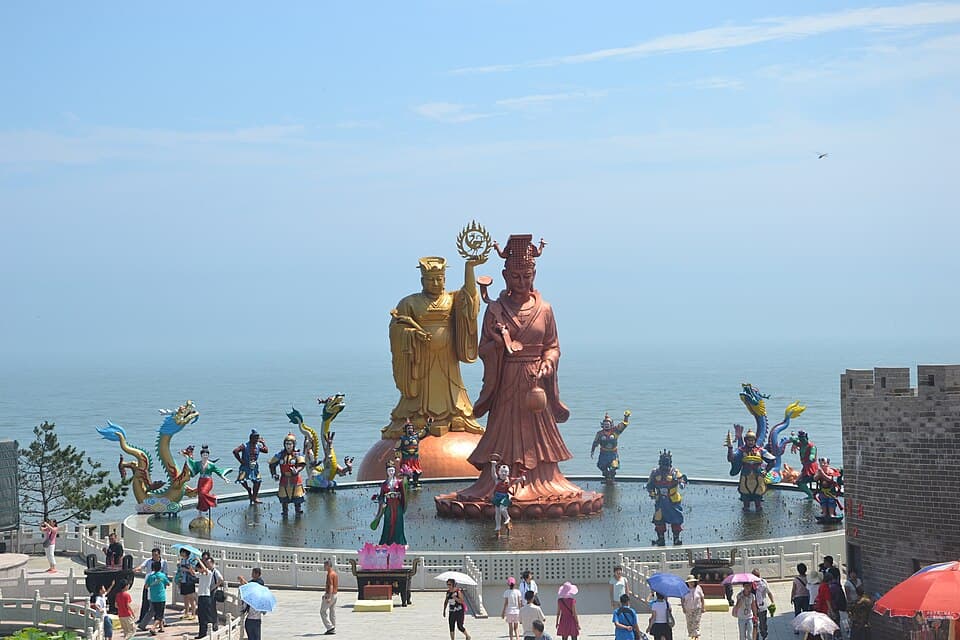
Chinese gods and immortals are beings in various Chinese religions seen in a variety of ways and mythological contexts.
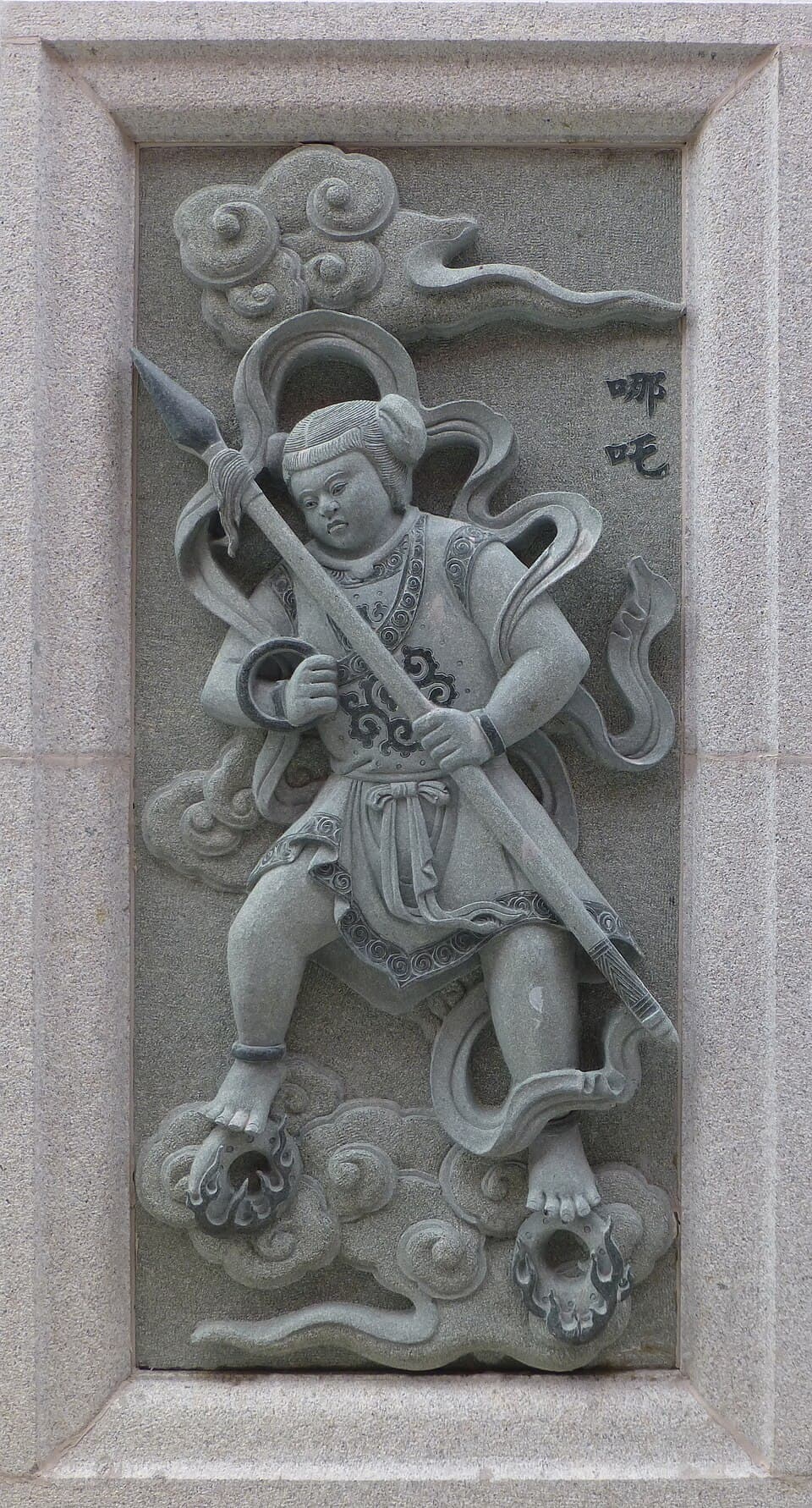
Nezha or sometimes Nezha the Crown Prince, is a protection deity in Taoism, Buddhism, Confucianism, and Chinese folk religion. His official Taoist name is "Marshal of the Central Altar" (中壇元帥). He was then given the title "Third Lotus Prince" (蓮花三太子) after he became a deity.
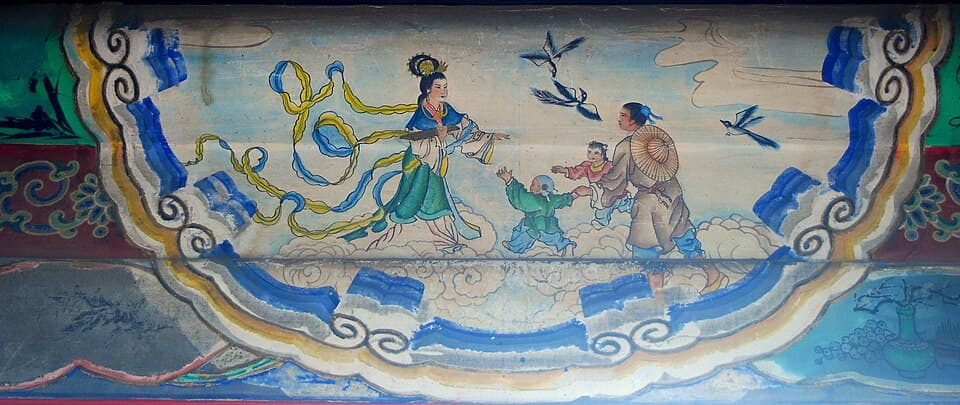
Niulang is a Chinese deity who is identified as the star Altair in the constellation Aquila. He was a legendary figure and main character in the popular Chinese folk tale The Cowherd and the Weaver Girl. The earliest record of this myth is traced to over 2600 years ago.
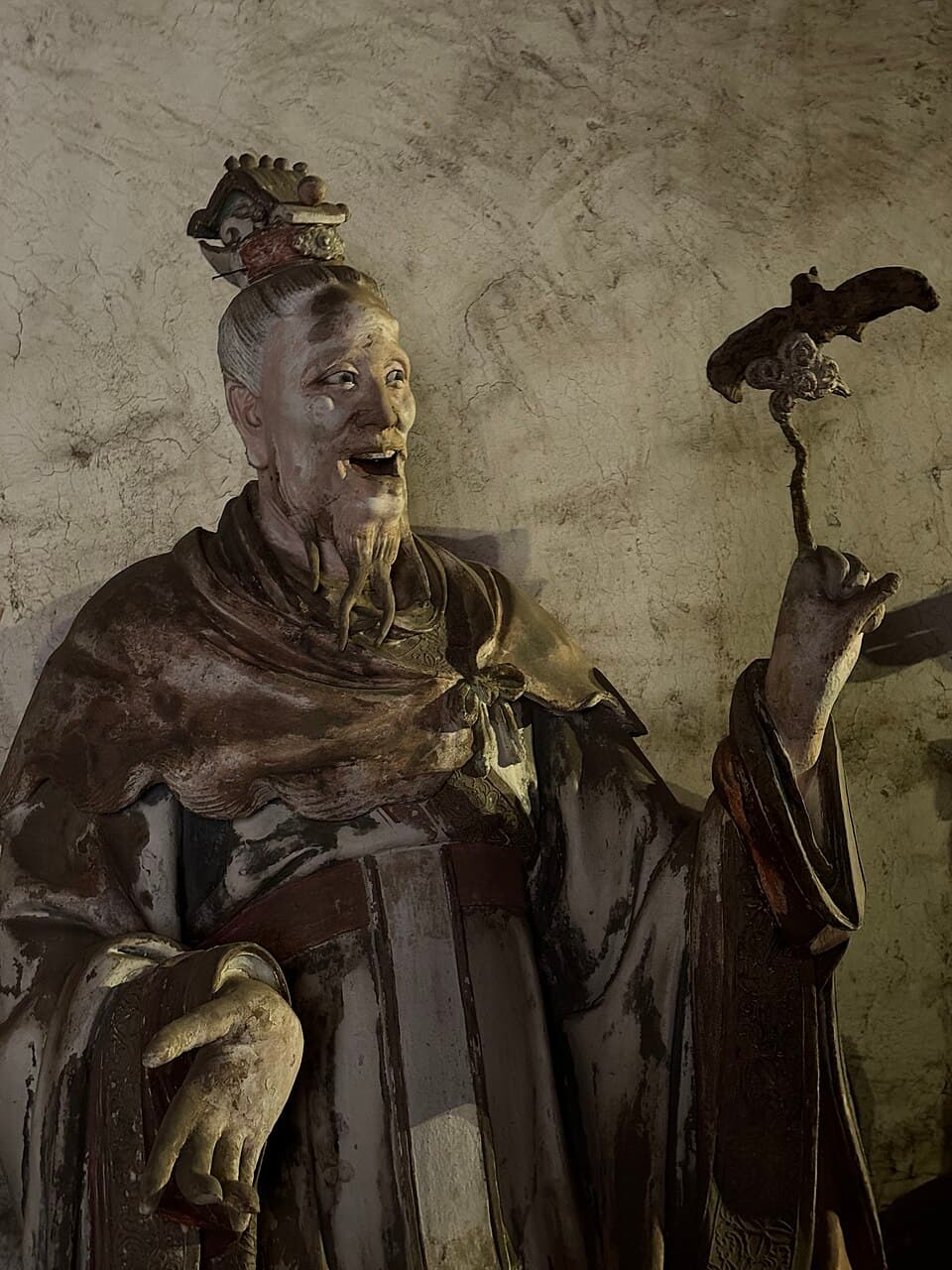
Nü Tofu is a deity of the Chinese pantheon.
Nüba is a deity of the Chinese pantheon.

The Old Man of the South Pole, also called the Old Immortal of the South Pole, Xian of Longevity, or Star of Longevity, is the Taoist deification of Canopus, the brightest star of the constellation Carina. He is typically portrayed with long white hair and beard, a protruding forehead and a healthy pink complexion. His right hand often holds a peach and left hand a walking staff with a calabash gourd, which is said to contain the elixir of life.
Pa-cha in late Chinese mythology is the god who protects farmers against locusts by eliminating them. Pa-cha is depicted as a naked to the waist human with a beak-like nose. His body beneath the waist resembles a bell with big crawled bird paws underneath.
Pan Jinlian is a deity of the Chinese pantheon.
Pang Juan was an ancient Chinese military general of the Wei state during the Warring States period.
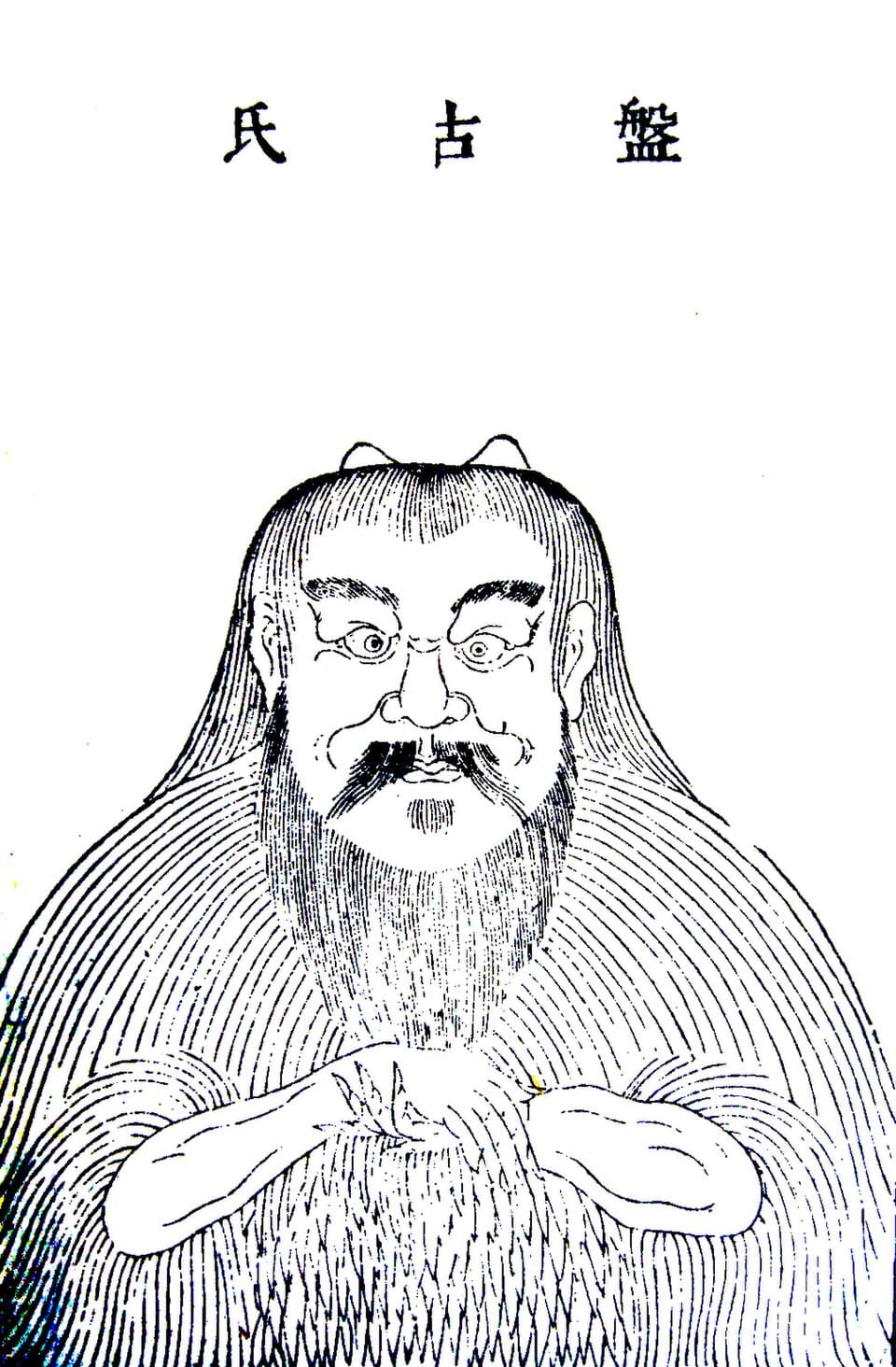
Pangu or Pan Gu (Chinese: 盤古; pinyin: Pángǔ ; PAN-koo) is a primordial being and creation figure in Chinese mythology and in Taoism. According to legend, Pangu separated heaven and earth, and his body later became geographic features such as mountains and flowing water.
Panhu is an important figure in Han and Yao mythologies. The Panhu mythological complex includes myths in Chinese and also other languages. This myth has a long history of being transmitted by Han Chinese and several of the other ethnic groups of the fifty-six officially recognized by the current administration of China, both orally and in literature.
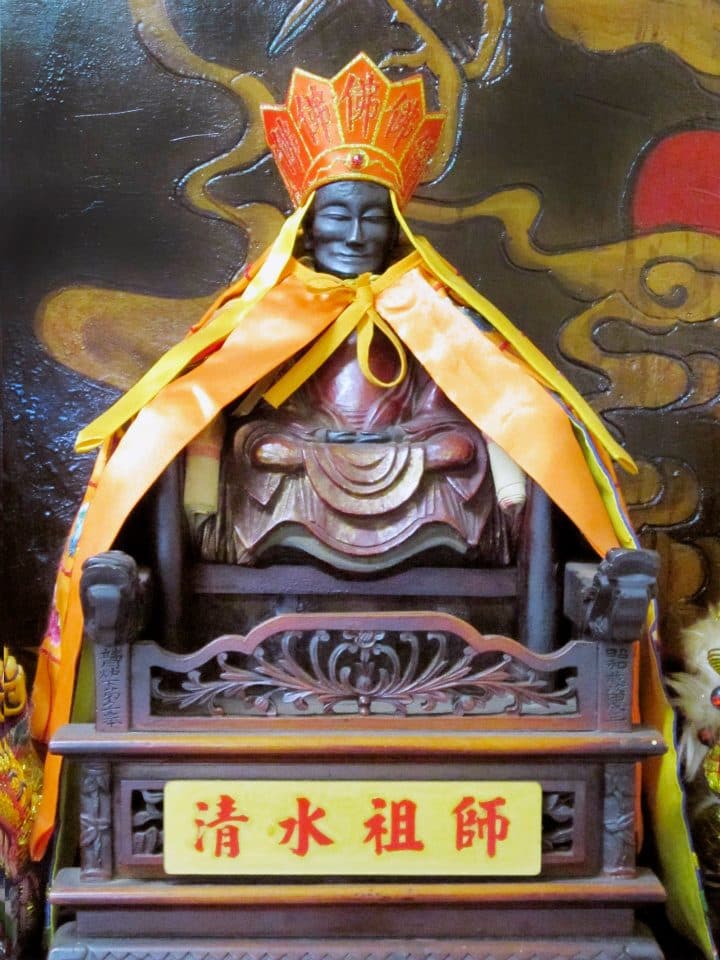
Patriarch Ching Chwee, also known as Chó͘-su-kong, born Tan Chiau Eng was a Chan/Zen Buddhist monk during the Northern Song from Anxi County, Quanzhou. He was said to have gained supernatural powers through his skill in learning and preaching the Dharma and meditation. Through this, he is said to have saved the town of Anxi during a period of drought, bringing rain as he went from place to place.
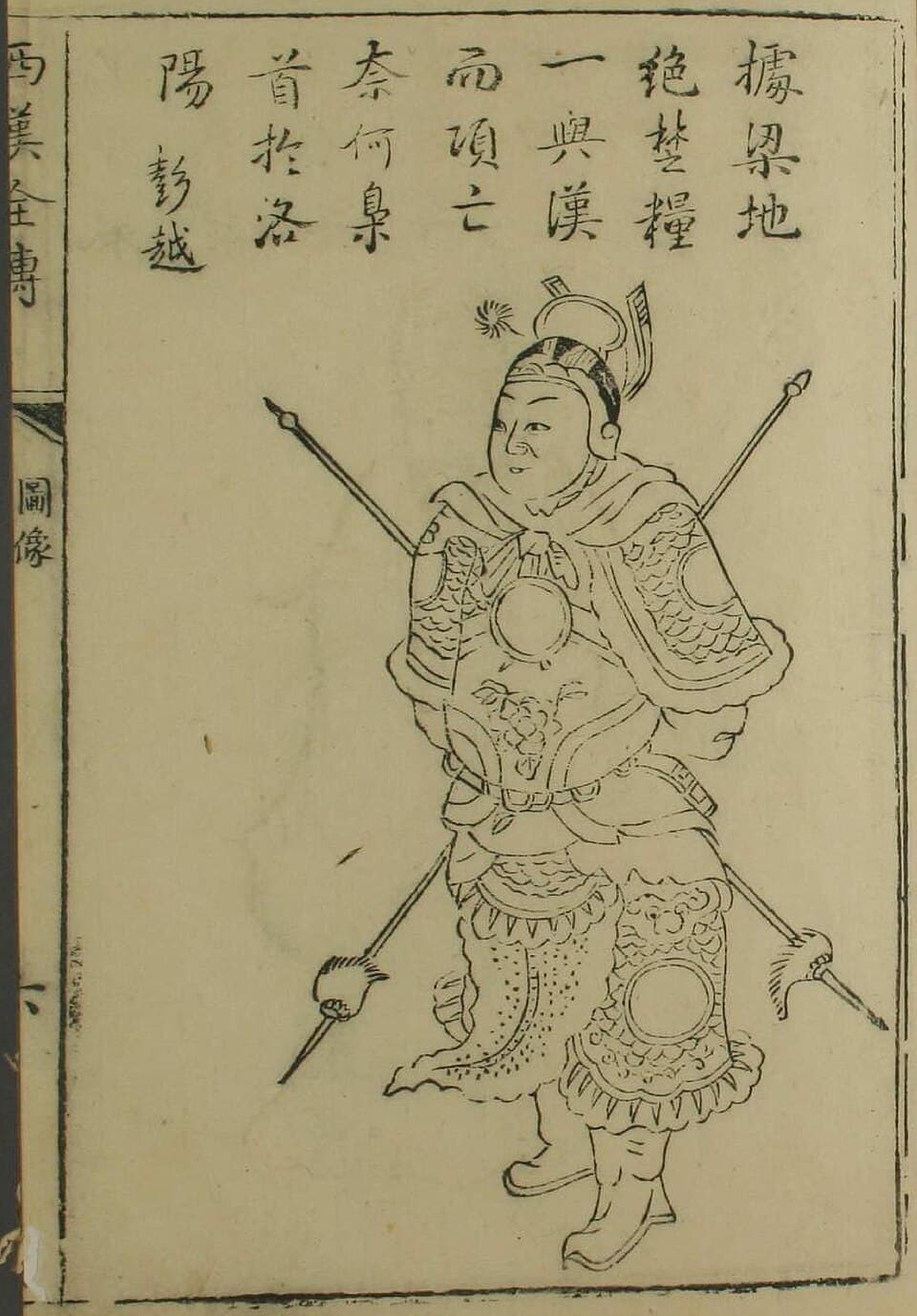
Peng Yue, courtesy name Zhong, was a Chinese military general who lived during the late Qin dynasty and early Han dynasty. He was a prominent ally of Liu Bang, the founding emperor of the Han dynasty, during the Chu–Han Contention, a power struggle for control over China between Liu Bang and his rival Xiang Yu. During this time, he was known for using guerrilla-style tactics to perform hit-and-run raids and wear down Xiang Yu's forces.
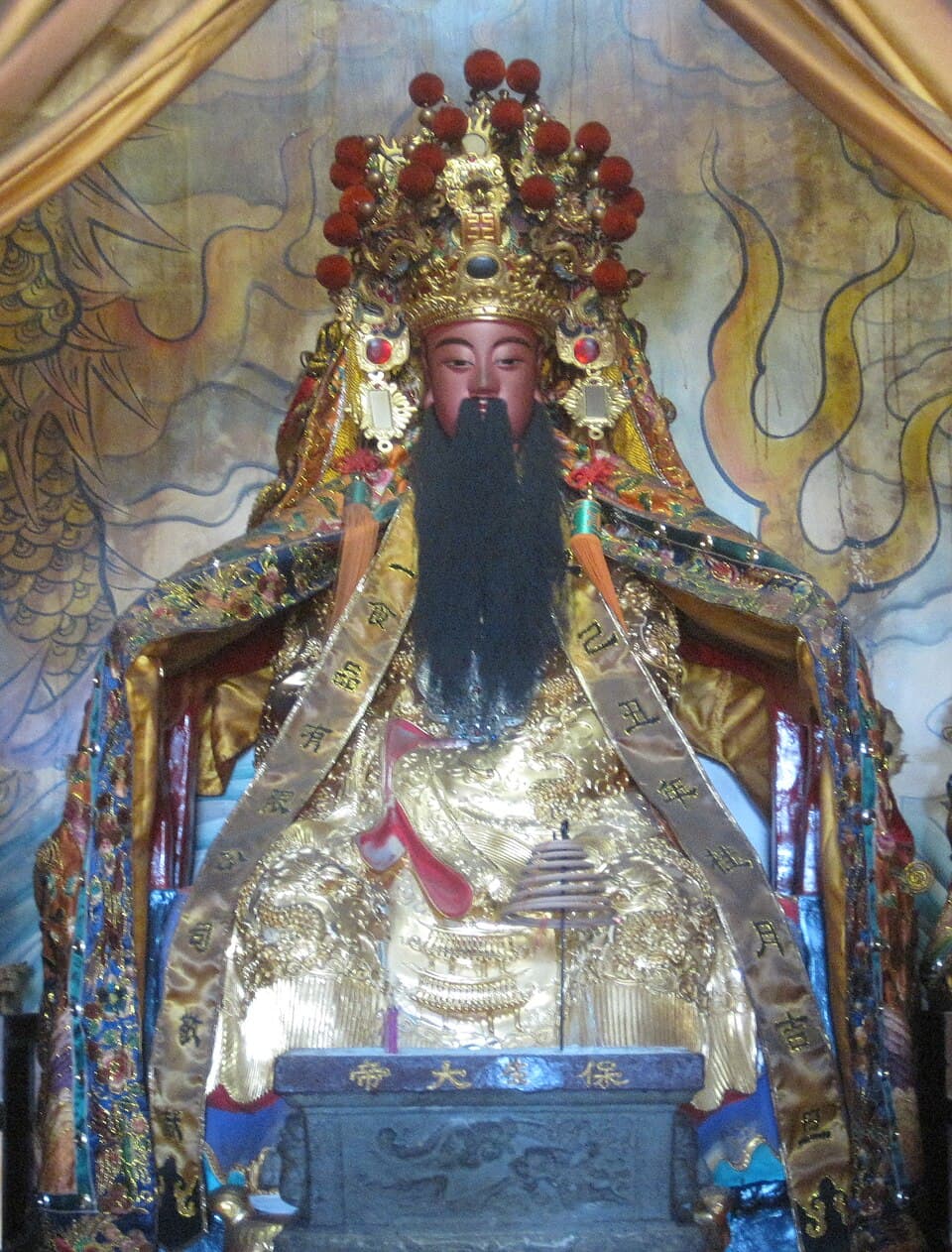
Poh Seng Tai Tay, also known as Taitokong, is the God of Medicine worshiped among the Hoklo people in Fujian, Taiwan, and the Hokkien communities in Southeast Asia.
Princess Longji is a deity of the Chinese pantheon.
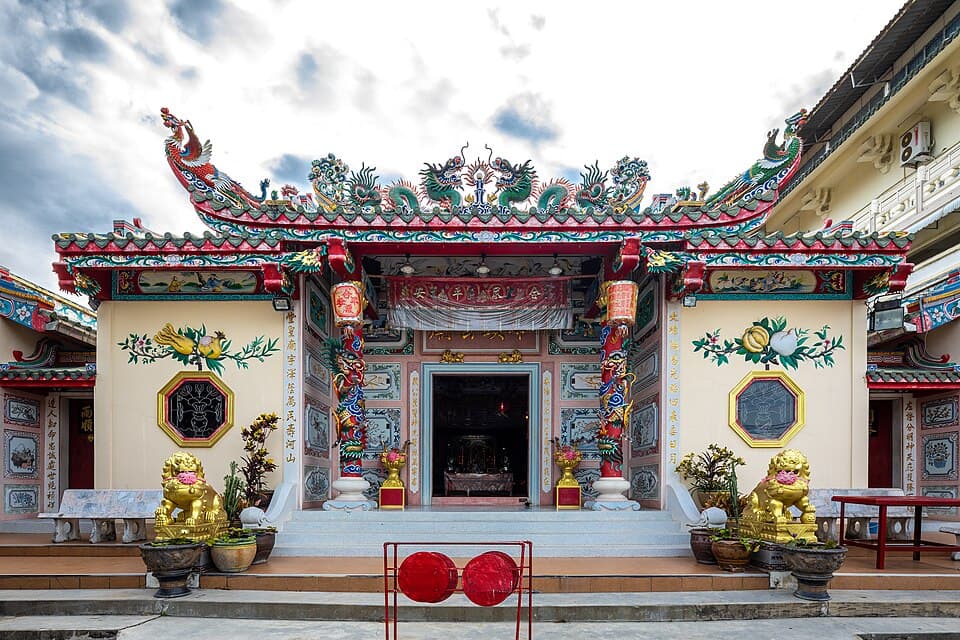
Pun Tao Kong or Lao Pun Tao Kong is a deity who is highly respected and broadly regarded by overseas Chinese but does not exist in China. He is related and similar to Tudigong. Pun Tao Kong beliefs and shrines exist in some countries such as Thailand, Malaysia, Vietnam, Cambodia, Singapore.
Puti Shushen is a deity of the Chinese pantheon.
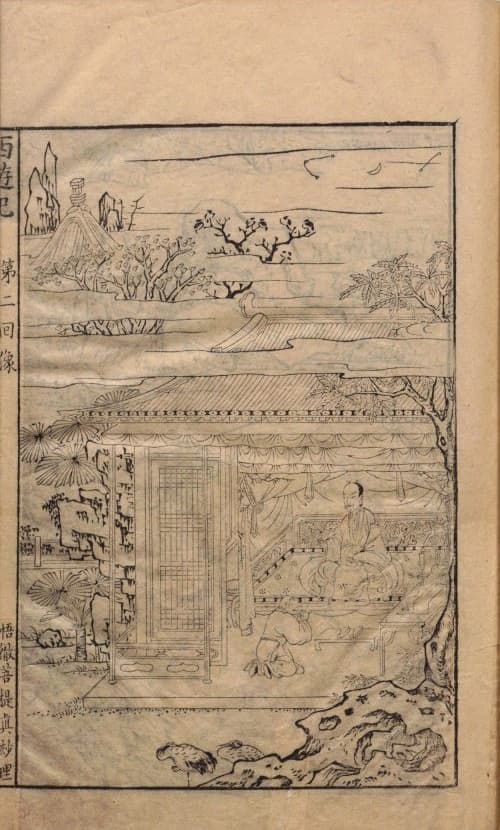
Puti Zushi, is a character from the 16th century Chinese novel Journey to the West. The character is believed to be derived from Subhūti, one of the ten principal disciples of the Buddha.
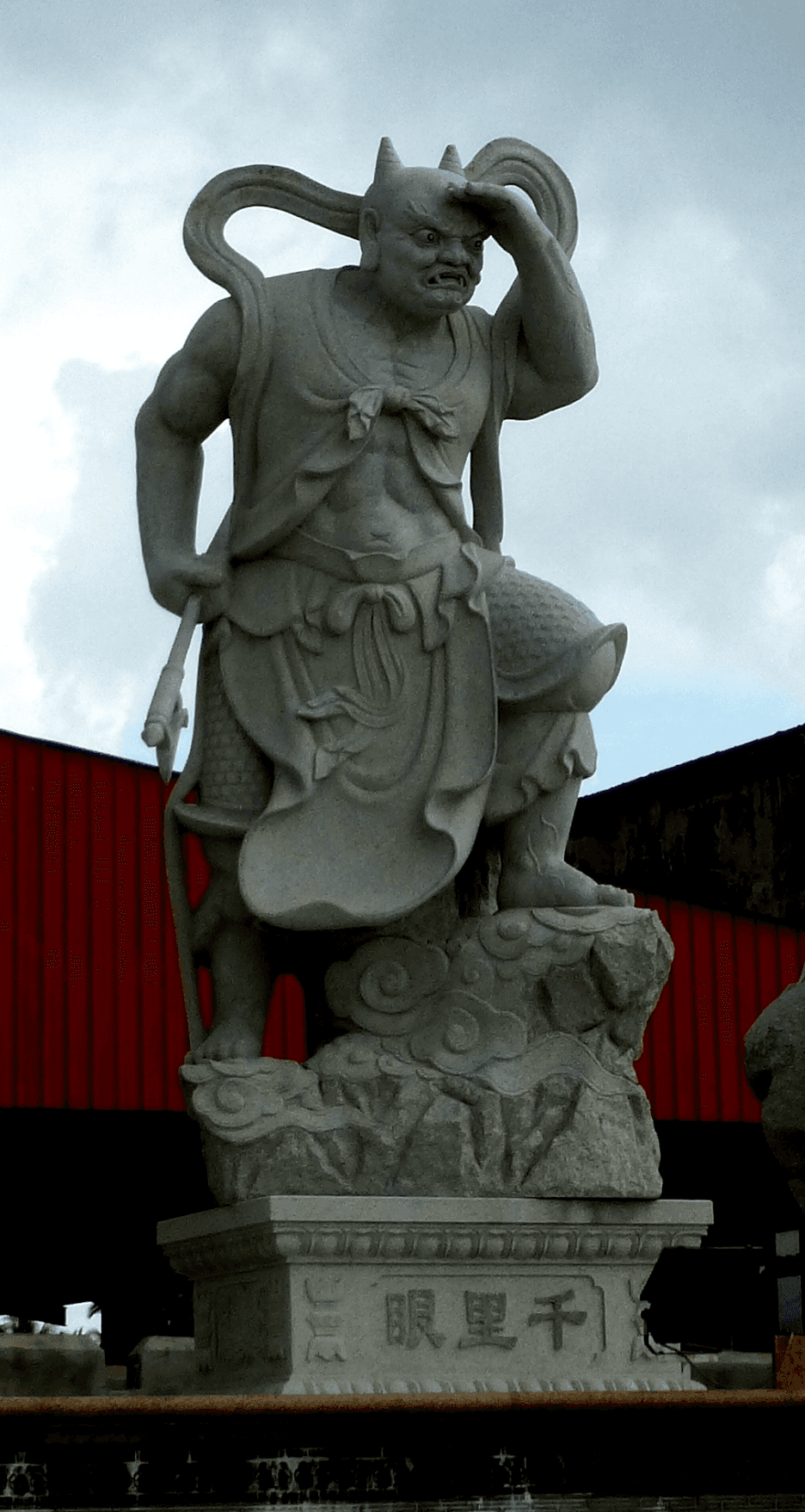
Qianliyan is a Chinese sea and door god. He usually appears with Shunfeng'er as a guardian of the temples of the sea goddess Mazu.
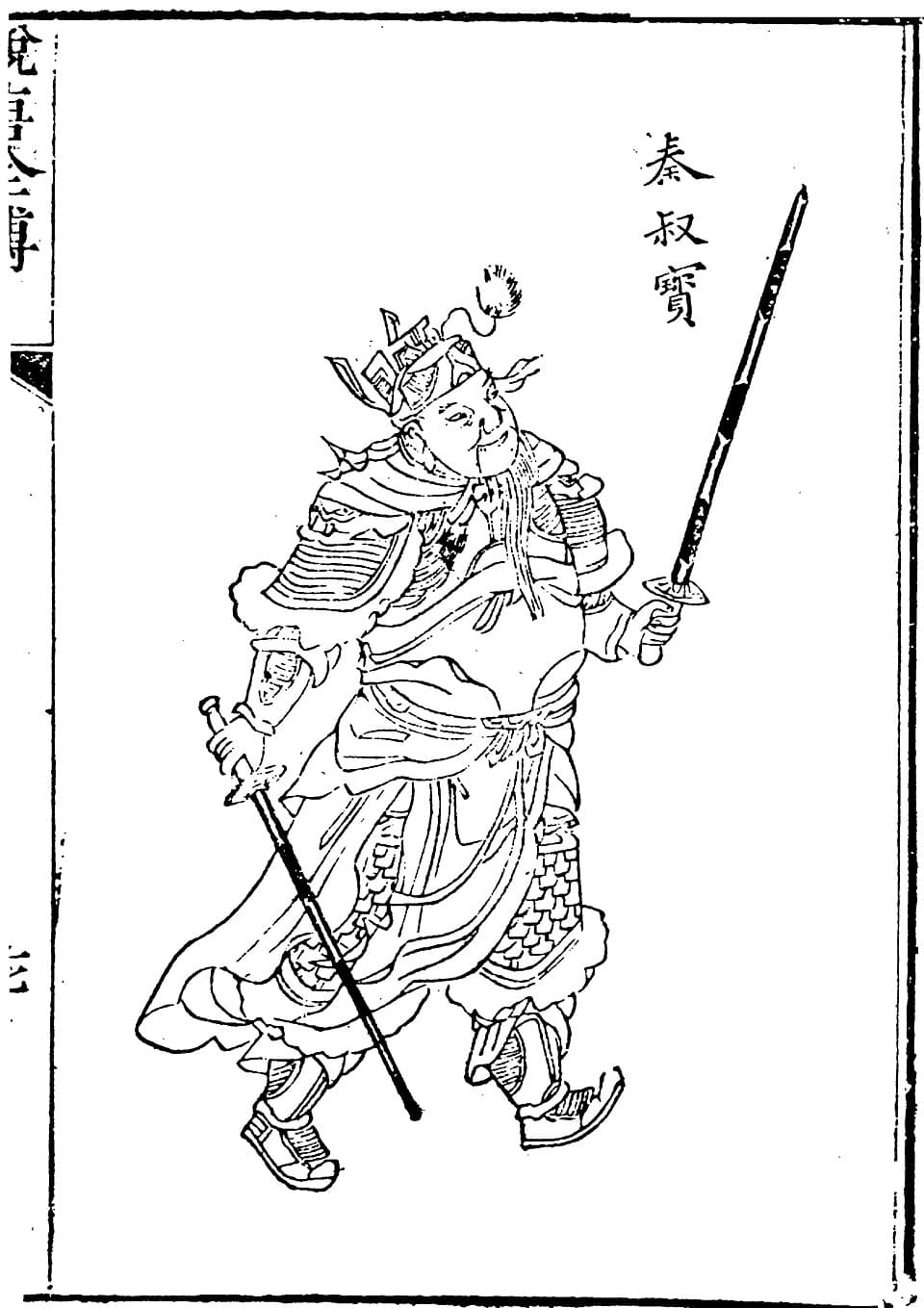
Qin Qiong, courtesy name Shubao, better known as Qin Shubao, was a Chinese general who lived in the early Tang dynasty of China. Along with Yuchi Gong, he continues to be worshipped in China as a door god. He is also known by his posthumous name Duke Zhuang of Hu.
Qingxu Daode Zhenjun is a character featured within the famed classic Chinese novel Investiture of the Gods. He is one of the Twelve Golden Immortals under Yuanshi Tianzun. He has two disciples: Huang Tianhua and Yang Ren, and the servant is Baiyun Boy.
Qiongxiao Niangniang is a deity of the Chinese pantheon.
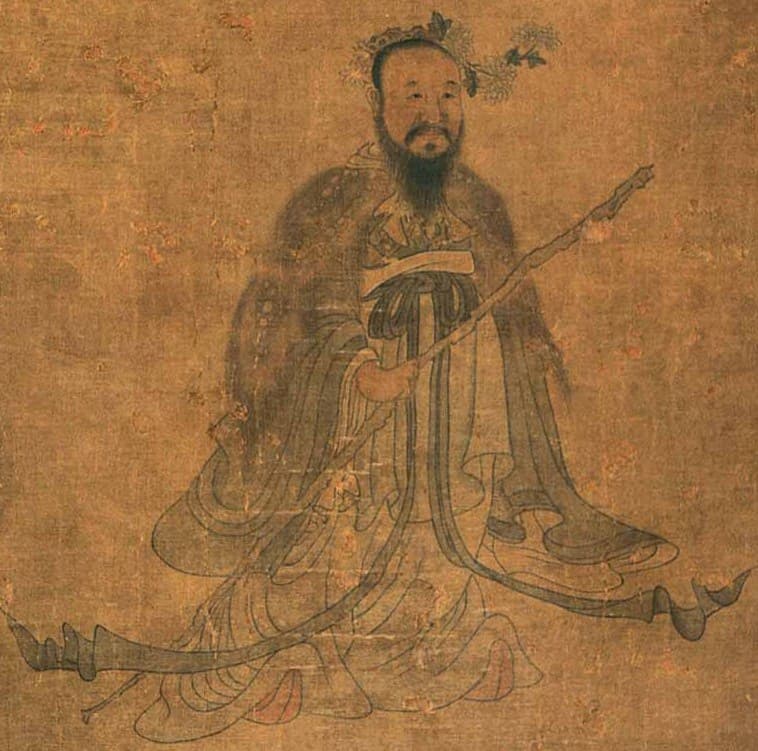
Qu Yuan was a Chinese poet and aristocrat in the State of Chu during the Warring States period. He is known for his patriotism and contributions to classical poetry and verses, especially through the poems of the Chu Ci anthology, a volume of poems attributed to or considered to be inspired by his verse writing. Together with the Shi Jing, the Chu Ci is one of the two greatest collections of ancient Chinese verse.
Queen Mother of the West is a deity of the Chinese pantheon.

Randeng Daoren is a character in the famed classic Chinese novel Fengshen Yanyi. He was renowned as the Superiorman of Mount Condor, Intuition Cave. His role originated from Dipankara Buddha of Buddhist lore, who was a past enlightened being before the time of Gautama Buddha.
Ri Ye Youshen are a pair of deities in Chinese folk religion and Taoism. They are the Day Wandering Deity (日遊神) and the Night Wandering Deity (夜遊神), who were originally depicted as malevolent spirits roaming the world. Over time, their roles evolved, and they became subordinates of major underworld deities such as the Dongyue Dadi, Yanluo Wang, and the City God.

The Sacred Mountains of China are divided into several groups. The Five Great Mountains refers to five of the most renowned mountains in Chinese history, which have been the subjects of imperial pilgrimage by emperors throughout ages. They are associated with the supreme God of Heaven and the five main cosmic deities of traditional Chinese religion.
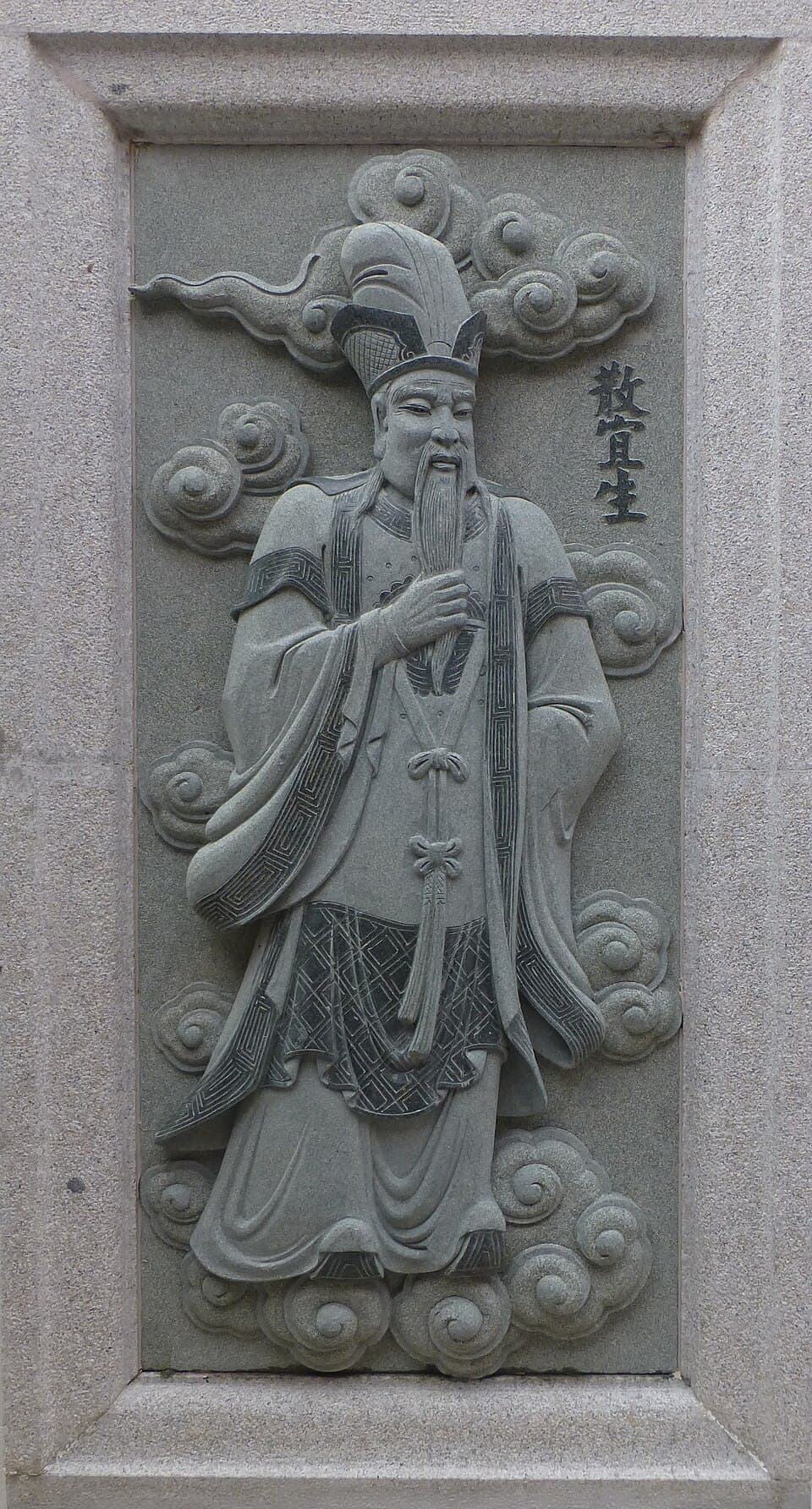
San Yisheng was a top official of the early Western Zhou dynasty.

The Sanxing are the gods of three celestial bodies of particular significance in Chinese astronomy and Chinese folk religion: Jupiter, Mizar in Ursa Major, and Canopus. Fu, Lu, and Shou, or Cai, Zi and Shou (財子壽) are the embodiments of Fortune (Fu), presiding over the planet Jupiter; Prosperity (Lu), presiding over Mizar ; and Longevity (Shou), presiding over Canopus. They have emerged from Chinese folk religion.
Saoqing Niang is a deity of the Chinese pantheon.

Seven Fairies (China) is a deity of the Chinese pantheon.
The Seven Sages of Meishan are a group of legendary deities and the subordinates of the god Erlang Shen in Chinese folklore and Daoist mythology, said to be powerful warrior-deities or spirit-generals originating from the mountainous region of Meishan. Their story forms a major episode in the legends of Erlang Shen and appears in the classic Chinese novels Investiture of the Gods and Journey to the West, as well as in the religious text The Precious Scroll of Erlang (二郎宝卷).
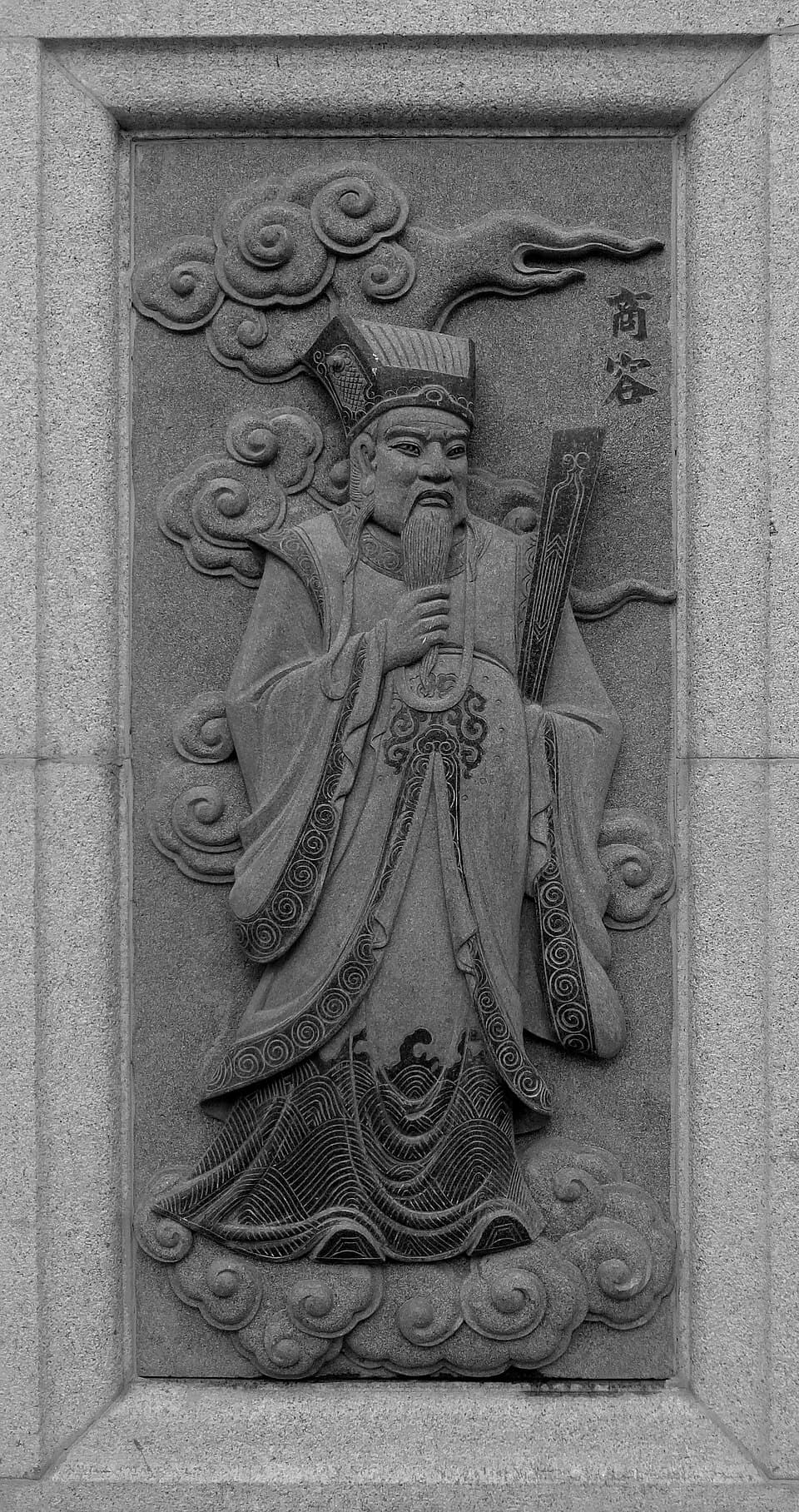
Shang Rong was a high official during the reign of Di Xin in the Late Shang period. He is also a major character featured in the classic Chinese novel Fengshen Yanyi.

Shangdi (Chinese: 上帝; pinyin: Shàngdì; Wade–Giles: Shang4 Ti4), also called simply Di (Chinese: 帝; pinyin: Dì; lit. 'Lord'), is the name of the Chinese Highest Deity or "Lord Above" in the theology of the classical texts, especially deriving from Shang theology and finding an equivalent in the later Tiān ("Heaven" or "Great Whole") of Zhou theology.

Shao Siming is an primordial Chinese deity of fate, paired with Da Siming (大司命) as one of a dual male dyadic pair of gods representing complementary aspects of destiny. His name has also been translated as Lesser Siming or The Lesser Master of Fate, The Young Lord of Fate.

Shen Gongbao is a major character featured within the famed classic Chinese novel Investiture of the Gods. Shen Gongbao is a disciple of Yuanshi Tianzun, Jiang Ziya's junior fellow apprentice.
Shenlong is the spirit dragon from Chinese mythology who is the dragon god of the tempest and also a master of rain. He is of equal significance to other creatures such as Tianlong the celestial dragon, Zhulong the dragon of eruption, Qinglong the azure dragon, and Yinglong the responsive dragon.
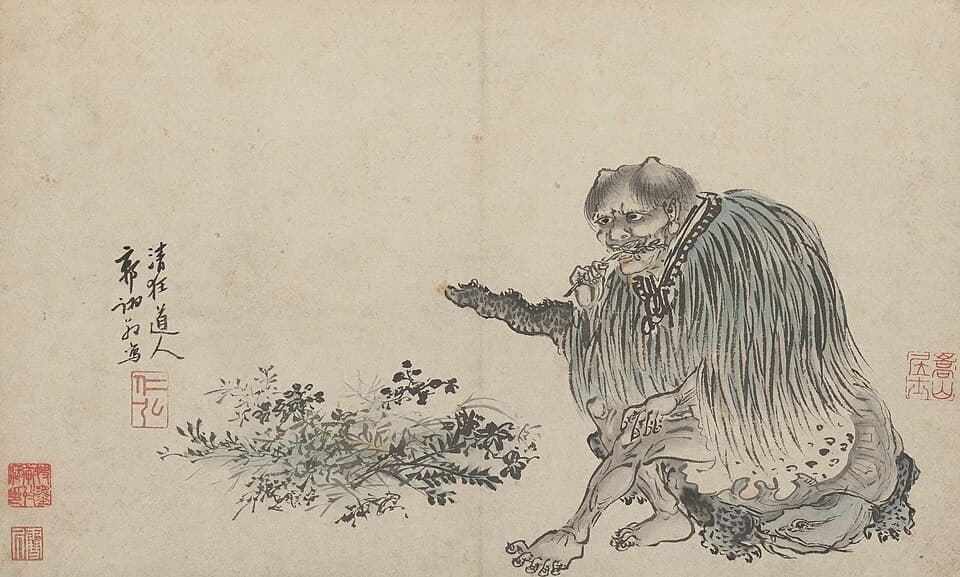
Shennong, variously translated as "Divine Farmer" or "Divine Husbandman", born Jiang Shinian (姜石年), was a mythological Chinese ruler known as the first Yan Emperor who has become a deity in Chinese folk religion. He is venerated as a culture hero in China.

Shenshu or Shentu and Yulü or Yulei are a pair of deities in Chinese mythology who punished evil spirits by binding them in reed ropes and feeding them to tigers. Their images together with reed rope seasonally adorned the doors or gates to ward off evil, and are considered the earliest examples of Menshen venerated under such practice. Later traditions identified other gods or deified people as gate deities.

Shiji Niangniang is a deity of the Chinese pantheon.

Shui Wei Sheng Niang is a deity of the Chinese pantheon.
Shuimu is a deity of the Chinese pantheon.
Shujun is a Chinese god of farming and cultivation, also known as Yijun and Shangjun. Alternatively he is a legendary culture hero of ancient times, who was in the family tree of ancient Chinese emperors descended from the Yellow Emperor (Huangdi). According to the various sources, Shujun was the son of Di Jun or else Houji's son or nephew.

Shunfeng'er is a Chinese sea and door god. He usually appears with Qianliyan as a guardian of the temples of the sea goddess Mazu.

Siming refers to a Chinese male deity or deified functionary of that title who makes fine adjustments to human fate, with various English translations. Siming is both an abstract deity and a celestial asterism.
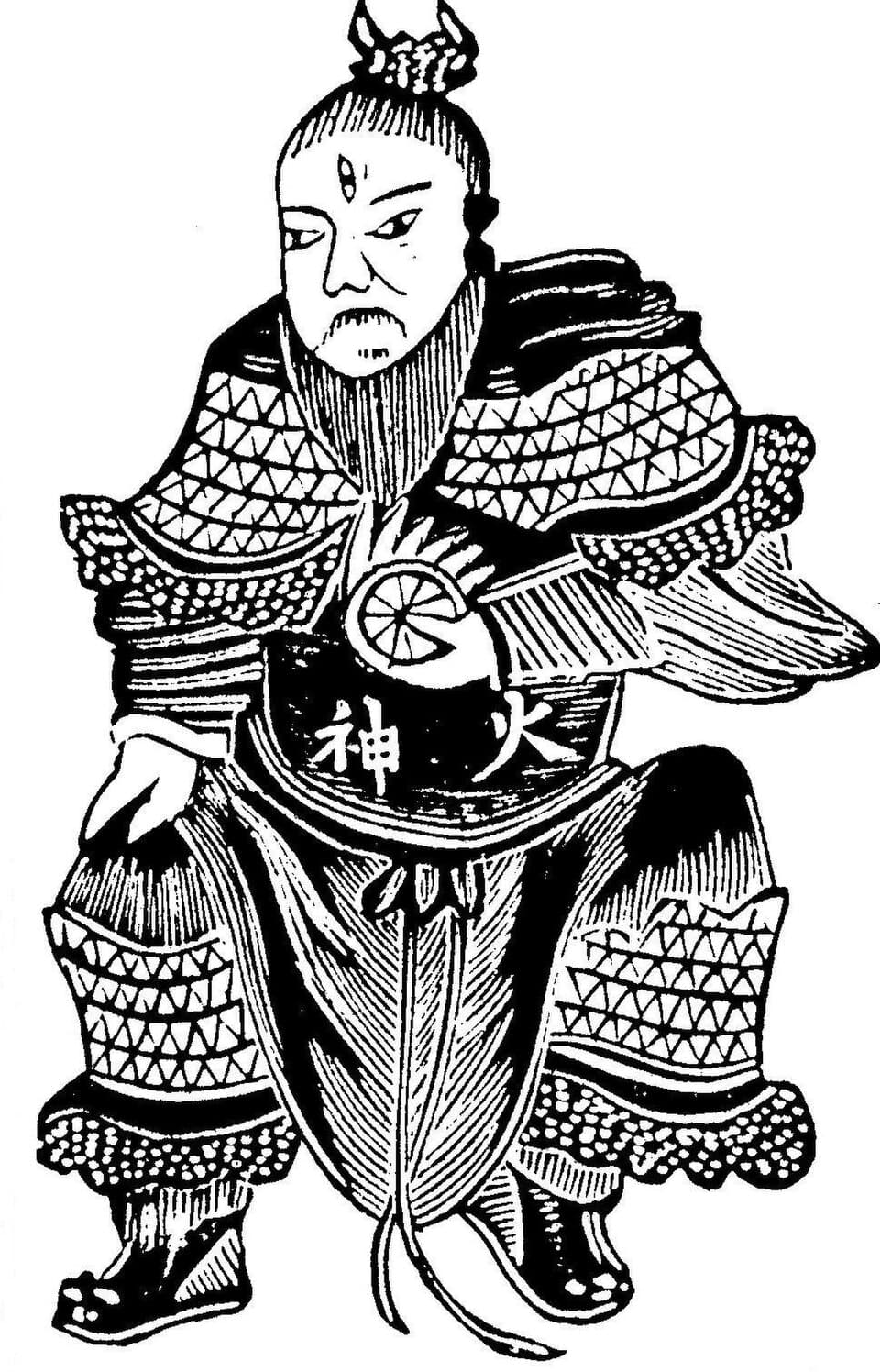
Suiren, also known as Suihuang, in Chinese mythology credited with introducing fire-making to human.
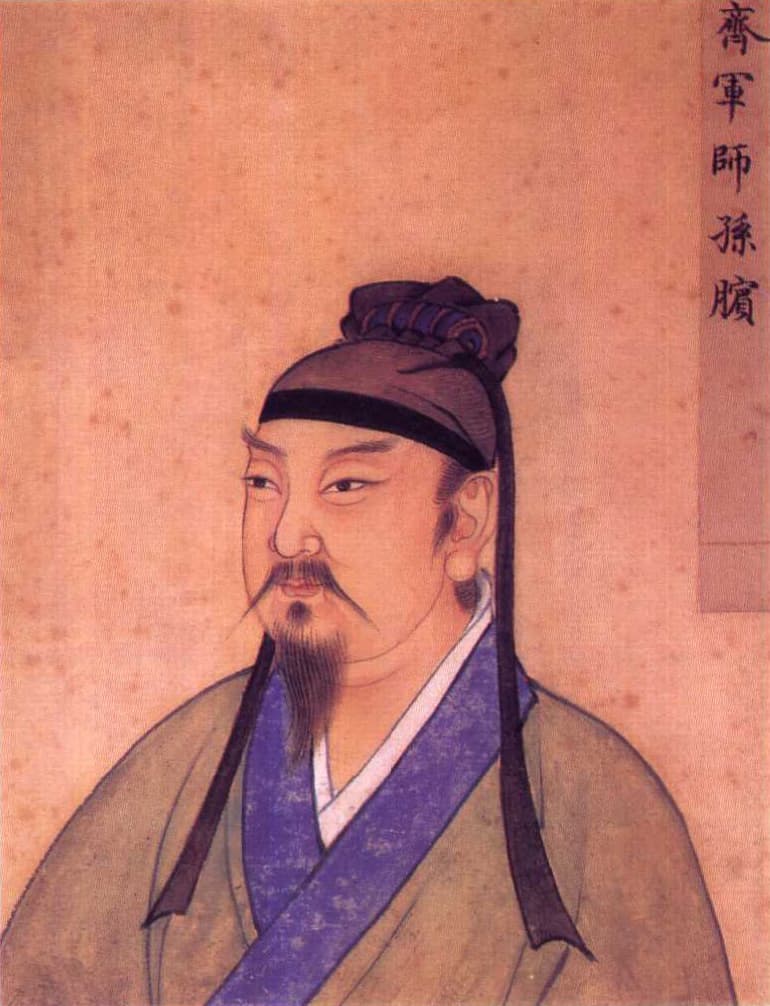
Sun Bin was a Chinese general, military strategist, and writer who lived during the Warring States period of Chinese history. A supposed descendant of Sun Tzu, Sun was tutored in military strategy by the hermit Guiguzi. He was accused of treason by Pang Juan while serving Wei and punished by being branded and crippled.
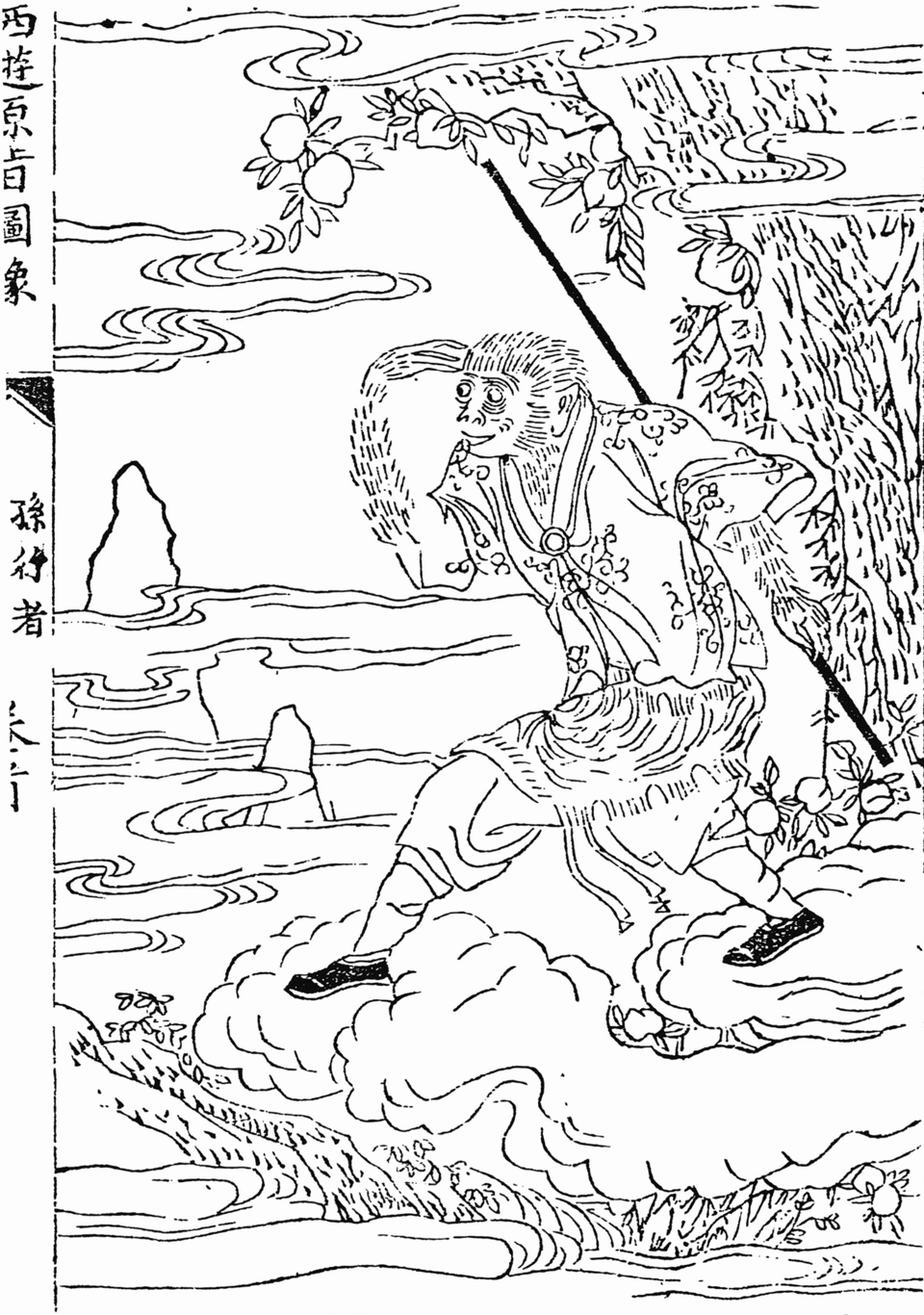
Sun Wukong, also known as the Monkey King, is a literary and religious figure best known as one of the main characters in the 16th-century Chinese novel Journey to the West. In the novel, Sun Wukong is an intelligent monkey born from a stone who acquires supernatural powers through Taoist practices. After rebelling against heaven, he is imprisoned under a mountain by the Buddha.
Sunü is a deity of the Chinese pantheon.
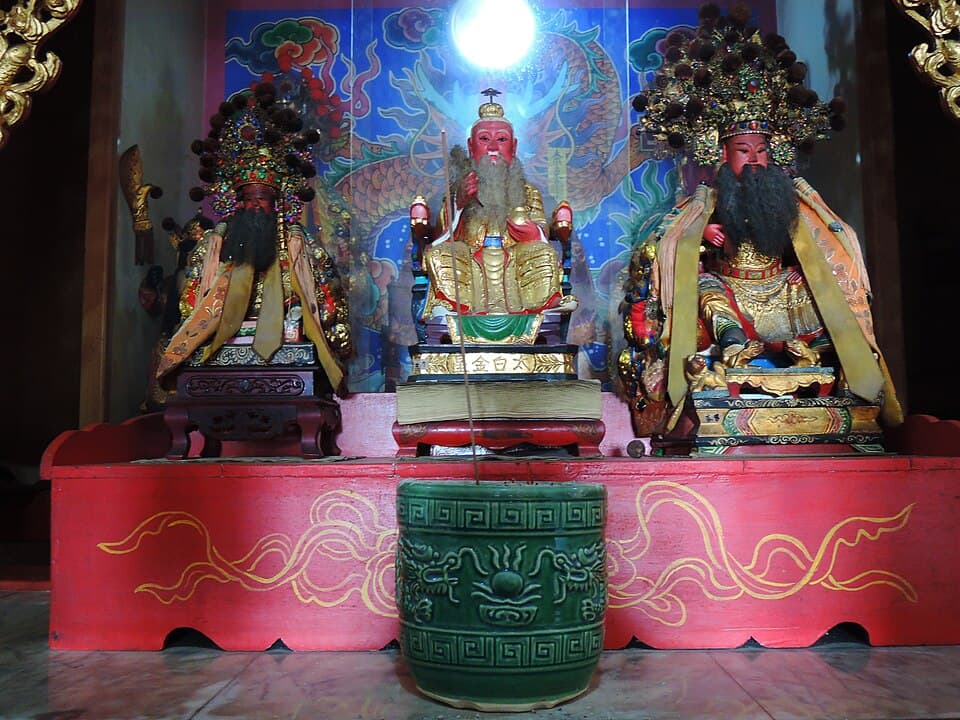
Taibai Jinxing is a deity in Chinese folk religion and Taoism. He is the son of Bai Di, the White Emperor, and his name means 'Evening Star'. The Fengshen Yanyi refers to him as an aide in the entourage of the Jade Emperor.

Taiyi Zhenren is a Daoist deity in Chinese religion and Taoism. Taiyi means "primordial unity of yin and yang" and Zhenren is a Daoist term for "Perfected Person". According to the opening of the classical novel Fengshen Bang, he is the reincarnation of the first emperor of the Shang dynasty, Tang of Shang.

Taiyin Xingjun is a deity of the Chinese pantheon.
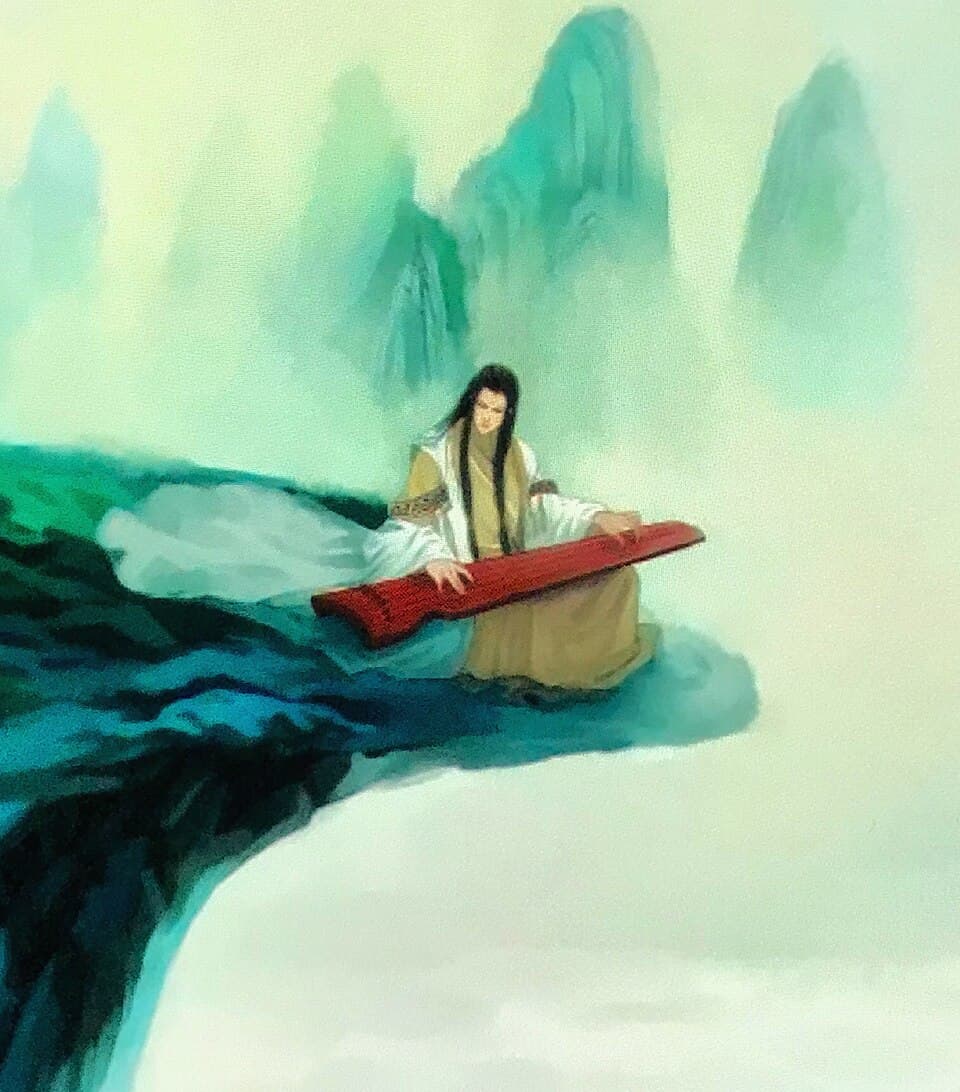
Taizi Changqin is a deity in Chinese mythology, regarded as the mythological ancestor of Chinese music and melody. His story is recorded in the ancient Chinese text Classic of Mountains and Seas.
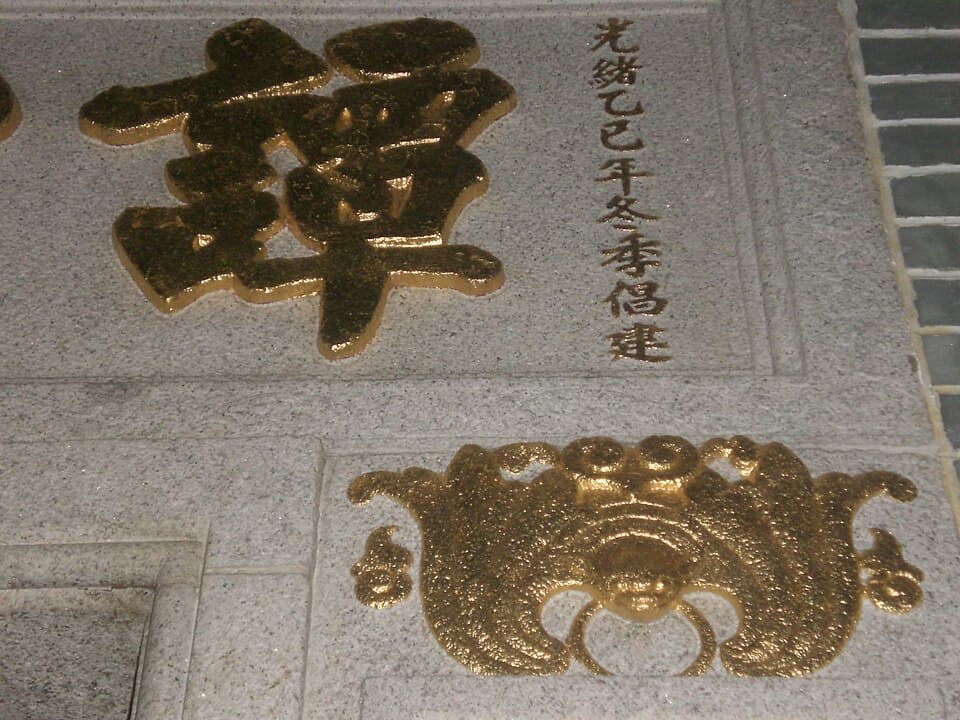
Tam Kung or Tam Tai Sin (譚大仙) is a sea deity worshiped in Hong Kong and Macau.

The Three Great Emperor-Officials, Sanguan, or the Three Officials are three of the highest shen in some branches of religious Taoism, and subordinate only to the Jade Emperor. The Three Great Emperor-Officials are the "Heavenly Official", the "Earthly Official" and the "Water Official". They administer all phenomena in the three spheres and were thought to be able to take away sin.

The Three Pure Ones, also translated as the Three Pure Pellucid Ones, the Three Purities, the Three Pristine Ones, the Three Clarities, or the Three Divine Teachers, are the three highest gods in the Taoist pantheon.

Thunder Ancestor (雷祖) is a Taoist deity in charge of thunder and the thirty-six heavens. His full name is Ninth Heaven Corresponding to the Origin Thunder Sound Universally Enlightening Heavenly Lord (九天应元雷声普化天尊), sometimes shortened to Thunder Sound Universally Enlightening Heavenly Lord (雷声普化天尊), also known as Ninth Heaven Universally Enlightening Lord. He is a manifestation of Southern Apex Longevity Great Emperor (南極長生大帝), who is also known as Jade Purity Truth King.

Tian (天) is one of the oldest Chinese terms for heaven or the cosmos and is a central concept in Chinese mythology, philosophy, and cosmology. During the Shang dynasty, the highest deity was referred to as Shangdi or Di. In the subsequent Zhou dynasty, Tian became synonymous with this figure.
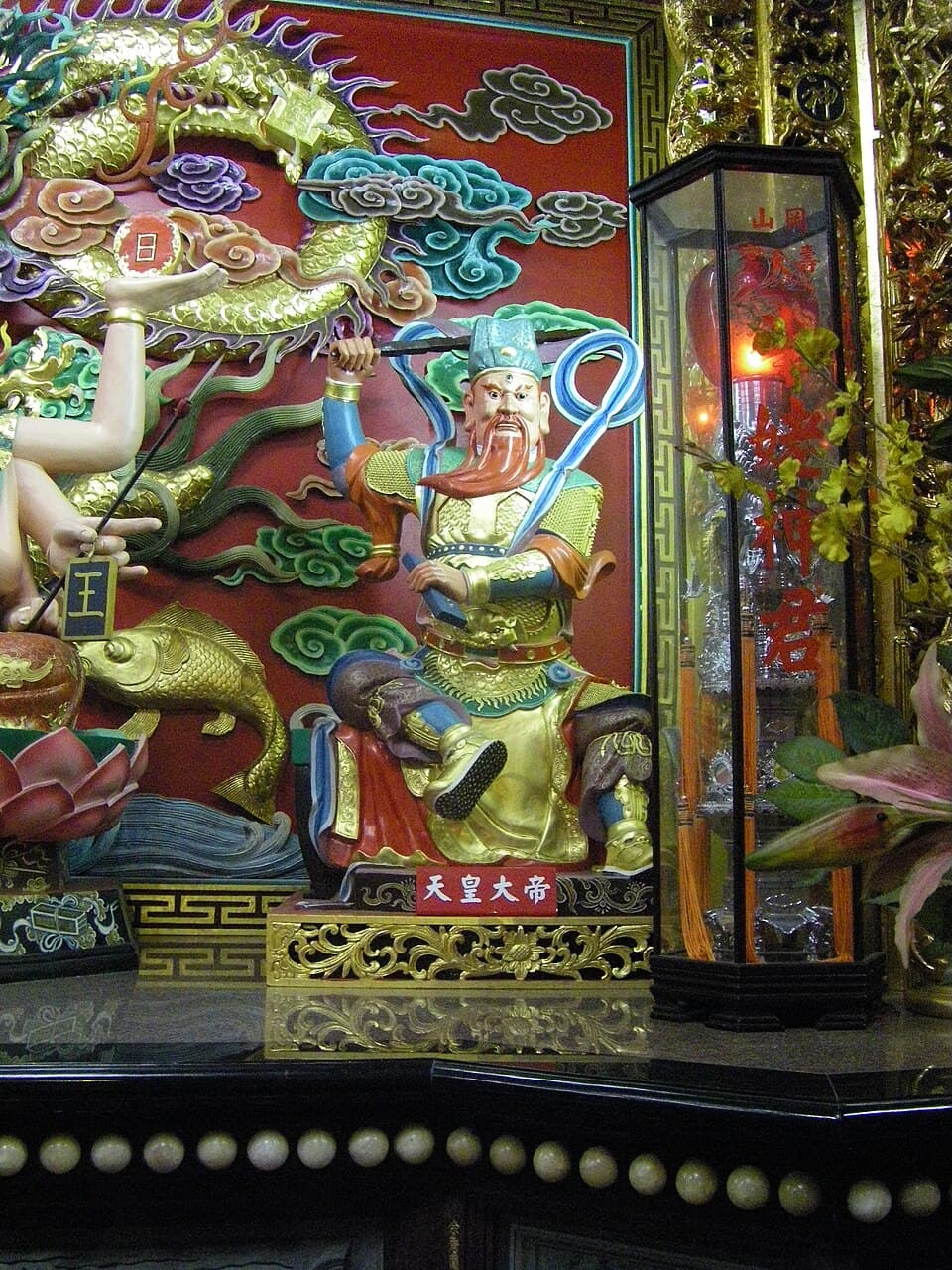
The Great Emperor of the Curved Array, also called the Gouchen Emperor and Tianhuang Emperor, is one of the highest sky deities of Taoism. He is one of the Four Sovereigns and is in charge of heaven, earth, and human and of wars in the human world.
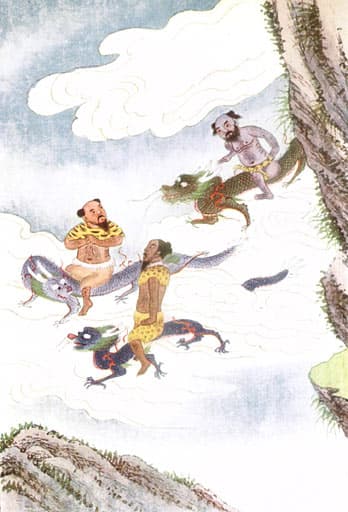
Tianlong is a flying dragon in Chinese mythology, a star in Chinese astrology, and a proper name.

Tongtian Jiaozhu (通天教主) or sometimes translated as Grandmaster of Heaven is the third disciple of Hongjun Laozu and younger brother of Yuanshi Tianzun and Taishang Laojun. He has appeared as an antagonist in many legends, classic novels, and television series. Most notably, he features in the classic Chinese novel Fengshen Yanyi, also known as The Investiture of the Gods.
Tu'er Shen, Hu Tianbao or Tu Shen, is a Chinese deity who manages love and sex between men. His name literally means "rabbit deity". His adherents refer to him as Ta Yeh.
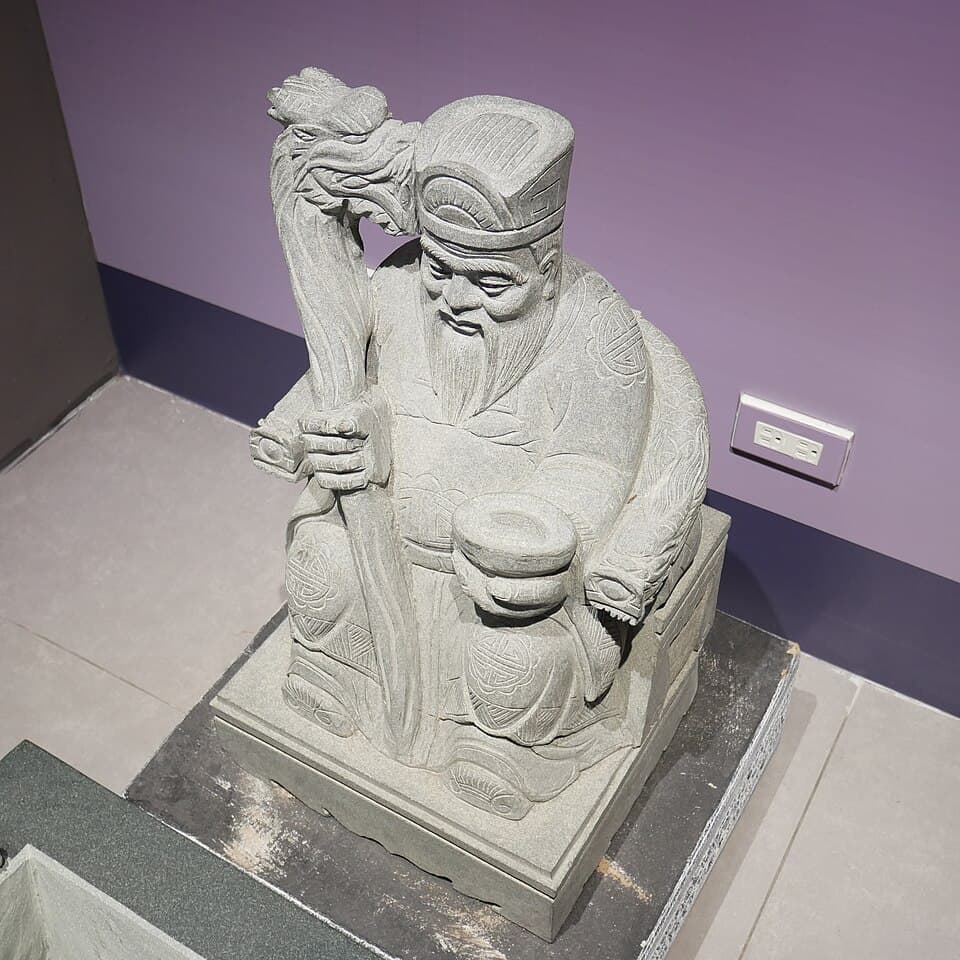
A Tudigong is a kind of Chinese tutelary deity of a specific location. There are several Tudigongs corresponding to different geographical locations and sometimes multiple ones will be venerated together in certain regions.
Twelve Flower Fairies is a deity of the Chinese pantheon.
Vilambā is a deity of the Chinese pantheon.
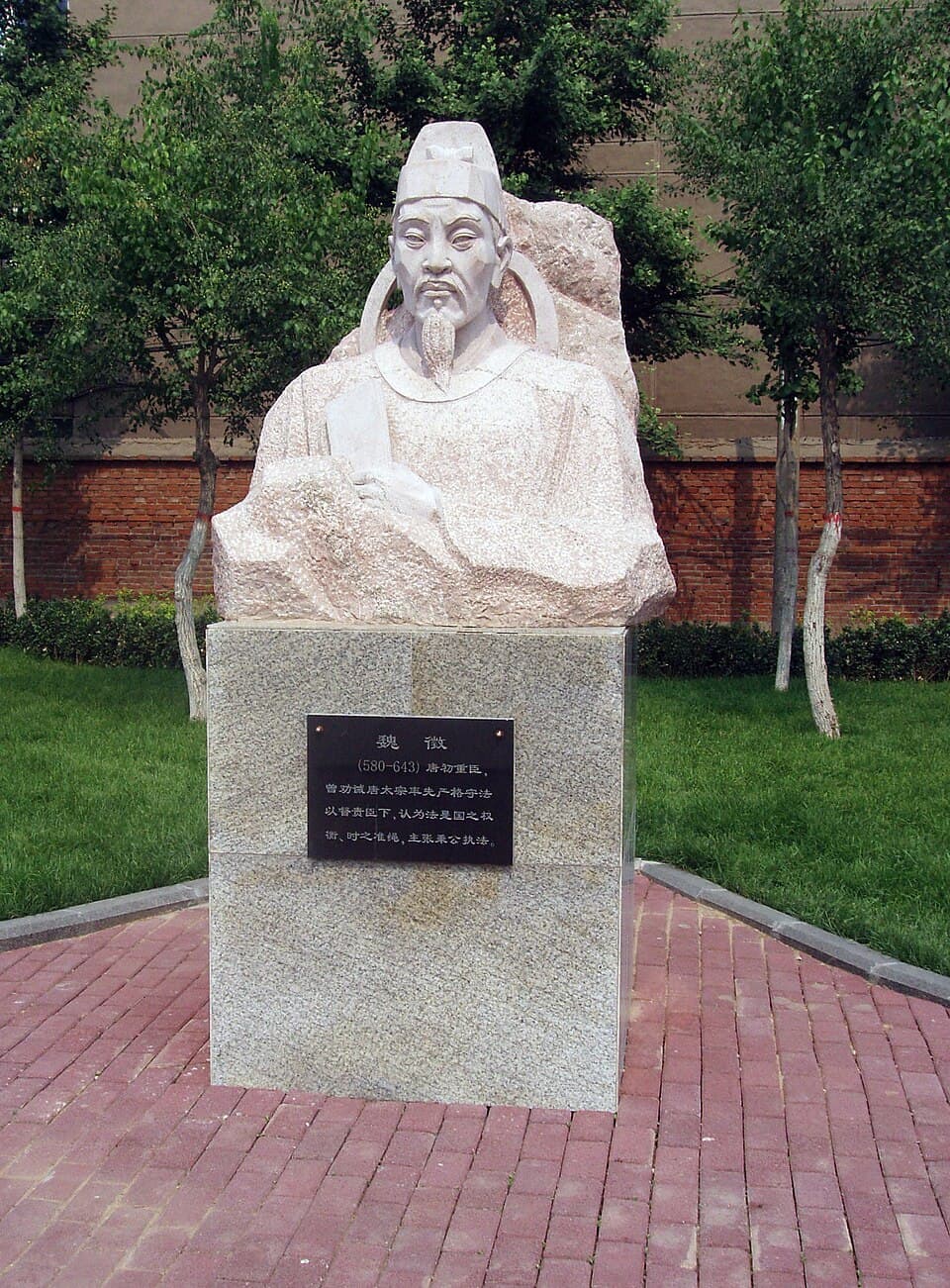
Wei Zheng, courtesy name Xuancheng, posthumous name Duke Wenzhen of Zheng, was a Chinese politician and historian. He served as a chancellor of the Tang dynasty for about 13 years during the reign of Emperor Taizong. He was also the lead editor of the official history of the Sui dynasty, the Book of Sui, which was composed in 636.
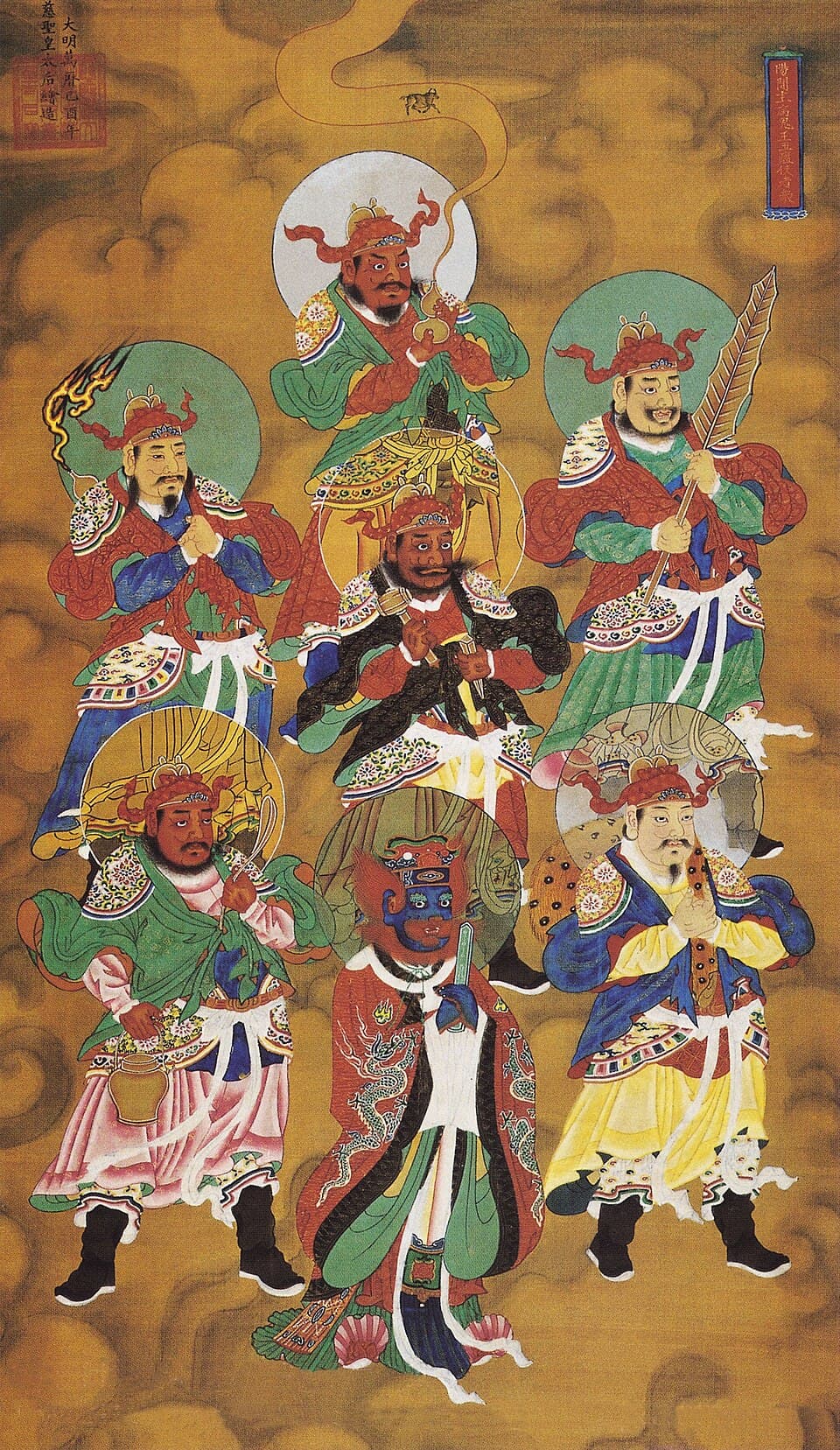
Wen Shen is a deity or group of deities responsible for illness, plague, and disease in Chinese folk religion. In some belief systems, Wen Shen is identified as a single entity who commands wen spirits; in others, the term is used for a grouping of several distinct deities.

Wen Zhong is a character in the classic Chinese novel Fengshen Yanyi. He was the Grand Preceptor (Taishi) of Di Xin. Wen Zhong and Huang Feihu were both renowned as the two most powerful military figures of the Shang dynasty.
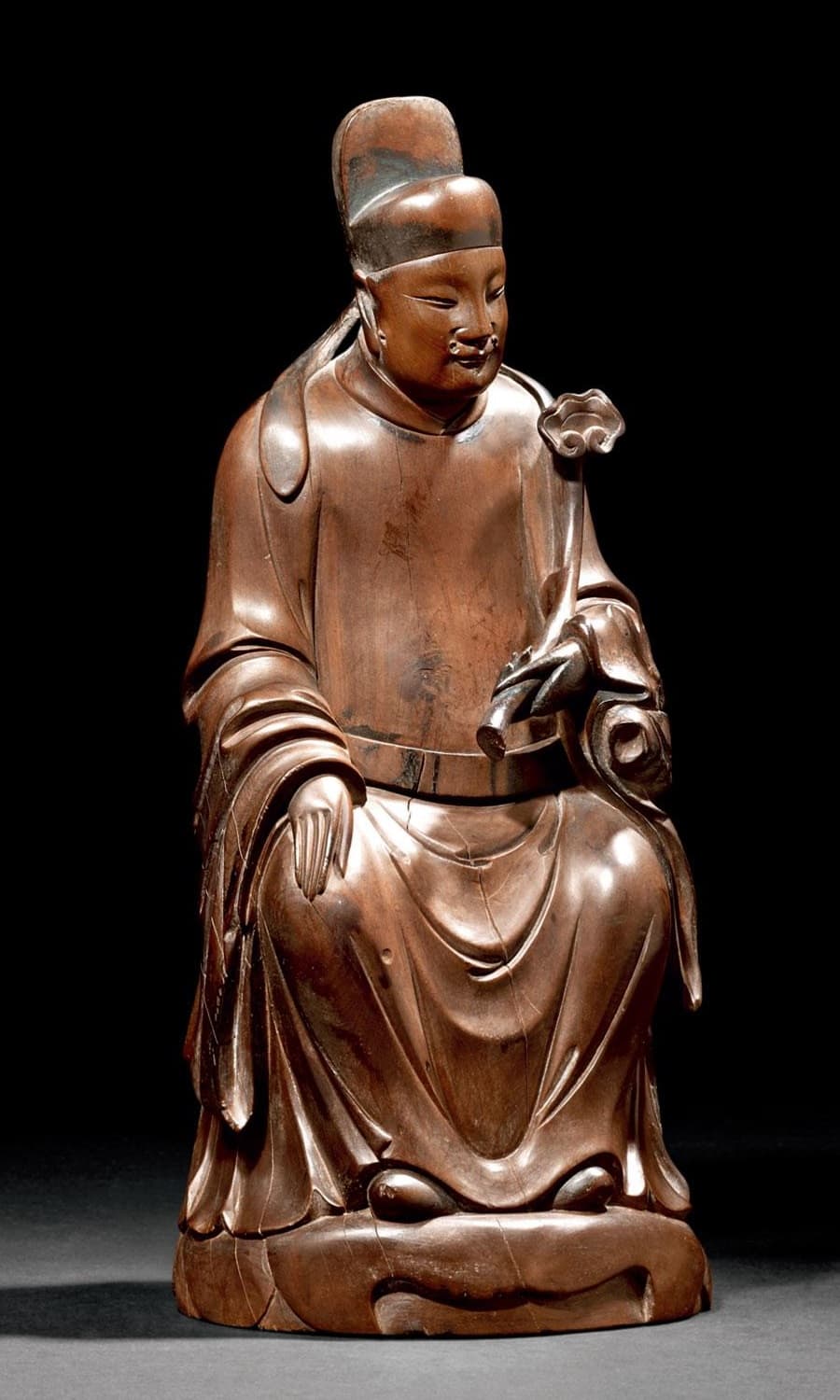
Wenchang Wang, also known as Wenchang Dijun, is a Taoist deity in Chinese mythology, known as the God of Culture and Literature. He is also at times referred to simply as Wen Qu, or Wen. The literal translation of his name would be King (王) of Flourishing (昌) Culture/Language (文).
In Chinese mythology, Wenquxing is a god responsible for overseeing literary pursuits and examinations. Those who excel in literary skills and hold high-ranking positions in the imperial court are often associated with the incarnation of Wenquxing to the mortal realm. Unlike other literary deities such as Wenchang Wang and Kui Xing, Wenquxing emphasizes romantic literary talents, while Wenchang Wang focuses on achieving fame and fortune, and Kui Xing specializes in literary composition and examinations.

Wenshu Guangfa Tianzun is a Taoist deity and character in the classic Chinese novel Investiture of the Gods. He is a disciple of Yuanshi Tianzun and one of the Three Great Immortals, holding the fifth position among the Twelve Golden Immortals.

Chinese: 白帝; pinyin: Báidì; trans. "White Emperor" or "White Deity" or Báishén, also known as the Xīdì or Xīyuèdàdì is one of the five manifestations of the deity Shangdi. He is associated with metal, the west, and autumn.

A wisdom king is a type of wrathful deity in East Asian Buddhism.
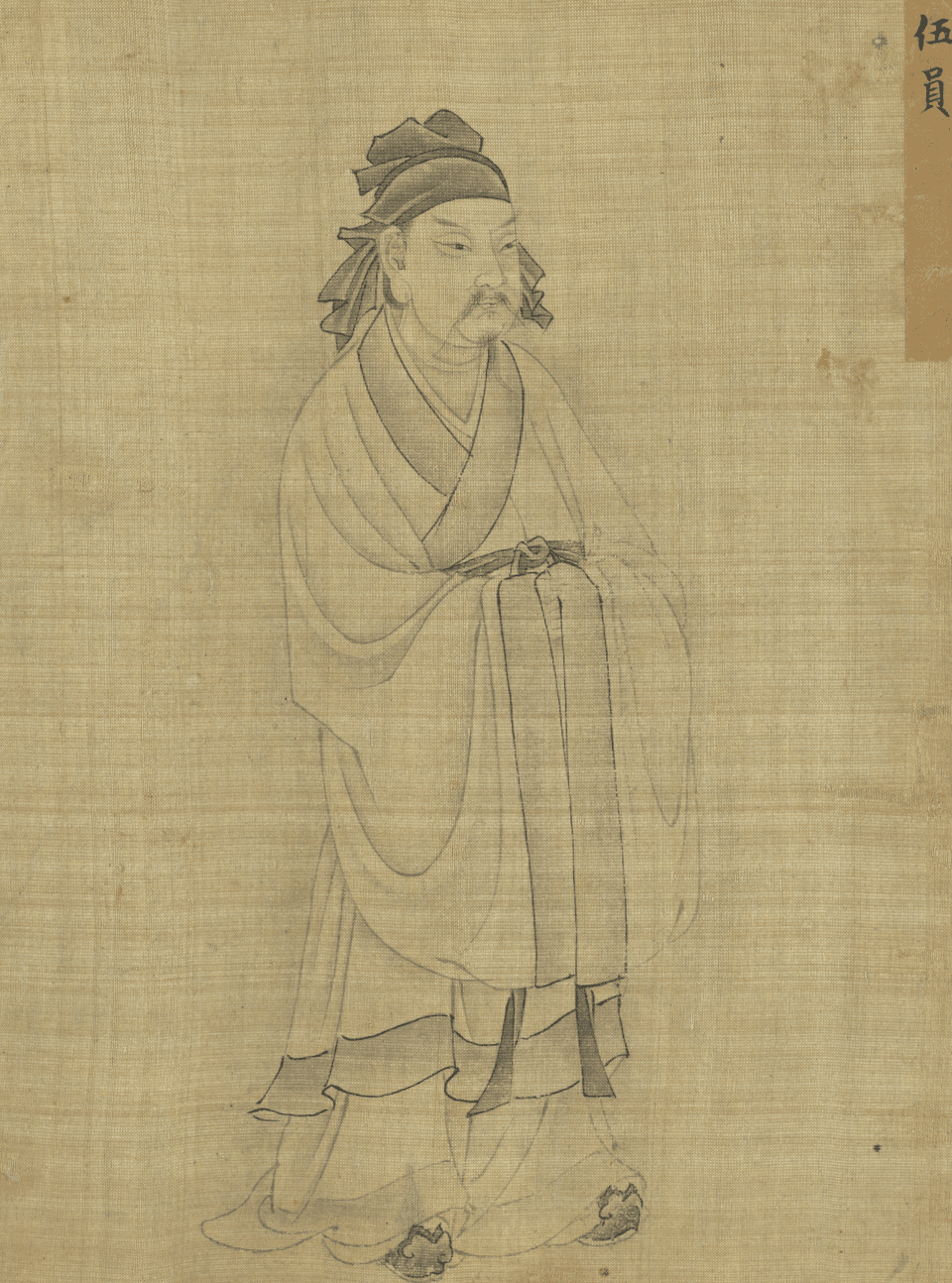
Wu Yun, better known by his courtesy name Zixu, was a Chinese military general and politician of the Wu kingdom in the Spring and Autumn period. Since his death, he has evolved into a model of loyalty in Chinese culture. He is the best known historical figure with the Chinese family name "Wu" (伍).
Wudao Jiangjun are underworld deities in Chinese folk religion and Taoism. They are responsible for escorting spirits of the dead to the afterlife, maintaining order among ghosts, and assisting in karmic judgment. They are subordinate deities of the Dongyue Dadi in Taoist belief.
Wufang Guidi are underworld deities in Chinese folk religion and Taoism. They are associated with death, ghosts, and the management of spirits in the afterlife. Their exact roles and identities vary by region and tradition, but they are often believed to be rulers of different directions in the underworld, similar to the Five Emperors of Taoist cosmology.

Wutong Shen (五通神) or Wulang Shen (五郎神) are a group of five sinister deities from the southern region of China. Their cult began in the Tang dynasty and are usually depicted as one-legged demons. By nature wanton and lascivious, the Wutong often disguised themselves as handsome gentlemen to seduce unsuspecting and vulnerable women.

Xiangshuishen is a deity of the Chinese pantheon.

Xianhe Tongzi, also known as Baihe Tongzi, is a Chinese deity who is worshipped in temples and shrines as a spiritual power for getting rid of negative forces, as well as a deity of bravery, determination, and intelligence. He appears in the Ming dynasty mythological novel Investiture of the Gods, as well as the Qing dynasty novel Fengjian Chunqiu.
Xiaoziye is a deity venerated in certain regional folk traditions, typically representing a mortal who was deified due to themes related to Filial piety. He is also known as San Ye and is most commonly associated with the celestial retinue of the Heibai Wuchang, the iconic pair of underworld emissaries in Chinese folk religion. Xiaoziye is regarded as the deification of Ding Lan (丁兰), a famous figure from the classic Confucian text The Twenty-four Filial Exemplars (二十四孝), whose story exemplifies the virtue of filial piety.
Xihe (deity) is a deity of the Chinese pantheon.
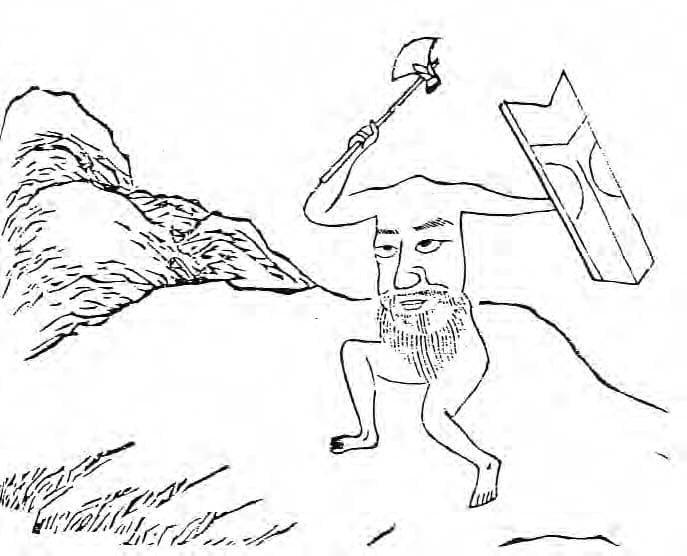
Xingtian is a Chinese deity who fights against the Supreme Divinity, not giving up even after he was decapitated. Losing the fight for supremacy, he was beheaded and his head buried in Changyang Mountain. Nevertheless, headless, with a shield in one hand and a battle axe in the other, he continues the fight, using his nipples as eyes and his belly button as a mouth.
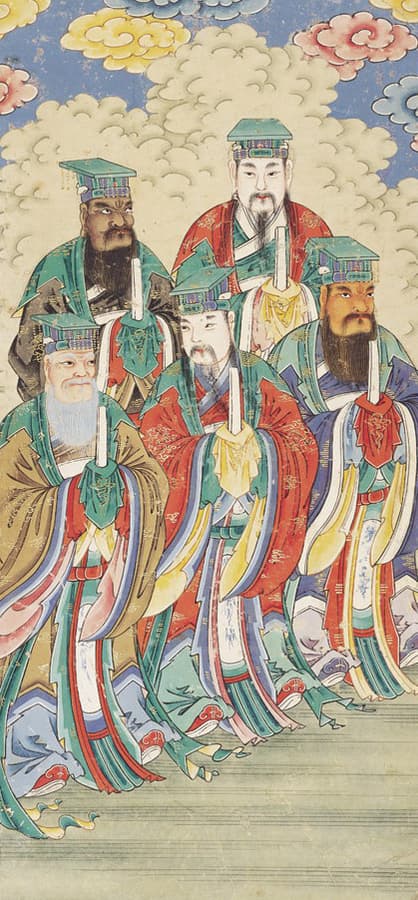
Emperor Xiyue is a Taoist deity of the sacred mountain Mount Hua and one of the Great Emperors of the Five Sacred Mountains. It is said that the worship of Xiyue Dadi can be traced back to the Shang dynasty when he was revered as the ancestor of Dayu. In the period of Emperor Wu of the Han Dynasty, a large-scale sacrificial temple was constructed for Xiyue Dadi as a gesture of respect towards this deity.
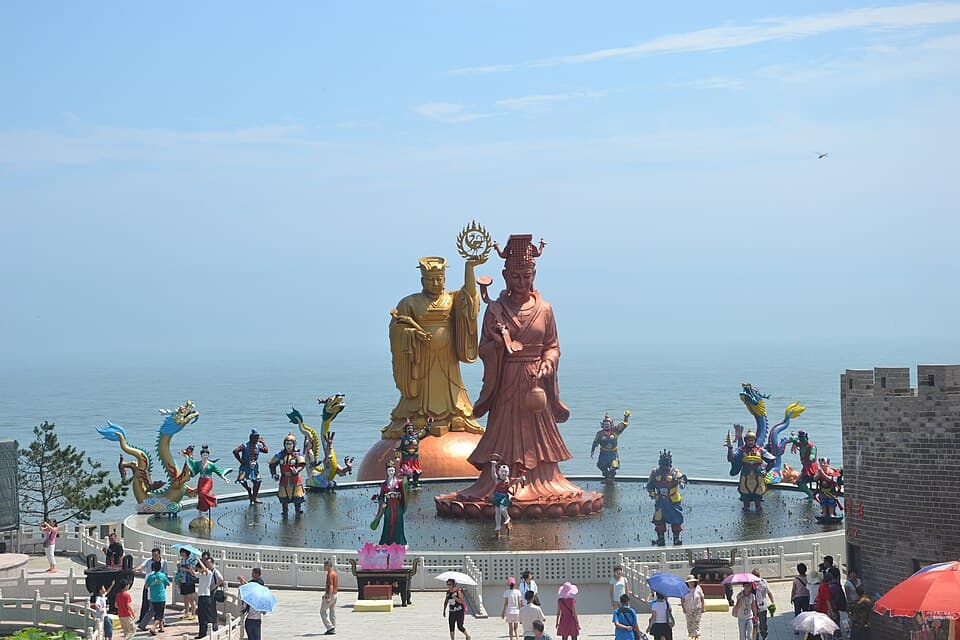
Chinese gods and immortals are beings in various Chinese religions seen in a variety of ways and mythological contexts.

Xu Shilin, known as Xu Mengjiao (许梦蛟) in some versions, is a Chinese mythological figure, son of the white snake spirit Bai Suzhen and Xu Xian. He is a major character in the Legend of the White Snake, one of four great Chinese folk tales. The story has been adapted many times, including into Chinese operas, films, television series and other media.
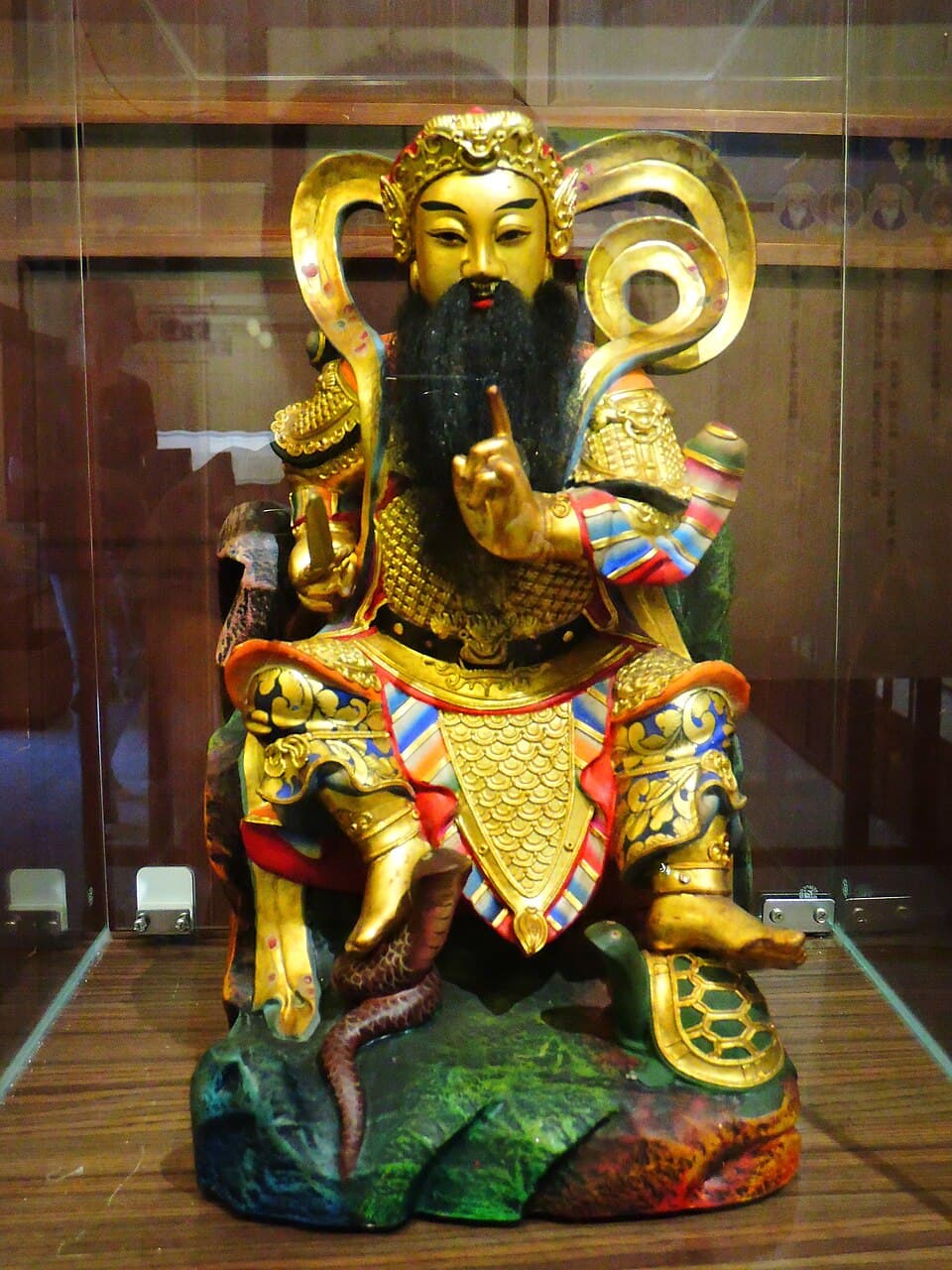
Xuanwu or Xuandi, also known as Zhenwu or Zhenwu Dadi, is a deity in Chinese religion and one of the higher-ranking deities in Taoism. He is identified as the god of the north, associated with water, winter, and the Black Turtle-Snake — one of the Four Symbols of the Chinese constellations. He is particularly revered by practitioners of martial arts and as a protective deity against evil and disease.
Yang Asha is a deity of the Chinese pantheon.
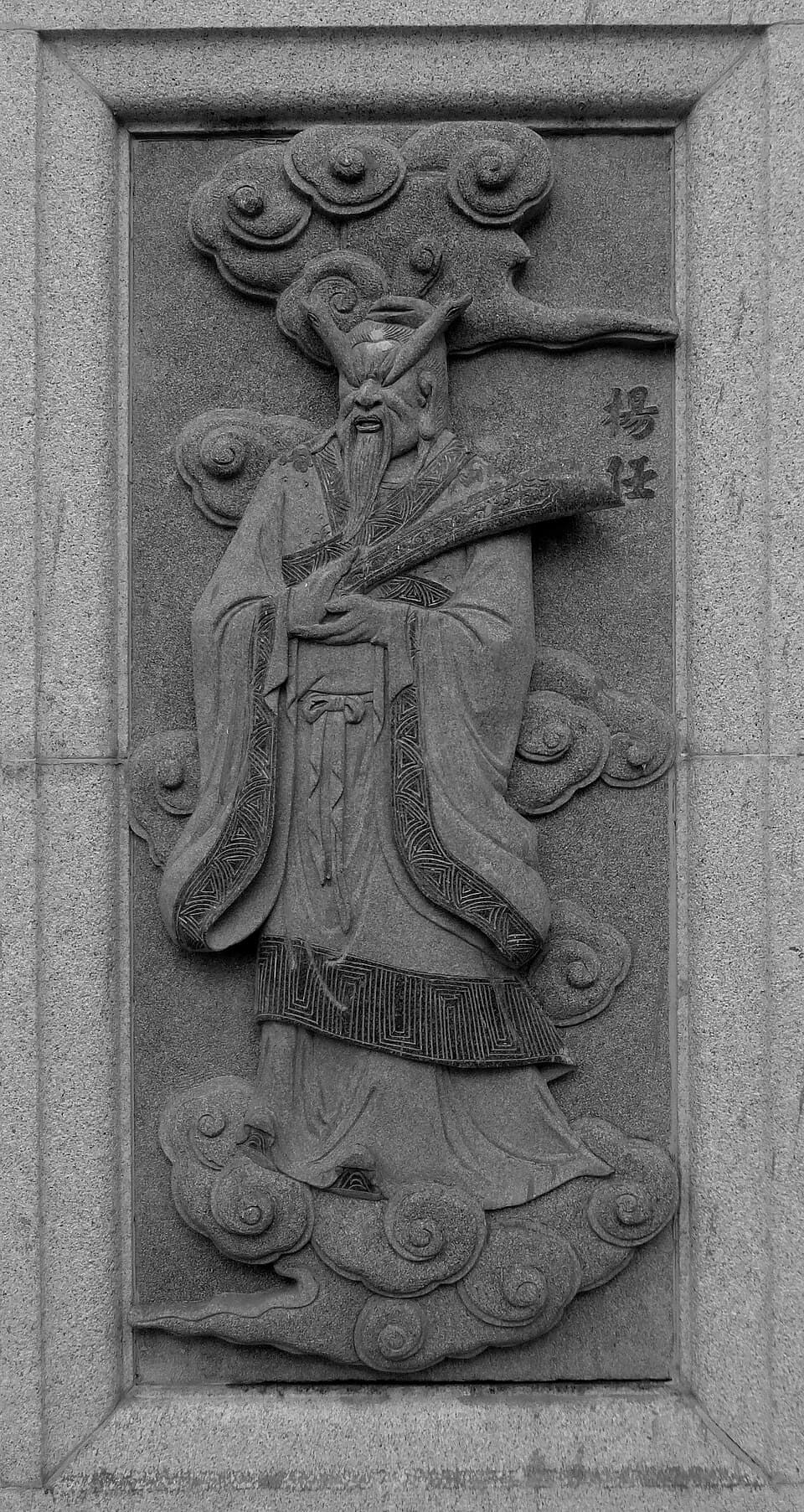
Yang Ren is a character from the classic Chinese novel Fengshen Yanyi. He is worshipped as the deity of the year in Chinese folk religion.
Yanguang Niangniang is a deity of the Chinese pantheon.

In Chinese culture and religion, Yanluo Wang is the god of death and the ruler of Diyu, overseeing the "Ten Kings of Hell" in its capital of Youdu. The name is a transcription of the Sanskrit for "King Yama". He is also known by the shortened form of the name: Yán Wáng.