Yaoji
Yaoji is a deity of the Chinese pantheon.
Pantheon
Page 3 of 3.
253 entries
These three are recorded for the Chinese pantheon as a whole. The archive holds no separate culture, civilization or period for the individual entries below.
Page 3 of 3
Showing 217–253 of 253, alphabetically.
Yaoji is a deity of the Chinese pantheon.

The Yellow Emperor, also known as the Yellow Thearch or Huangdi, was a legendary Chinese sovereign and culture hero included among the legendary Three Sovereigns and Five Emperors. He is revered as a deity individually or as part of the Five Regions Highest Deities in Chinese folk religion. Regarded as the initiator of Chinese culture, he is traditionally credited with numerous innovations – including the traditional Chinese calendar, Taoism, wooden houses, boats, carts, the compass needle, "the earliest forms of writing", and cuju, a ball game.
Yidi is the goddess of wine and alcohol in Chinese mythology (Daoism). She was the brewer credited with the invention of wine during the reign of Yu the Great.
Yincha are servants of the underworld, Diyu, often tasked with escorting souls to the afterlife or carrying out the decrees of underworld deities. They are usually subordinate to Yanluo Wang (閻羅王), the King of Hell, and help maintain order in the realm of the dead.
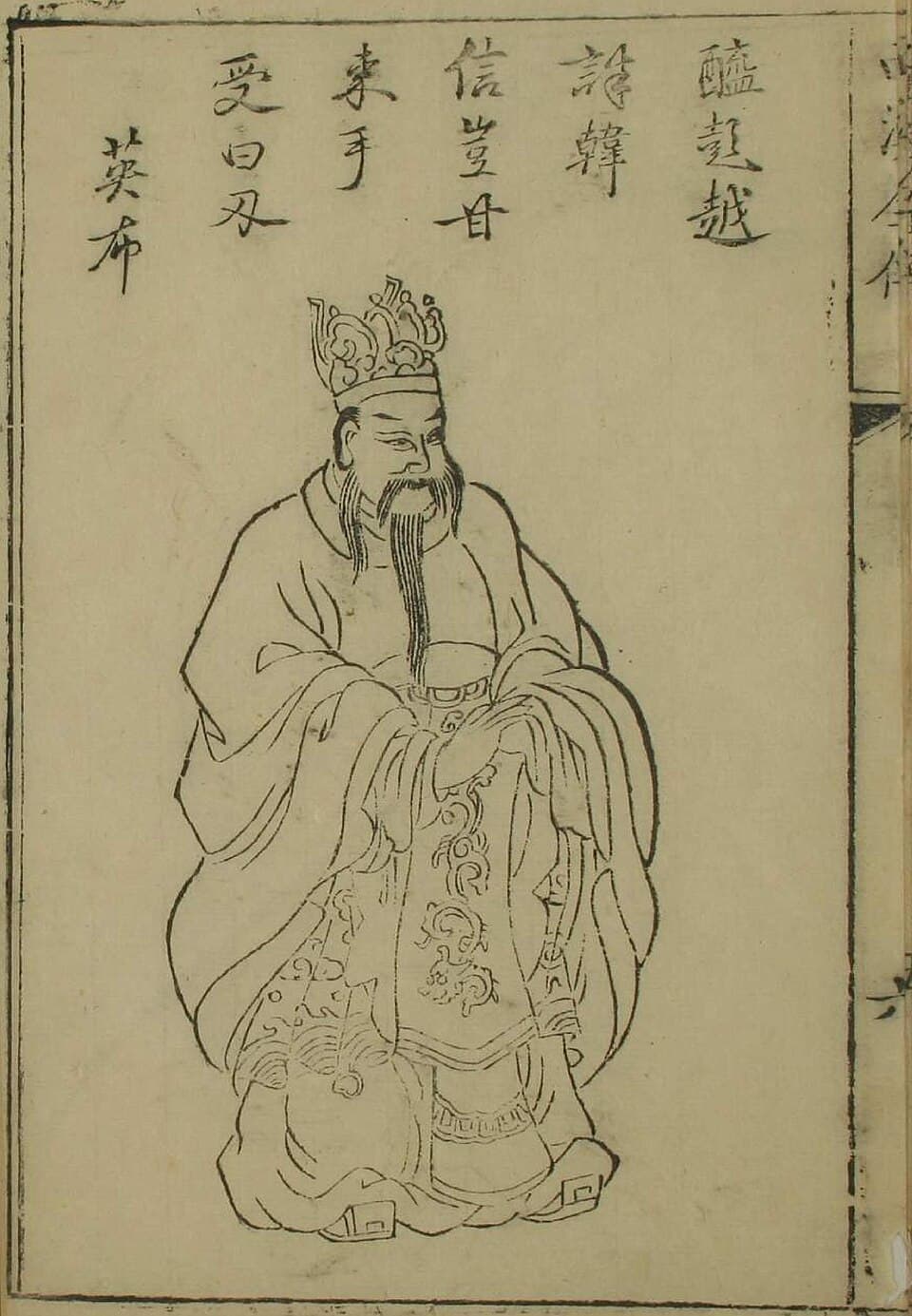
Ying Bu was a Chinese military general, monarch, politician, and warlord who lived during the early Han dynasty. He was a native of Lu County. In his early life under the Qin dynasty, Ying Bu was convicted and sentenced to qing, so he was also called Qing Bu (黥布).

Yinyanggong, also known as Yinyangsi, is a Taoist deity and the personification of the union of yin and yang. He often assisted the gods of the underworld such as the Emperor Dongyue, Wufu Emperor, and Lord Chenghuang. Lord Chenghuang regarded Yinyanggong as his first assistant, with whom he could share some of his affairs in the yin and yang world during the busy ghost gate.

Yŏn Kaesomun was a powerful military dictator in the waning days of the Goguryeo kingdom, one of the Three Kingdoms of ancient Korea. Traditional Korean histories from Joseon painted Yŏn Kaesomun as a despotic leader, whose cruel policies and disobedience to his monarch led to the fall of Goguryeo. His successful resistance against Tang China under Emperor Taizong and his son Emperor Gaozong inspired early Korean nationalist historians, most notably the 19th-century Korean historian and intellectual Shin Chae-ho, to term Yŏn Kaesomun the greatest hero in Korean history.
Yu Shi is a Chinese spirit or god of rain, also known as or conflated with Red Pine, among other names. Translations of Yu Shi into English include "Lord of Rain" and "Leader of Rain".
Yu Shiqie is a deity of the Chinese pantheon.

Yuanshi Tianzun, the Celestial Venerable of the Primordial Beginning or the Primeval Lord of Heaven, is one of the highest deities of Taoism. He is one of the Three Pure Ones and is also known as the Jade Pure One. He resides in the Great Web or the Heaven of Jade Purity.

Yuding Zhenren is a Taoist deity and character in the classic Chinese novel Fengshen Yanyi. He is one of the Twelve Golden Immortals under Yuanshi Tianzun. His disciple is Yang Jian and he taught him fighting and magical skills including the 72 earthly transformations.
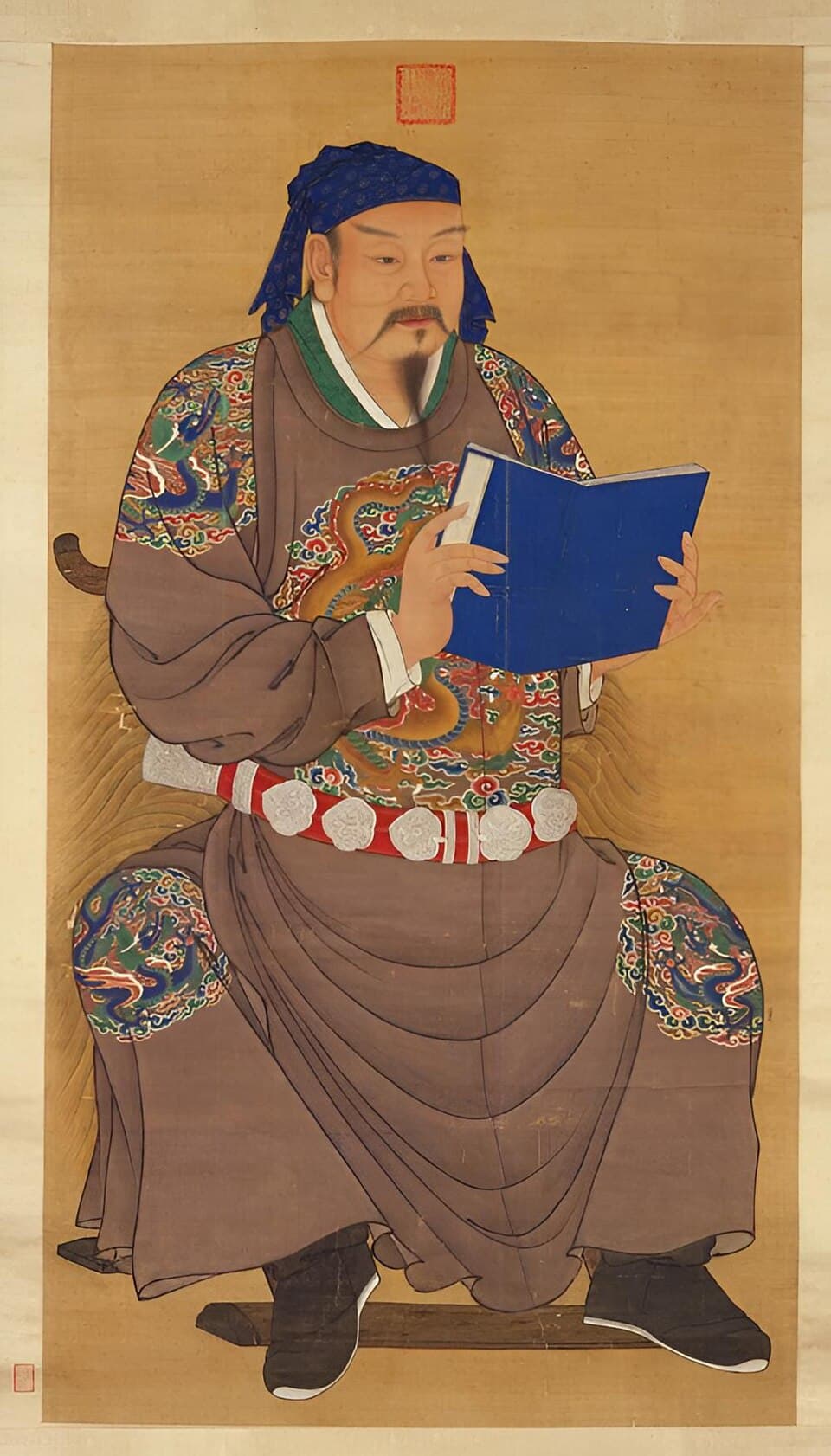
Yue Fei, courtesy name Pengju (鵬舉), was a Chinese military general of the Song dynasty and is remembered as a patriotic national hero, known for leading its forces in the wars in the 12th century between Southern Song and the Jurchen-led Jin dynasty in northern China. Because of his warlike stance, he was put to death by the Southern Song government in 1142 under a frameup, after a negotiated peace was achieved with the Jin dynasty. He was posthumously pardoned.
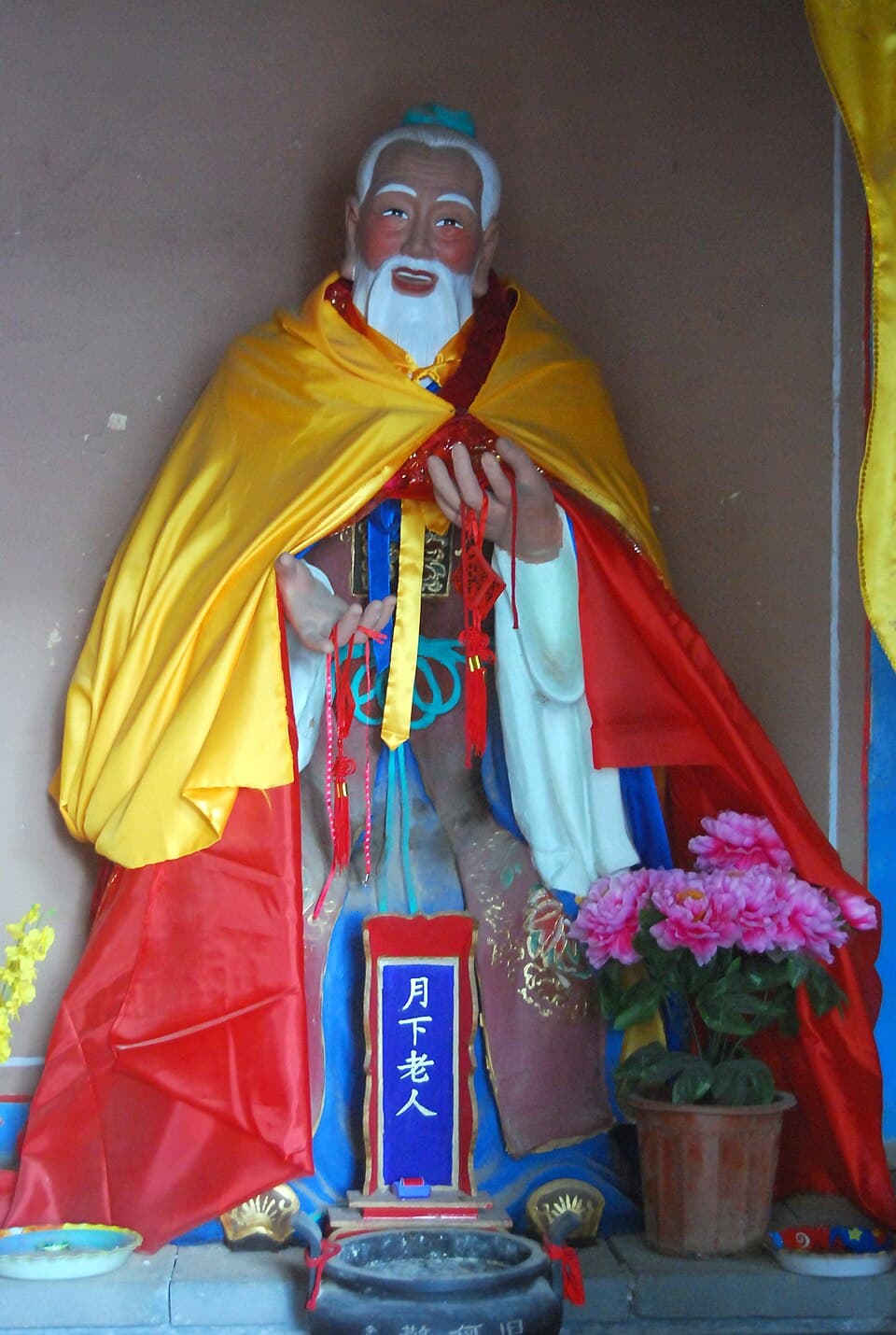
Yue Lao is a god of marriage and love in Chinese mythology. He appears as an old man under the moon. Yue Lao appears at night and "unites with a silken cord all predestined couples, after which nothing can prevent their union.
Yunhua is a deity of the Chinese pantheon.
Yunü is a deity of the Chinese pantheon.
Yunxiao Niangniang is a deity of the Chinese pantheon.
Yuqiang, in Chinese mythology is one of the descendants of Huang Di, the "Yellow Emperor". Yuqiang was also the god of the north sea and a wind god. His father was Yuhao, another sea god.

Zhang Fei, courtesy name Yide (益德), was a Chinese military general and politician serving under the warlord Liu Bei in the late Eastern Han dynasty and early Three Kingdoms period of China. Zhang Fei and Guan Yu, who were among the earliest to join Liu Bei, shared a brotherly relationship with their lord and accompanied him on most of his early exploits. Zhang Fei fought in various battles on Liu Bei's side, including the Red Cliffs campaign (208–209), takeover of Yi Province (212–214), and Hanzhong Campaign (217–218).
Zhang Guifang is a character featured within the famed classic Chinese novel Investiture of the Gods.
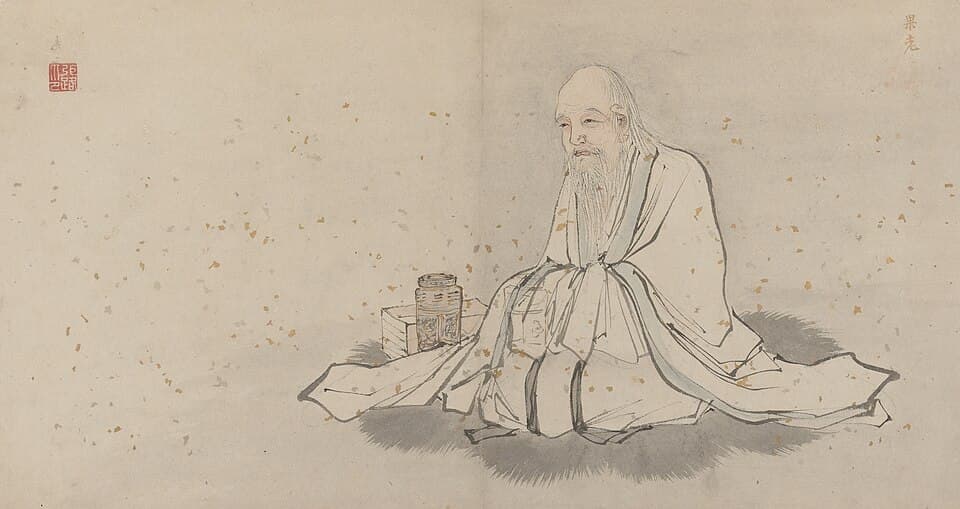
Zhang Guo, better known as Zhang Guolao, is a Chinese mythological figure and one of the Eight Immortals in the Taoist pantheon. Among the Eight Immortals, Zhang Guolao, Zhongli Quan and Lü Yan are the only ones who appear in historical records as genuine figures in society at specific times and places. His existence is said to have begun around the middle or end of the 7th century, and ended approximately in the middle of the 8th.
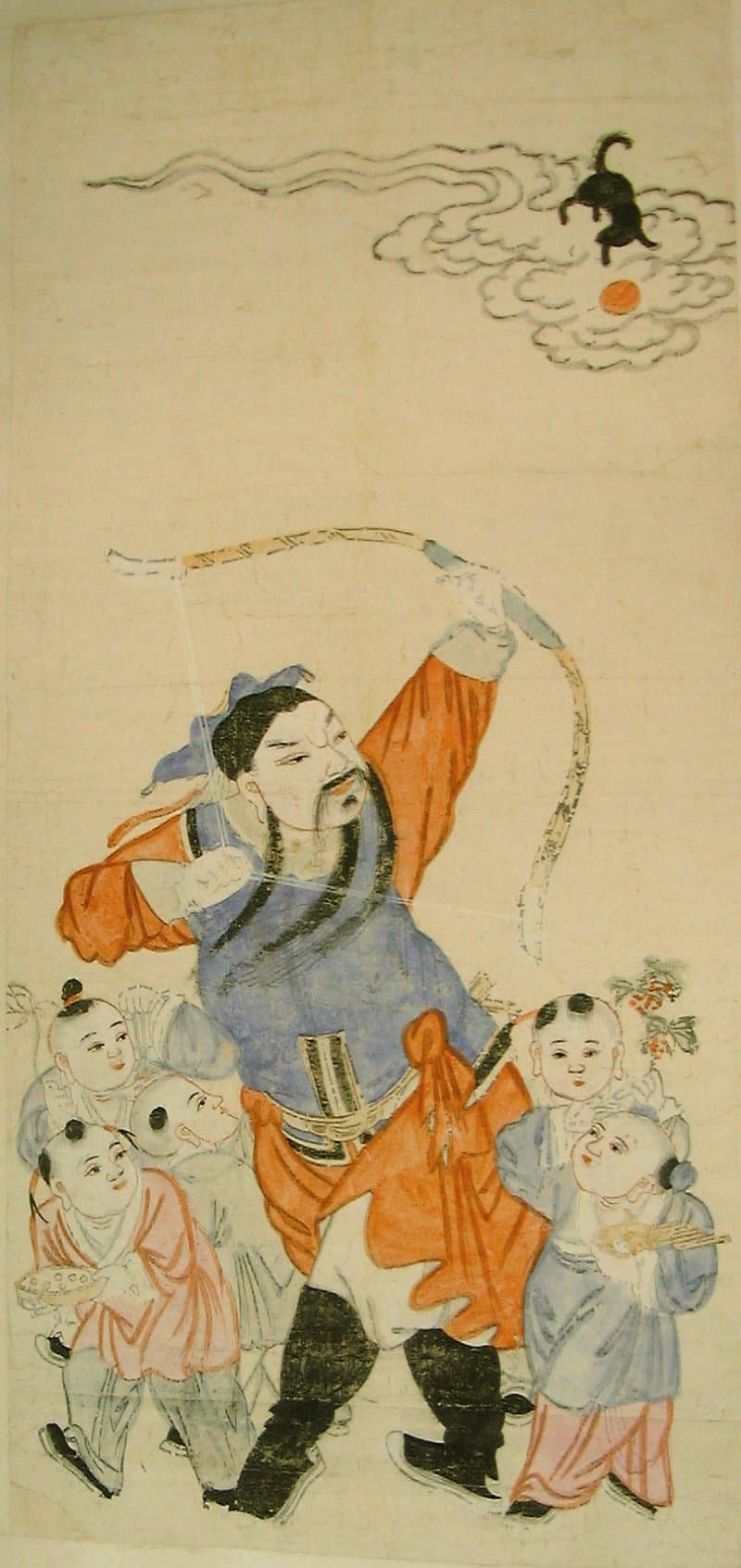
Zhang Xian is a Chinese god who is the enemy of the tiangou, a legendary creature in the form of a dog who creates eclipses. It is said that he protects his children from the dog with his bow and arrows. He is often depicted aiming at the sky, waiting for the beast to appear.
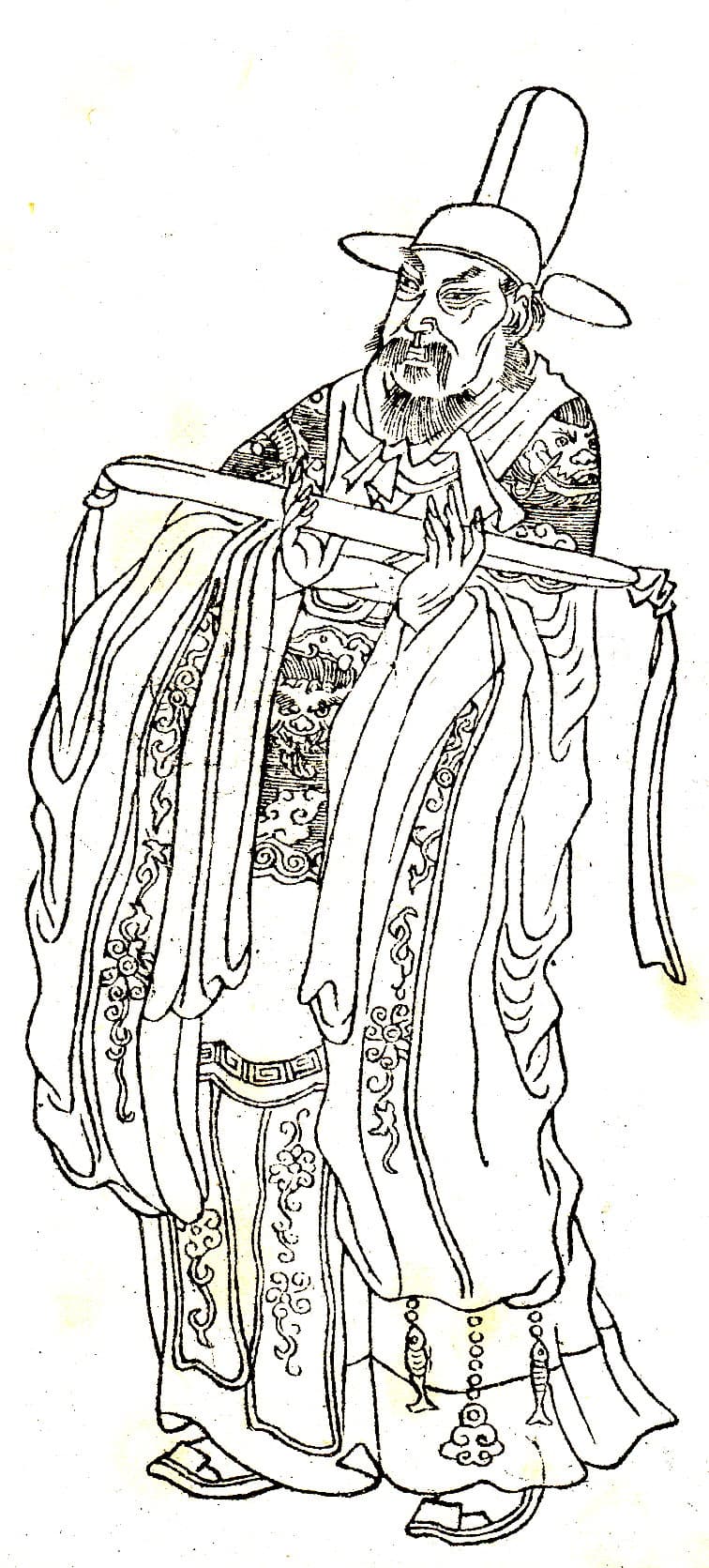
Zhang Xun was a Chinese scholar-official and military commander during the Tang dynasty. He was known for defending Yongqiu and Suiyang during the An Shi Rebellion against the rebel armies of Yan, and thus, his supporters asserted, he blocked Yan forces from attacking and capturing the fertile Tang territory south of the Huai River. However, he was severely criticized by some contemporaries and some later historians as lacking humanity due to his encouragement of cannibalism during the Battle of Suiyang.
Zhao Gongming, also known as Zhao Gong Yuanshuai and Xuantan Zhenjun, is a god of wealth in Chinese folk religion and Taoism. He is the most widely venerated of the various forms of Caishen, and is conventionally identified as the central figure of the Five Roads Wealth Gods system. Within the Chinese pantheon, Zhao Gongming is the principal Military God of Wealth, distinguished by his armoured iconography from the Civil Wealth Gods (文財神) such as Bi Gan and Fan Li, who are depicted in court robes.
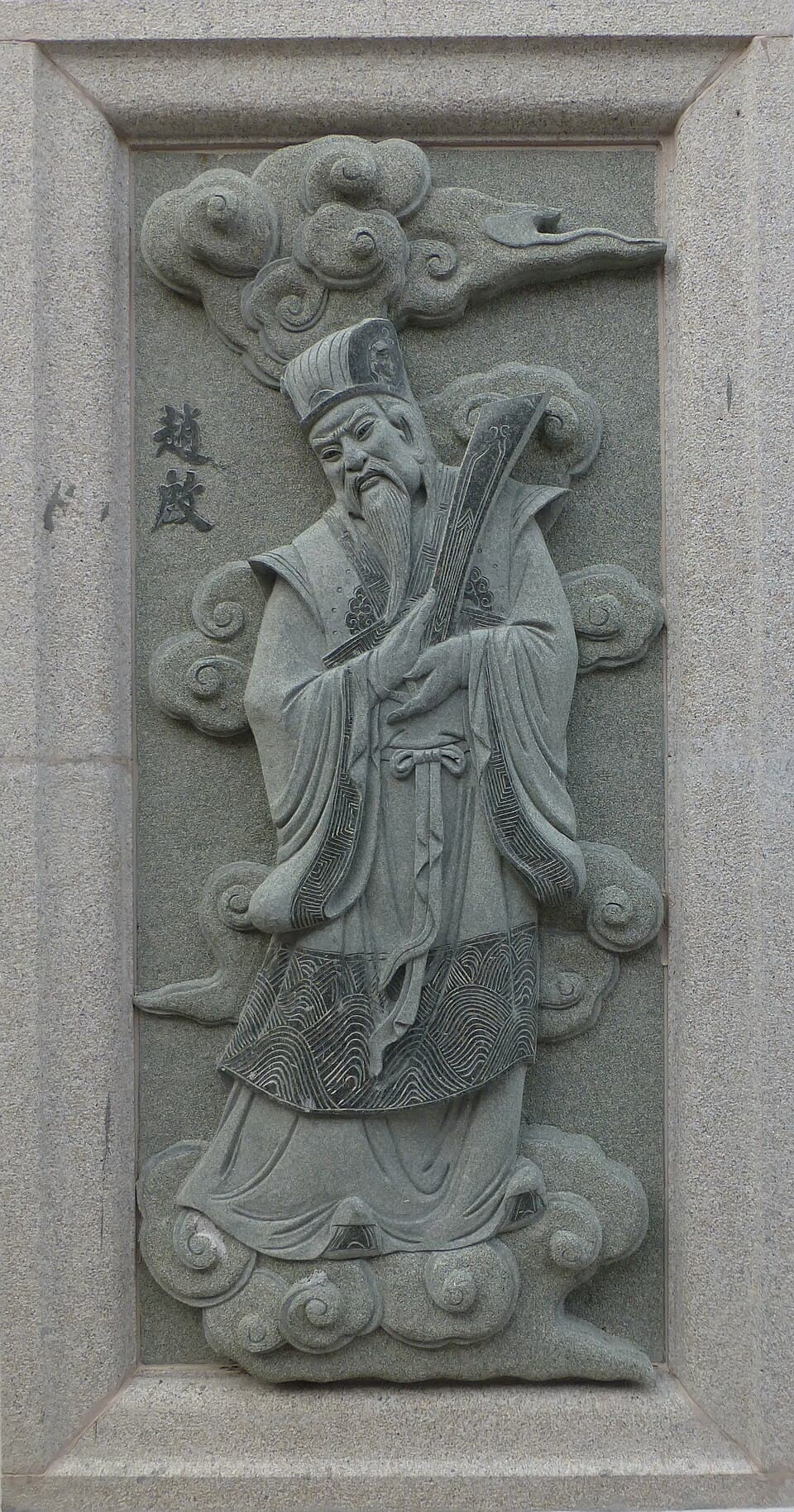
Zhao Qi is a character featured in the classic Chinese novel Fengshen Yanyi.
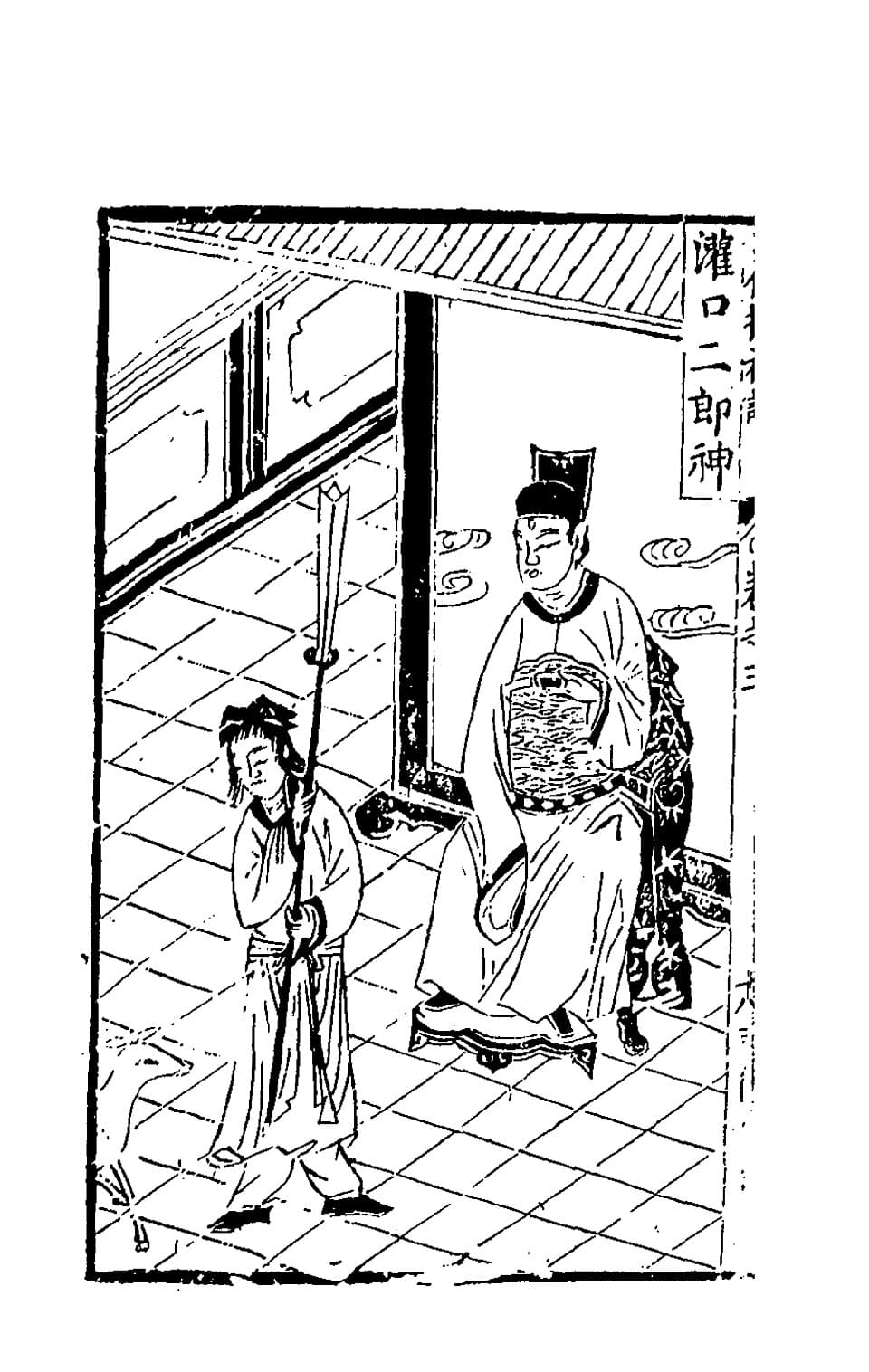
Zhao Yu was a government official of the Sui dynasty in China who later became a deified figure in Chinese folk religion and Taoism. He is one of the most prominent historical figures believed to be the true identity of the popular deity Erlang Shen, particularly the cult of "Erlang of Guankou" (灌口二郎). He is venerated as a god who provides protection and controls floods.
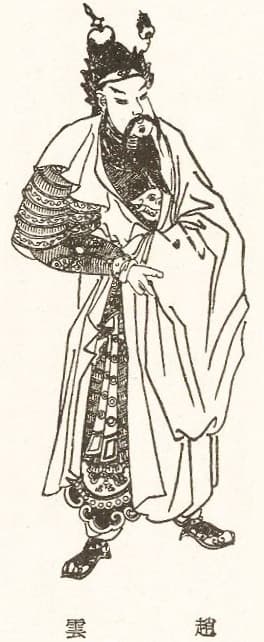
Zhao Yun, courtesy name Zilong (子龍), was a military general who lived during the late Eastern Han dynasty and early Three Kingdoms period of China. Originally a subordinate of the northern warlord Gongsun Zan, Zhao Yun later came to serve another warlord, Liu Bei, and had since accompanied him on most of his military exploits, from the Battle of Changban (208) to the Hanzhong Campaign (217–219). He continued serving in the state of Shu Han – founded by Liu Bei in 221 – in the Three Kingdoms period and participated in the first of the Northern Expeditions until his death in 229.
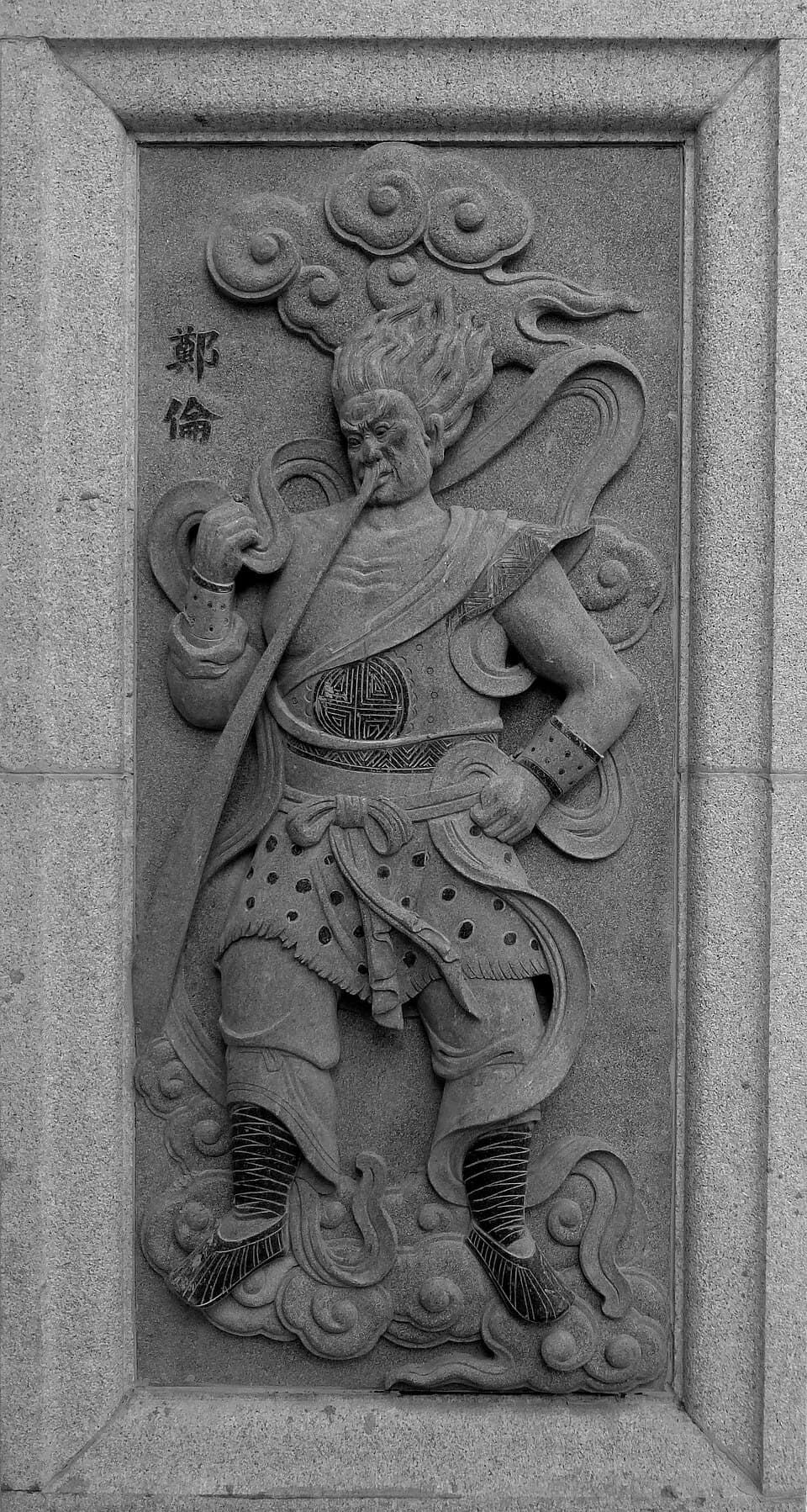
Zheng Lun is a character featured within the famed classic Chinese novel Fengshen Yanyi.
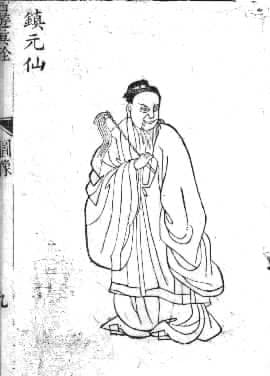
Zhenyuan Daxian, also known as Zhenyuanzi, is a character from the 16th century Chinese novel Journey to the West and a Taoist deity who is the patriarch of all Earth's Immortals in Taoist pantheon. His residence is Wanshoushan Wuzhuang Guan, one of the only two officially listed Dongtianfudi in Journey to the West.
Zhinü is a deity of the Chinese pantheon.
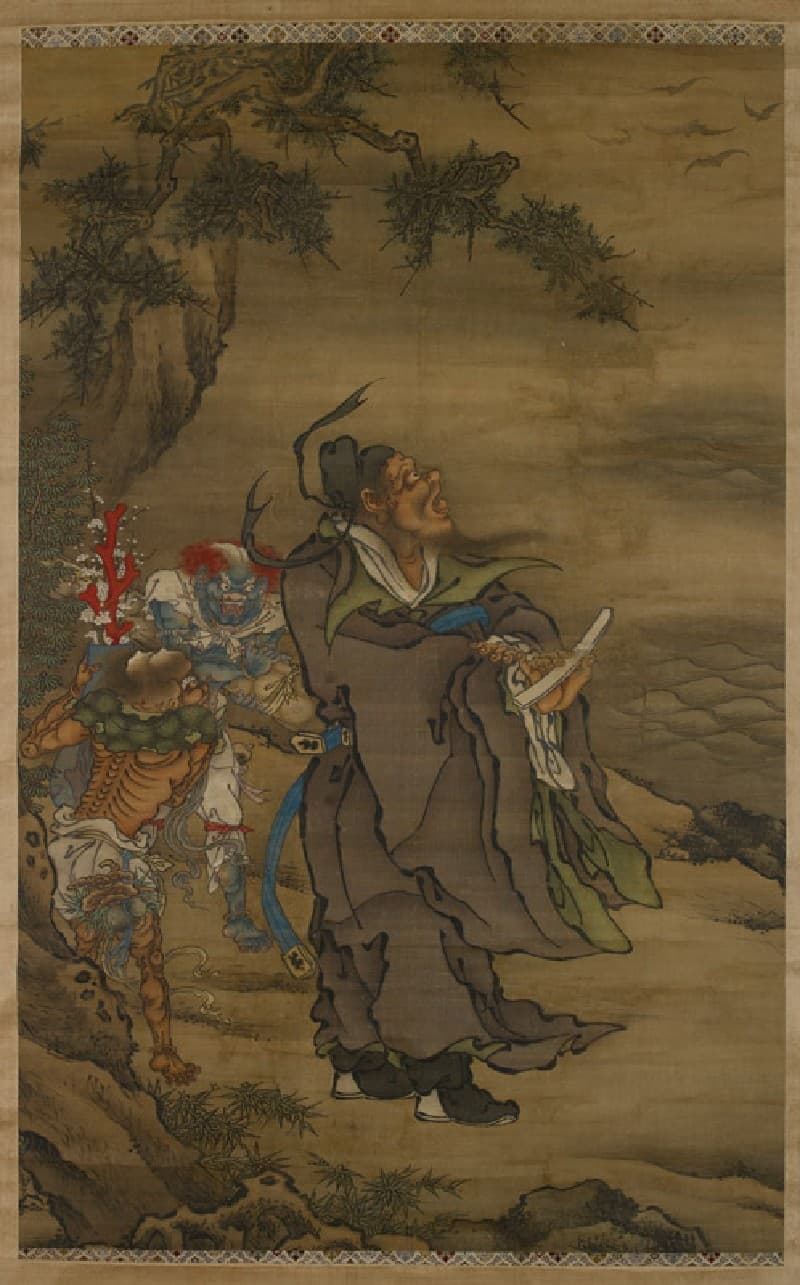
Zhong Kui is a Taoist deity in Chinese mythology, traditionally regarded as a vanquisher of ghosts and evil beings. He is depicted as a large man with a big black beard, bulging eyes, and a wrathful expression. Zhong Kui is able to command 80,000 demons to do his bidding and is often associated with the five bats of fortune.
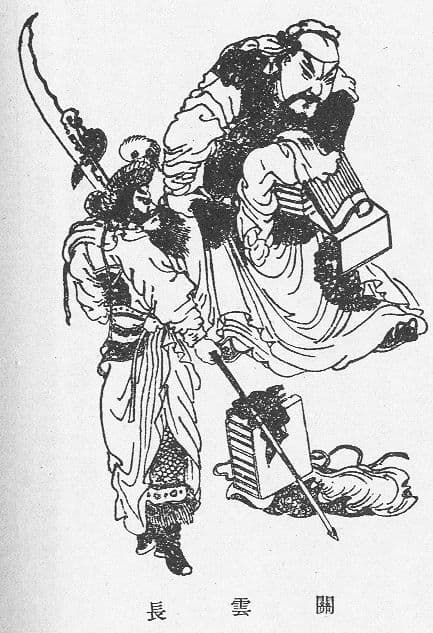
Zhou Cang is a fictional character in the 14-century novel Romance of the Three Kingdoms. His prominence as an aide to Guan Yu led him to be popularly worshipped in Chinese folk religion along with his lord. He is also mentioned in the Shanxi Tongzhi, a Shanxi history compendium that was compiled after the novel was published.
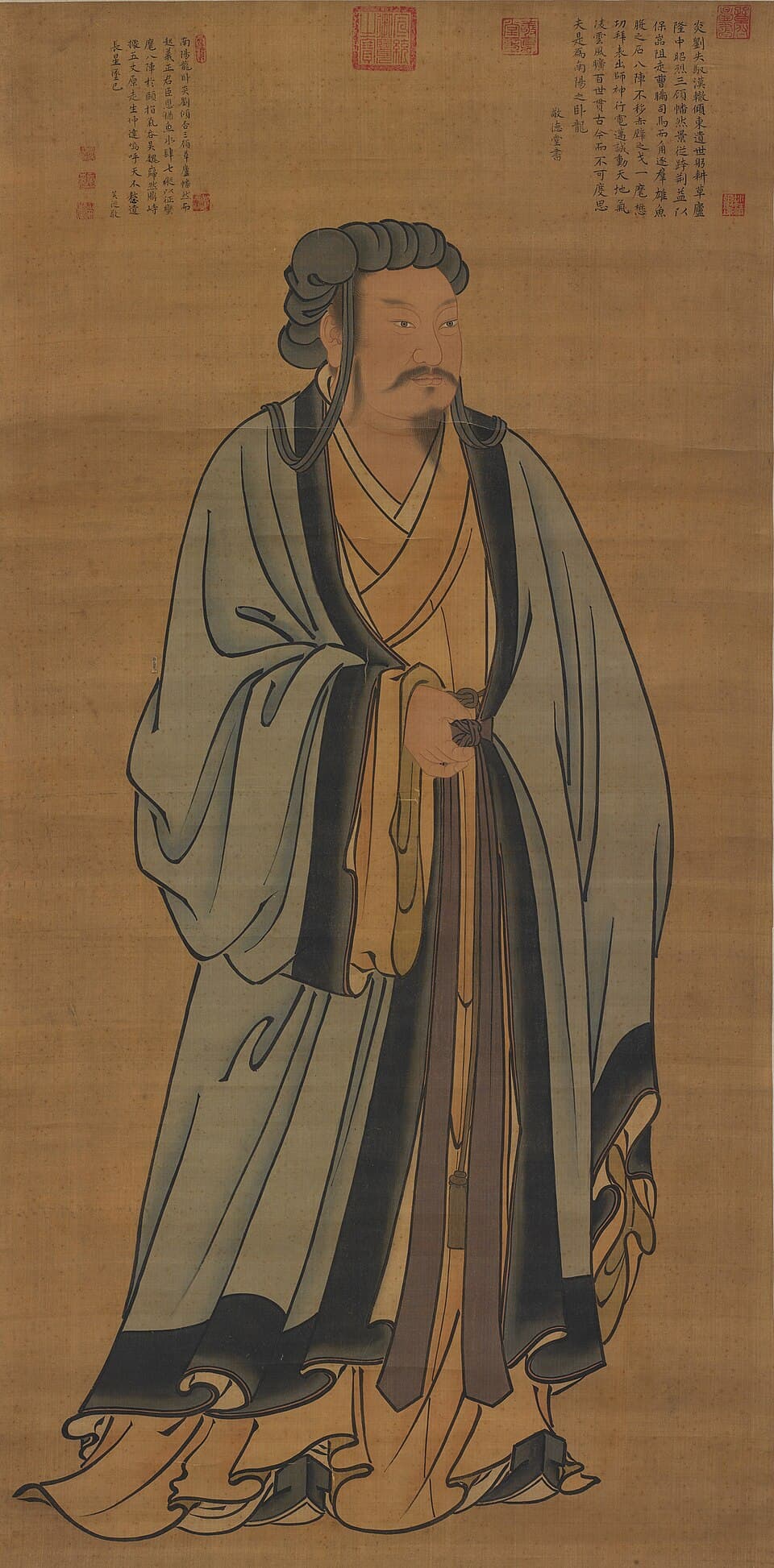
Zhuge Liang, courtesy name Kongming, was a Chinese statesman and strategist who lived through the collapse of the Eastern Han dynasty and became the principal architect of the Shu Han state. He served as chancellor under its founding emperor Liu Bei from 221 and as regent to the young emperor Liu Shan after 223 until his death.
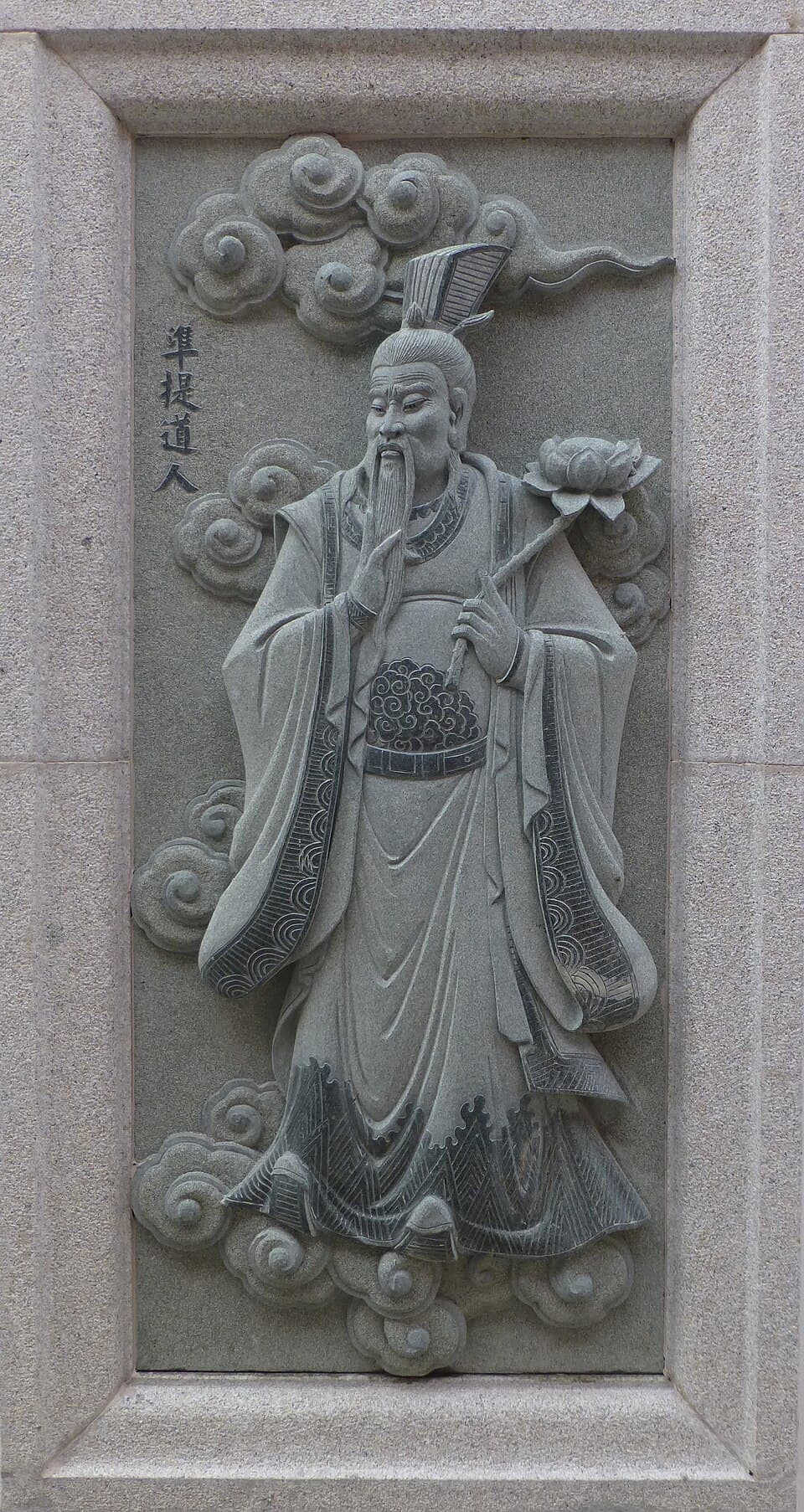
Zhunti Daoren is a character from the Chinese classic novel Fengshen Yanyi. He is a heavenly saint come from the Western Heaven, the land of Buddha. His rank is high and equal with Taishang Laojun and Yuanshi Tianzun from the East.
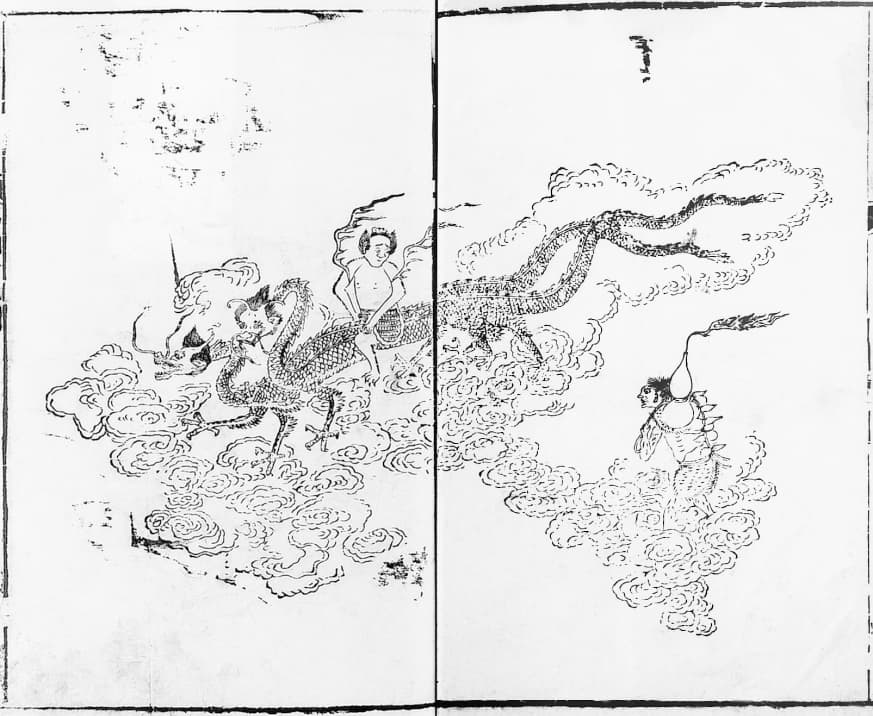
Zhurong, also known as Chongli, is an important personage in Chinese mythology and Chinese folk religion. According to the Huainanzi and the philosophical texts of Mozi and his followers, Zhurong is a god of fire and of the south. Some sources associate Zhurong with some of the principal early and ancient myths of China, such as those of Nüwa, Gonggong, and the Great Flood.
Zigu is a deity of the Chinese pantheon.
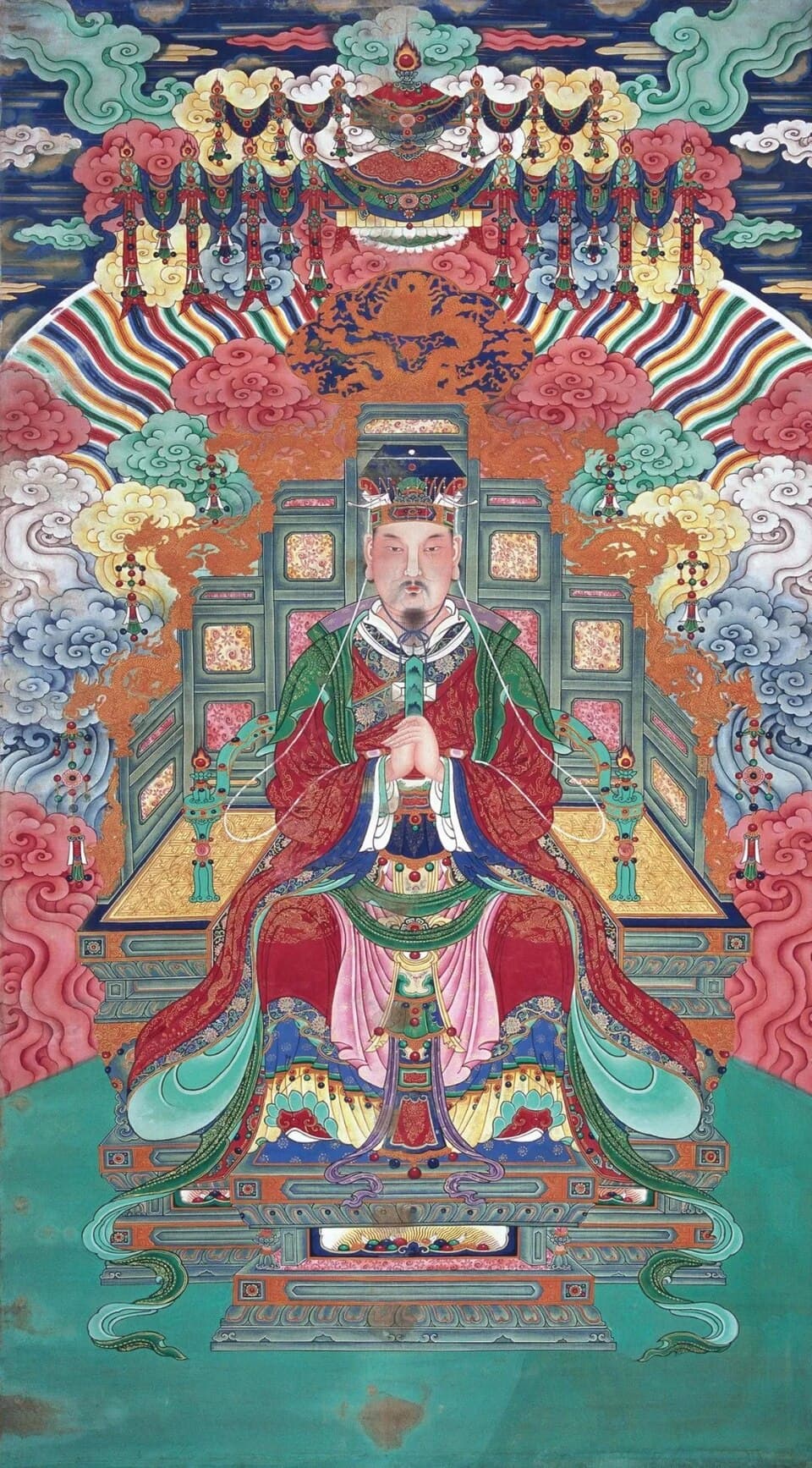
The Great Emperor of the North Star, also called the Ziwei Emperor (紫微) and the Beiji Emperor, is one of the highest sky deities and one of the Four Sovereigns of Taoism.
Ying Ziying, also known as Ziying, King of Qin, was the third and last ruler of the Qin dynasty of China. He ruled over a fragmented Qin Empire for 46 days, from mid-October to early December 207 BC. Unlike his predecessor, he ruled as a king instead of emperor.