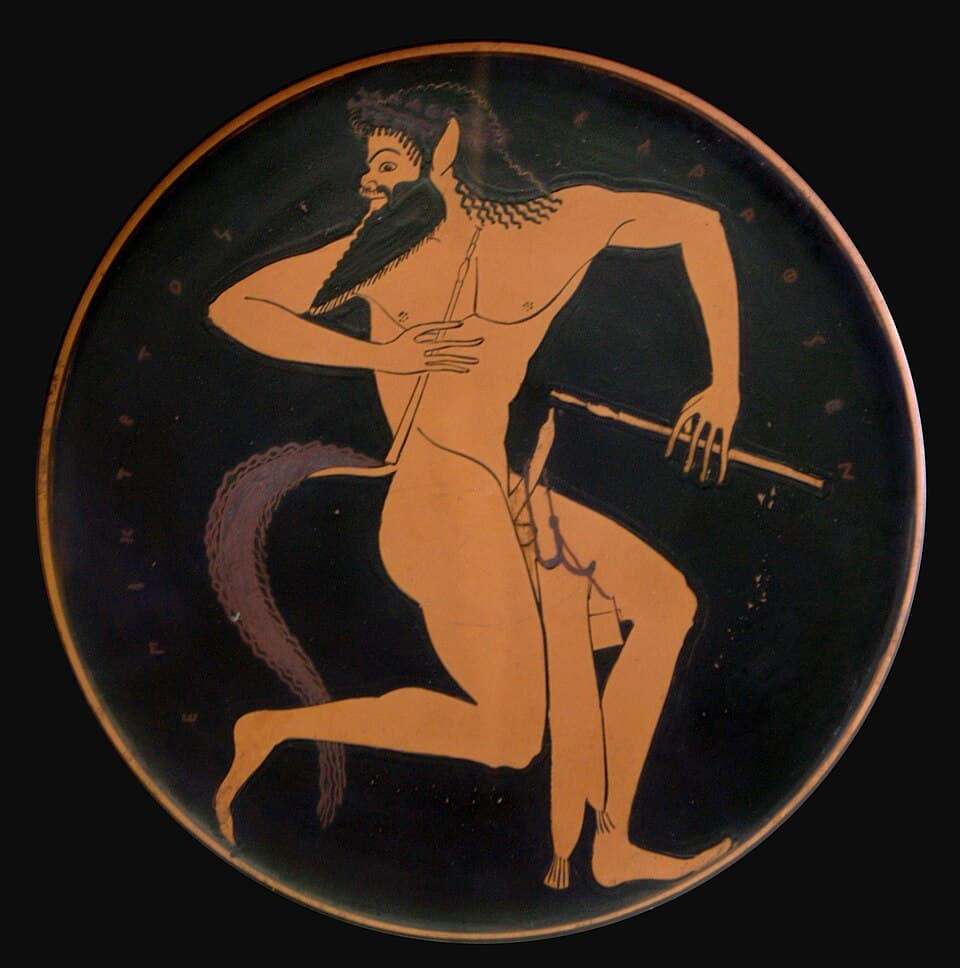
Satyr
In Greek mythology, a satyr, also known as a silenus or silenos, and sileni (plural), is a male nature spirit with ears and a tail resembling those of a horse, as well as a permanent, exaggerated erection. Early artistic representations sometimes include horse-like legs, but, by the sixth century BC, they were more often represented with human legs. Comically hideous, they have mane-like hair, bestial faces, and snub noses and they always are shown naked. Satyrs were characterized by their ribaldry and were known as lovers of wine, music, dancing, and women. They were companions of the god Dionysus and were believed to inhabit remote locales, such as woodlands, mountains, and pastures. They often attempted to seduce or rape nymphs and mortal women alike, usually with little success. They are sometimes shown masturbating or engaging in bestiality.
Pantheon: Greek Culture: Ancient Greek Civilization: Ancient Greece Period: 800 BCE – 400 CE
Source: Wikipedia
Sources & Notes
Wikipedia: https://en.wikipedia.org/wiki/Satyr
Discussion
Discussion
No comments yet
Start the discussion — sign in to leave a comment.
Join the Discussion
Join the discussion
Sign in to leave a comment or review.
Sign InorCreate an account