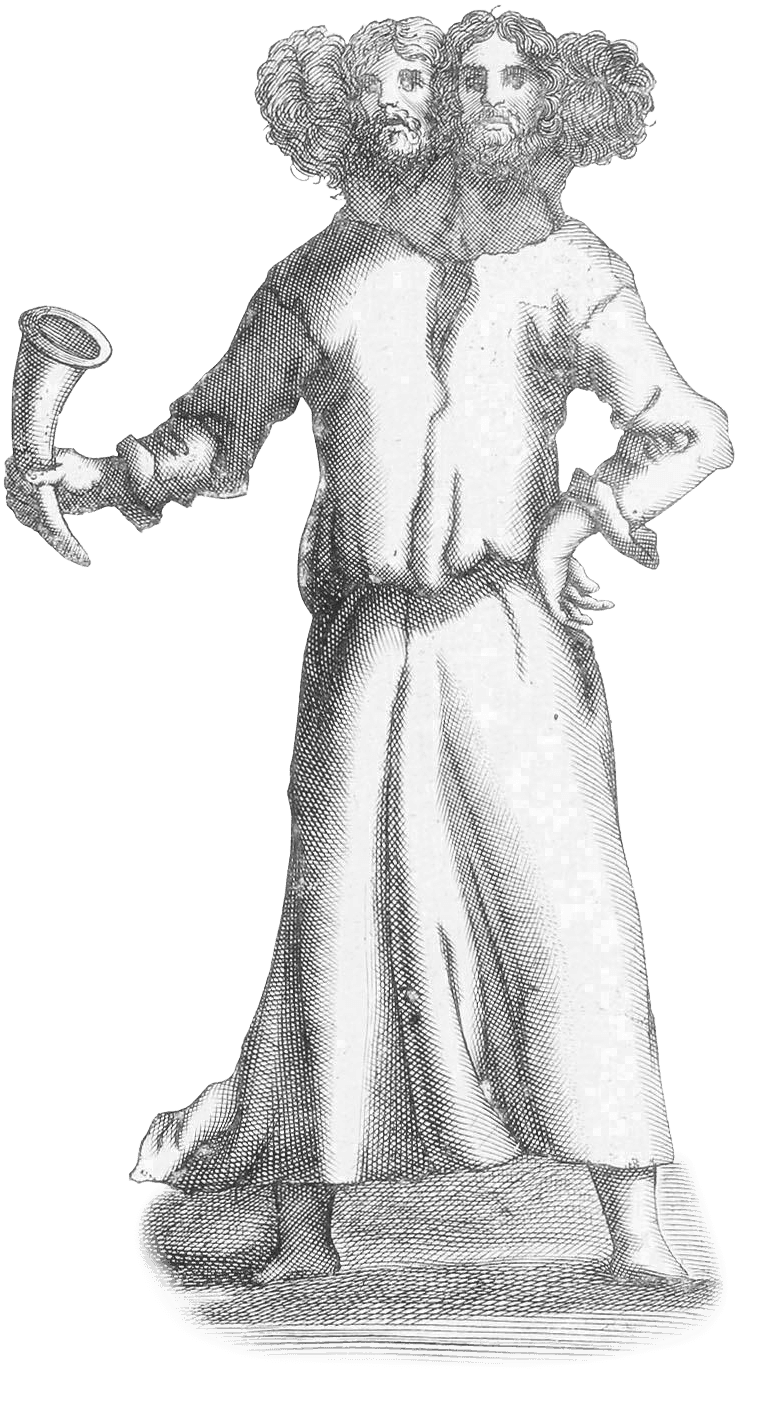
Svetovit
Svetovit, also known as Sventovit and Svantovit amongst other variants, is the god of abundance and war, and the chief god of the Slavic tribe of the Rani, and later of all the Polabian Slavs. His organized cult was located on the island of Rügen, at Cape Arkona, where his main temple was also located. According to the descriptions of medieval chroniclers, the statue representing this god had four heads and held a horn and a sword. Dedicated to the deity were a white horse, a saddle, a bit, a flag, and eagles. Once a year, after the harvest, a large festival was held in his honor. With the help of a horn and a horse belonging to the god, the priests carried out divinations, and at night the god himself rode a horse to fight his enemies. His name can be translated as "Strong Lord" or "Holy Lord". In the past it was often mistakenly believed that the cult of Svetovit originated from St. Vitus. Among scholars of Slavic mythology, Svetovit is often regarded as a Polabian hypostasis of Pan-Slavic god Perun. His cult was destroyed in 1168.
Pantheon: Slavic Culture: Slavic Civilization: Early Slavs Period: 500 CE – 1100 CE
Source: Wikipedia
Sources & Notes
Wikipedia: https://en.wikipedia.org/wiki/Svetovit
Discussion
Discussion
No comments yet
Start the discussion — sign in to leave a comment.
Join the Discussion
Join the discussion
Sign in to leave a comment or review.
Sign InorCreate an account