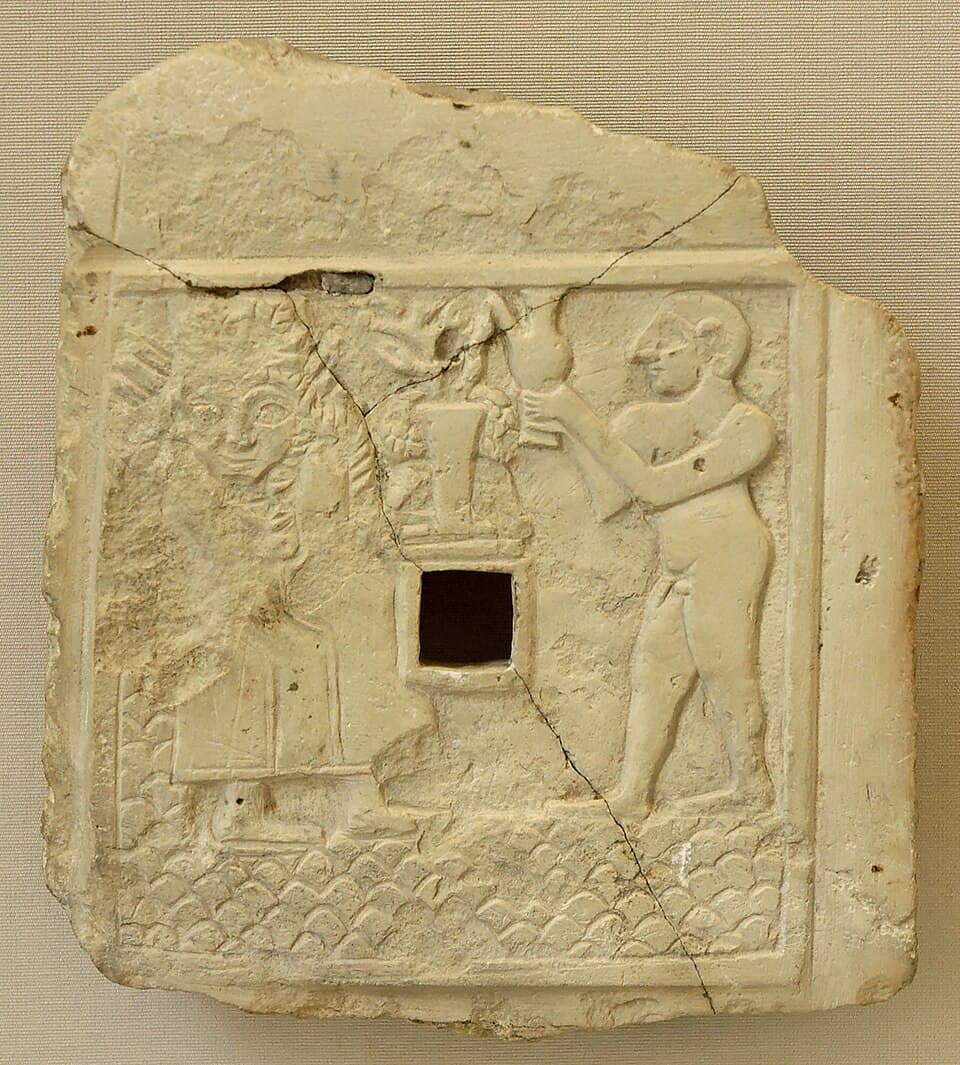
Vegetation deity
A vegetation deity is a nature deity whose disappearance and reappearance, or life, death and rebirth, embodies the growth cycle of plants. In nature worship, the deity can be a god or goddess with the ability to regenerate itself. A vegetation deity is often a fertility deity. The deity typically undergoes dismemberment, scattering, and reintegration, as narrated in a myth or reenacted by a religious ritual. The cyclical pattern is given theological significance on themes such as immortality, resurrection, and reincarnation. Vegetation myths have structural resemblances to certain creation myths in which parts of a primordial being's body generate aspects of the cosmos, such as the Norse myth of Ymir.
Pantheon: Mesopotamian Culture: Sumerian / Akkadian Civilization: Ancient Mesopotamia Period: 3500 BCE – 500 BCE
Source: Wikipedia
Sources & Notes
Wikipedia: https://en.wikipedia.org/wiki/Vegetation_deity
Discussion
Discussion
No comments yet
Start the discussion — sign in to leave a comment.
Join the Discussion
Join the discussion
Sign in to leave a comment or review.
Sign InorCreate an account