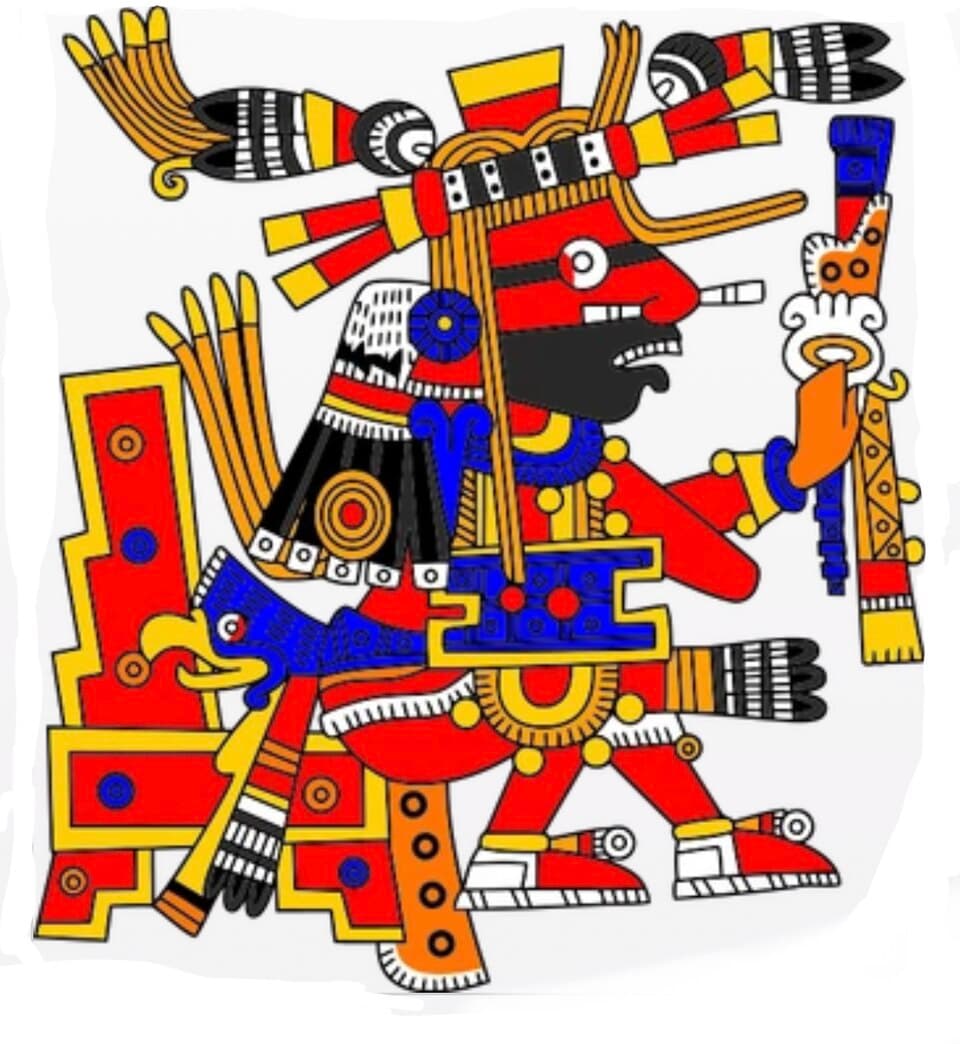
Xiuhtecuhtli
In Aztec mythology, Xiuhtēcuhtli, was the god of fire, day and heat. In historical sources he is called by many names, which reflect his varied aspects and dwellings in the three parts of the cosmos. He was the lord of volcanoes, the personification of life after death, warmth in cold (fire), light in darkness and food during famine. He was also named Cuezaltzin ("flame") and Ixcozauhqui, and is sometimes considered to be the same as Huehueteotl, although Xiuhtecuhtli is usually shown as a young deity. His wife was Chalchiuhtlicue. Xiuhtecuhtli is sometimes considered to be a manifestation of Ometecuhtli, the Lord of Duality, and according to the Florentine Codex Xiuhtecuhtli was considered to be the father of the Gods, who dwelled in the turquoise enclosure in the center of earth. Xiuhtecuhtli-Huehueteotl was one of the oldest and most revered of the indigenous pantheon. The cult of the God of Fire, of the Year, and of Turquoise perhaps began as far back as the middle Preclassic period. Turquoise was the symbolic equivalent of fire for Aztec priests. A small fire was permanently kept alive at the sacred center of every Aztec home in honor of Xiuhtecuhtli.
Pantheon: Aztec Culture: Nahua / Aztec Civilization: Aztec Empire Period: 1300 CE – 1521 CE
Source: Wikipedia
Sources & Notes
Wikipedia: https://en.wikipedia.org/wiki/Xiuhtecuhtli
Discussion
Discussion
No comments yet
Start the discussion — sign in to leave a comment.
Join the Discussion
Join the discussion
Sign in to leave a comment or review.
Sign InorCreate an account