According to Plato
en
London (England) -- Social life and customs -- Fiction; Love -- Fiction; Political fiction; Satire
Athens
Student of Socrates and founder of the Academy, author of the dialogues on justice, love, and the Forms.
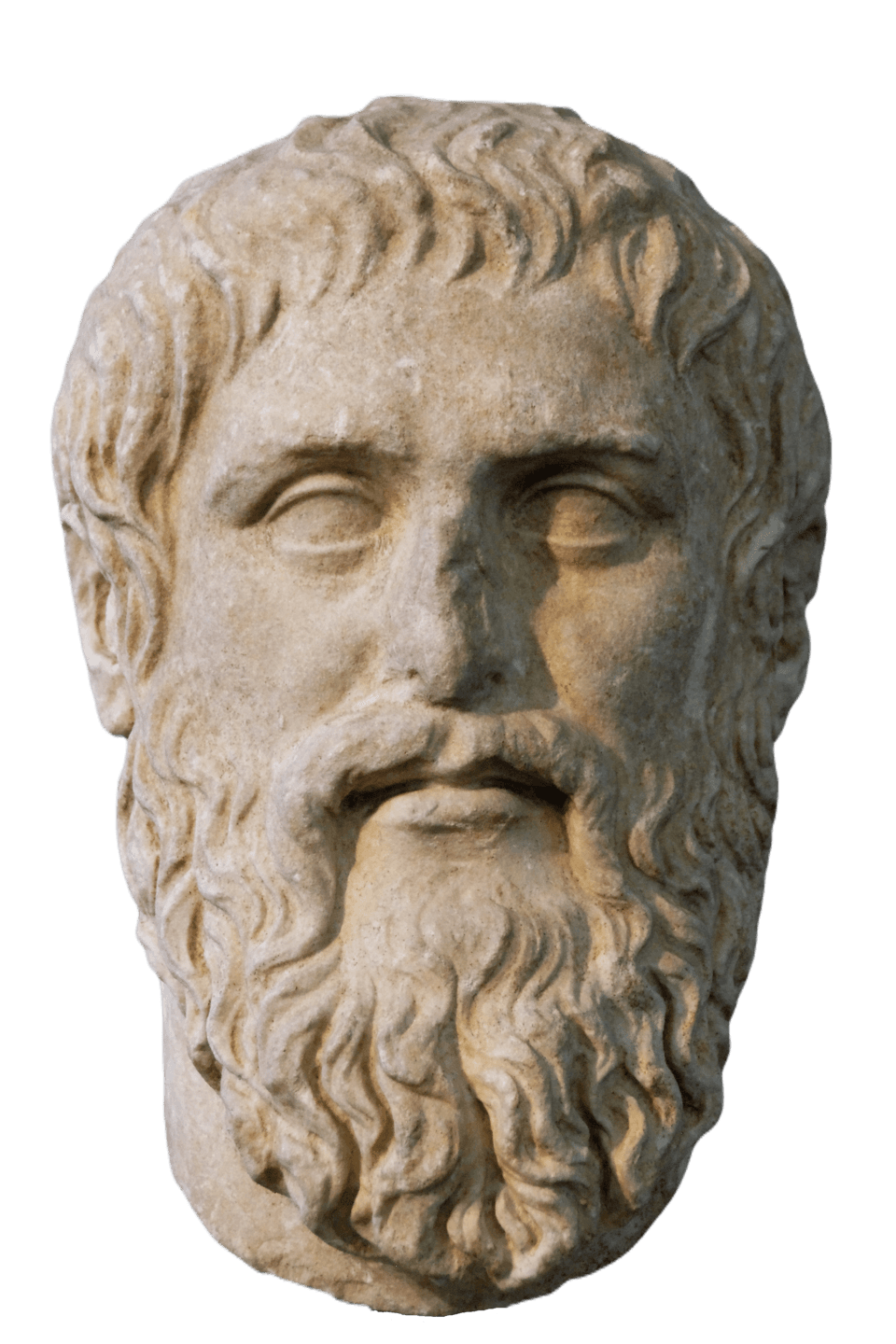
Plato was born into an aristocratic Athenian family and seemed destined for politics until he watched his city execute Socrates. That death became the hinge of his life. He left Athens, traveled, and returned to found the Academy — the first enduring institution of higher learning in Europe, which would run for nearly nine centuries.
His dialogues — the Republic, Phaedo, Symposium, Timaeus among some thirty works — are philosophy written as drama, with Socrates usually the protagonist. At their center stands the theory of Forms: the visible world of particular things is a realm of shadows and change, while true reality belongs to eternal, immaterial Forms — Justice itself, Beauty itself, the Good itself — which the soul knew before birth and strains to recollect. The famous allegory of the cave in Republic Book VII makes the claim vivid: most of humanity watches flickering images on a wall, mistaking them for the world.
From this metaphysics flows his politics. If knowledge of the Good is possible but rare, the just city should be ruled by those who possess it — philosopher-kings, trained through decades of mathematics and dialectic. The Republic works out this city in speech, alongside a psychology that divides the soul into reason, spirit, and appetite, with justice as their right ordering.
For religious history, Plato is inescapable. The Timaeus describes a divine craftsman — the Demiurge — shaping the cosmos according to eternal patterns, and the Phaedo argues for the soul's immortality. Early Christian and Islamic thinkers alike found in him a pagan who had almost reached them; Augustine said the Platonists came closer to Christianity than any other school, and the Neoplatonism built on his work became the philosophical grammar of medieval theology in three faiths.
en
London (England) -- Social life and customs -- Fiction; Love -- Fiction; Political fiction; Satire


en
Christianity -- Controversial literature -- Early works to 1800; Theology -- Early works to 1800

en
Classical literature; Ethics -- Early works to 1800; Knowledge, Theory of -- Early works to 1800; Socrates, 470 BC-399 BC; Temperance -- Early works to 1800



en
Classical literature; Dialogues, Greek -- Translations into English; Justice -- Early works to 1800; Philosophy, Ancient


en
Classical literature; Logic -- Early works to 1800; Philosophy, Ancient; Socrates, 470 BC-399 BC; Sophists (Greek philosophy)


en
Classical literature; Philosophy, Ancient; Piety -- Early works to 1800; Socrates, 470 BC-399 BC

en
Classical literature; Ethics -- Early works to 1800; Political science -- Early works to 1800





en
Classical literature; Ethics -- Early works to 1800; Socrates, 470 BC-399 BC; Virtue -- Early works to 1800
en
Astrology -- Early works to 1800; Science -- Early works to 1800

en
Classical literature; Dialectic -- Early works to 1800; Ontology -- Early works to 1800; Parmenides; Philosophy, Ancient; Reasoning -- Early works to 1800; Socrates, 470 BC-399 BC; Zeno, of Elea


en
Classical literature; Love -- Early works to 1800; Lysias; Rhetoric -- Early works to 1800; Rhetoric, Ancient; Socrates, 470 BC-399 BC; Soul -- Early works to 1800



en
Philosophy, Ancient; Plato; Socrates, 470 BC-399 BC

en
Philosophy, Ancient; Plato; Socrates, 470 BC-399 BC

en
Philosophy, Ancient; Plato; Socrates, 470 BC-399 BC

en
Philosophy, Ancient; Plato; Socrates, 470 BC-399 BC

en
English poetry -- Early modern, 1500-1700 -- History and criticism; English poetry -- Greek influences; Neoplatonism in literature; Plato -- Influence; Renaissance -- England; Thesis (Ph. D.)

en
Classical literature; Protagoras; Socrates, 470 BC-399 BC; Sophists (Greek philosophy); Virtue -- Early works to 1800

en
Classical literature; Logic, Ancient; Meaning (Philosophy); Methodology; Ontology; Sophists (Greek philosophy)


en
Classical literature; Love -- Early works to 1800; Philosophy, Ancient; Socrates, 470 BC-399 BC
en
Dialogues, Greek -- Translations into English; Philosophy, Ancient
en
Euclid. Elements; Platonists

en
Classical literature; Justice -- Early works to 1800; Political science -- Early works to 1800; Utopias -- Early works to 1800

en
Justice -- Early works to 1800; Political science -- Early works to 1800; Utopias -- Early works to 1800
en
Justice -- Early works to 1800; Political science -- Early works to 1800; Utopias -- Early works to 1800
en
Neoplatonism -- Early works to 1800; Plato -- Early works to 1800; Theology -- Early works to 1800
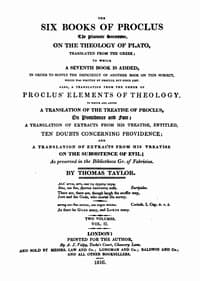
en
Neoplatonism -- Early works to 1800; Plato -- Early works to 1800; Theology -- Early works to 1800
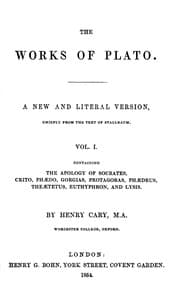
en
Philosophy -- Early works to 1800


Quote Attribution
Identify the philosopher behind a quote using AI.
Works by and about Plato — readable in full, right here in the Library.