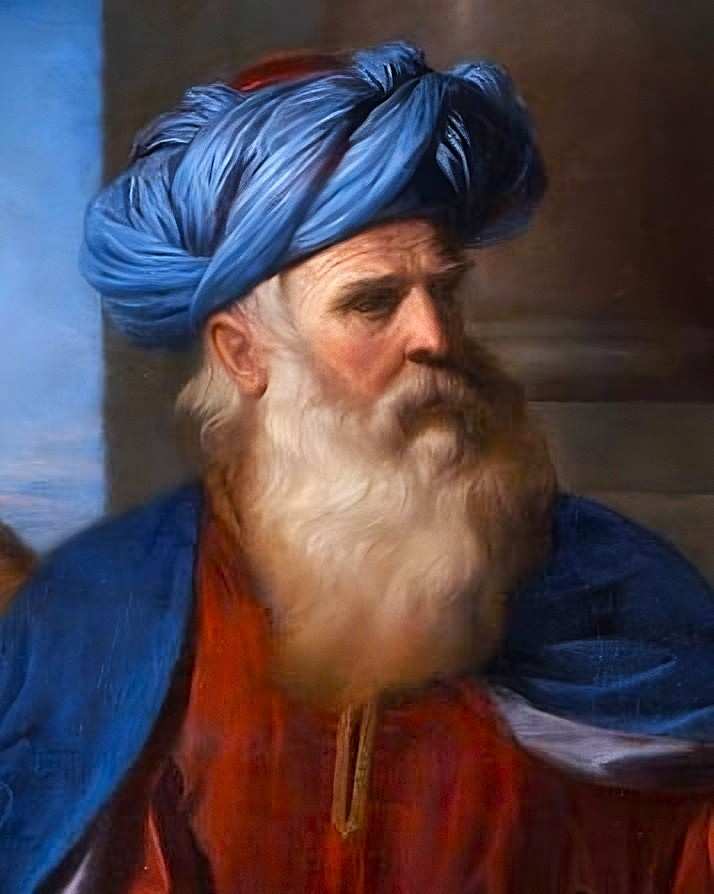
Who He Was
Abraham (originally Abram) is widely revered as a foundational legendary figure among adherents of the eponymous Abrahamic religions. In Judaism, he is the ethnic ancestor and first Hebrew patriarch who began the covenantal relationship between the Jewish people and God; in Christianity, he is regarded as the forebear of Jesus and the spiritual ancestor of all Christians; and in Islam, he is a link in the chain of Islamic prophets that begins with Adam and culminates in Muhammad. Abraham is revered in all other Abrahamic religions, such as the Baháʼí Faith and the Druze faith. He is regarded as the common forefather of both the Arab people through his son Ishmael and the Jewish people through his son Isaac. The story of the life of Abraham, as told in the narrative of the Book of Genesis in the Hebrew Bible, revolves around the themes of blessing and promise, especially the promise of progeny and land. He is said to have been called by God to leave the house of his father Terah and settle in the land of Canaan, which God now promises to Abraham and his progeny. This promise is subsequently inherited by Isaac, Abraham's son by his wife Sarah, while Isaac's half-brother Ishmael is also promised that he will be the founder of a great nation. Abraham purchases a tomb (the Cave of the Patriarchs) at Hebron to be Sarah's grave, thus establishing his right to the land; and, in the second generation, his heir Isaac is married to a woman from his own kin to earn his parents' approval. Abraham later marries Keturah and has six more sons; but, on his death, when he is buried beside Sarah, it is Isaac who receives "all Abraham's goods" while the other sons receive only "gifts". Most scholars view the patriarchal age, along with the Exodus and the period of the biblical judges, as a late literary construct that does not relate to any particular historical era. It is largely concluded that the Torah, the series of books that includes Genesis, was composed during the Persian period, as a result of tensions between Jewish landowners who had stayed in Judah during the Babylonian captivity and traced their right to the land through their "father Abraham", and the returning exiles who based their counterclaim on Moses and the Exodus tradition of the Israelites. Recognized in: Islam, Christianity, Judaism.
Birth and Early Life
Traditional and historical sources place Abraham in the era of c. 2000–1800 BCE (traditional). Where such dates are traditional, mythic, or disputed rather than historically established, they should be read as the tradition's own reckoning rather than confirmed chronology.
His Calling / Mission
The scriptures and traditions of Islam, Christianity, Judaism describe the calling and mission of Abraham; the key passages are listed under Sacred Texts and Scripture below.
Religion and Teachings
Abraham is honored within Islam, Christianity, Judaism. His teaching and significance are set out in the sacred texts that record his life.
Sacred Texts and Scripture
Scriptural references: Quran 2:124–141, 14, 19:41–50, 37:99–113; Genesis 11–25
Major Accomplishments and Events
The account of Abraham's life, works, and significance is preserved in the scriptures cited above and in the living tradition of Islam, Christianity, Judaism.
Death and Legacy
Abraham is remembered across Islam, Christianity, Judaism as one of the foundational figures of faith, and continues to be honored in scripture, devotion, and scholarship. Source: Wikipedia
Scripture References
Quran 2:124–141, 14, 19:41–50, 37:99–113; Genesis 11–25
Sources & Notes
Wikipedia: https://en.wikipedia.org/wiki/Abraham
Discussion
Discussion
No comments yet
Start the discussion — sign in to leave a comment.
Join the Discussion
Join the discussion
Sign in to leave a comment or review.
Sign InorCreate an account